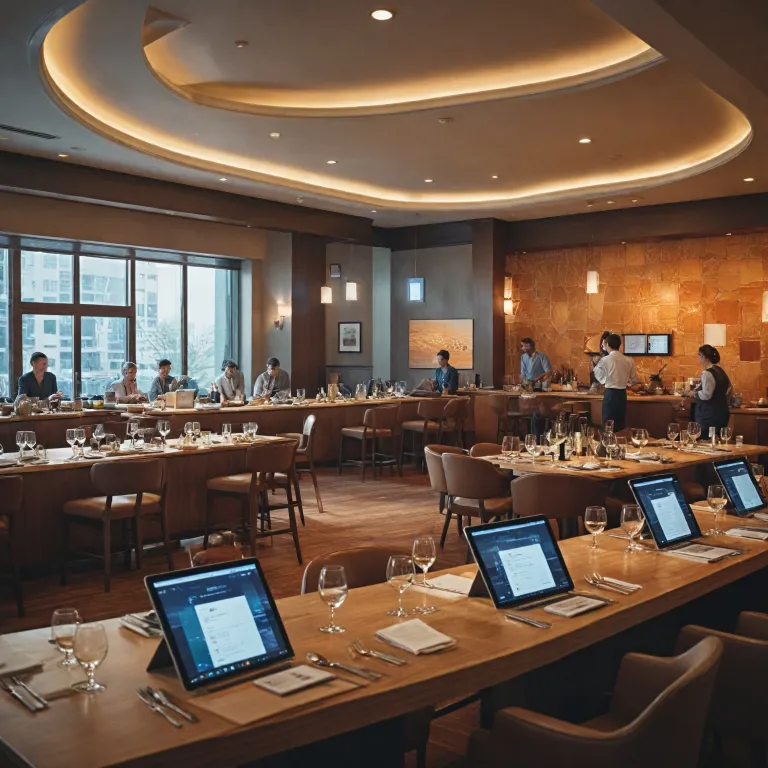
Why foodservice advertising now defines competitive advantage in hospitality F&B
Foodservice advertising has moved from optional expense to core strategic lever for every ambitious hospitality group. As competition intensifies across hotel restaurant portfolios and independent venues, leadership teams now treat foodservice marketing as a primary driver of profitable food beverage growth. The foodservice industry context is clear ; brands that under invest in structured advertising programs are steadily losing share to sharper, data led operators.
Recent spending patterns in the United States illustrate how serious the industry has become about foodservice advertising. Casey's has allocated around 40 million USD to advertising, while Campbell's Foodservice has committed close to 100 million USD to support its food service and food products services visibility. ARKO, parent of GPM Investments, has also scaled its foodservice advertising to support foodservice businesses across approximately 1 070 locations, reinforcing the link between sustained media presence and resilient sales.
For directeurs F&B and chefs exécutifs, these numbers are not just news ; they are a benchmark for the level of marketing effort now required to stay relevant with demanding customers. Foodservice marketing today blends digital marketing, social media, print digital channels, and in store ads into one coherent advertising program aligned with brand positioning. The goal is not only higher sales but deeper foodservice insights about the target audience and the evolving foodservice market.
In this environment, hospitality decision makers must treat foodservice advertising as a disciplined investment, not a discretionary cost. That means building a marketing program with clear KPIs, a trained sales team, and robust sales enablement content that translates industry insights into compelling guest facing campaigns. Those who master this integrated approach will shape the next phase of growth for the global foodservice industry.
Designing a foodservice advertising architecture for multi outlet restaurant portfolios
For hotel groups and multi unit operators, foodservice advertising must be architected across brands, concepts, and geographies. A single restaurant campaign is no longer sufficient when the foodservice market expects consistent messaging across lobby bars, rooftop venues, and grab and go counters. The challenge is to orchestrate foodservice marketing so that each outlet speaks with its own voice while reinforcing the master brand.
Effective strategies start with a clear segmentation of the target audience by occasion, spend level, and expectations around food beverage experiences. Directeurs F&B should map which foodservice businesses rely on local customers, which attract international travelers, and which depend on conference and events traffic. This segmentation then guides media choices, from local social media ads to print digital placements in a specialist magazine read by corporate travel planners.
Within this architecture, foodservice advertising must also reflect operational realities such as equipment capabilities, menu engineering, and production capacity. There is little value in driving aggressive marketing efforts for a signature dish if the kitchen equipment cannot sustain peak demand without compromising service standards. Strategic content, such as this analysis of elevating menus with lean cuts of pork, shows how menu design and advertising messaging must be aligned.
To manage complexity, leading operators build a centralized advertising program that defines brand guardrails, shared assets, and cross brand industry insights. Local restaurant teams then adapt these frameworks to their specific food service context, tailoring promotions, pricing, and products services to local market dynamics. This balance between central control and local agility is becoming the defining capability of high performing foodservice marketing organizations.
From impressions to covers: turning media exposure into measurable restaurant sales
Foodservice advertising only creates value when it translates into incremental covers, higher average checks, and sustained sales growth. In the foodservice industry, the most sophisticated brands now connect media metrics with restaurant level P&L data to understand which ads genuinely move customers from awareness to booking. This shift from vanity metrics to commercial outcomes is reshaping how directeurs F&B evaluate their marketing program.
Digital marketing and social media are central to this transformation, particularly for younger demographics who rely heavily on online signals. In 2023, 76% of U.S. consumers aged 18-34 were influenced by social media in their dining choices, and 89% of diners checked online reviews before visiting foodservice outlets. These figures underline why foodservice advertising must integrate user generated content, influencer partnerships, and review management into a single, coherent service strategy.
To convert attention into sales, operators are pairing foodservice advertising with precise offers and limited time menu innovations. Campaigns around signature desserts, for example, can be amplified through visually rich media, as illustrated by this feature on elevating dessert menus with banana chimichanga. When the sales team and operations collaborate, such food beverage promotions can be rolled out across multiple restaurant brands with consistent execution.
Crucially, foodservice insights from these campaigns must feed back into planning cycles, informing future advertising program design. By tracking which products services resonate with each audience segment, decision makers can refine menu engineering, staffing, and equipment investments. Over time, this closed loop approach turns foodservice marketing from a cost center into a disciplined growth engine for the entire foodservice market.
Leveraging data, diversity, and local relevance in foodservice marketing
The next frontier in foodservice advertising lies at the intersection of data analytics, inclusive storytelling, and local market nuance. Hospitality brands are increasingly using foodservice insights to tailor messaging by neighborhood, cultural profile, and guest mix, ensuring that each restaurant feels authentically rooted in its community. This local sensitivity is particularly important for foodservice businesses operating across diverse urban and resort locations.
Data driven foodservice marketing allows operators to test different ads, offers, and creative narratives with specific target audience segments. By analyzing redemption patterns, social media engagement, and sales by time of day, decision makers can identify effective strategies for each food service concept. Innovation now extends beyond menu items to the way brands communicate their values, including commitments to diversity and inclusion that resonate strongly with modern customers.
Research indicates that a significant majority of consumers support brands that actively promote diversity and inclusion in their advertising. This is especially relevant for the foodservice industry, where staff, suppliers, and guests often represent a wide range of backgrounds and cultures. “In 2023, 71% of consumers supported brands promoting diversity and inclusion.”
Local execution remains critical, even within a global advertising program supported by centralized industry insights and sales enablement tools. Restaurant teams should adapt national campaigns to highlight local suppliers, regional food traditions, and community partnerships, reinforcing the authenticity of the brand. For inspiration on how localized innovation can shape perception in the foodservice market, many leaders are examining beverage centric case studies such as Japanese energy drinks and their market impact.
Integrating print digital, loyalty, and in store theatre into one advertising program
While digital marketing dominates many conversations about foodservice advertising, high performing hospitality operators are rediscovering the power of integrated print digital ecosystems. A well designed magazine style insert in guest rooms, combined with QR codes and targeted social media ads, can guide customers from inspiration to reservation within minutes. This blend of tactile and digital touchpoints reinforces brand memory and drives measurable restaurant sales.
In parallel, loyalty programs and mobile apps are becoming central pillars of foodservice marketing, especially for multi property hotel groups. By linking loyalty IDs to food beverage transactions, operators can generate granular foodservice insights about visit frequency, spend patterns, and product preferences. These data streams then inform personalized ads, tailored offers, and dynamic pricing strategies that reward high value customers while protecting margins.
In store theatre remains a powerful, often underutilized, component of foodservice advertising in the hospitality industry. Menu boards, table talkers, and digital screens can showcase products services, highlight local suppliers, and promote limited time offers that align with broader media campaigns. When the sales team and operations collaborate, these touchpoints become extensions of the advertising program rather than isolated marketing efforts.
To manage this complexity, many groups are investing in centralized content libraries and sales enablement platforms. These tools allow directeurs F&B to deploy consistent creative assets across restaurant brands, while still allowing local teams to adapt messaging to their specific audience. The result is a more coherent foodservice marketing presence that maximizes every guest interaction, from pre arrival emails to the final room charge.
Building organizational capabilities for next generation foodservice marketing
For investors and senior hospitality leaders, the most important question is not whether to invest in foodservice advertising, but how to build the capabilities to sustain it. The foodservice industry is moving toward a model where marketing, operations, and finance collaborate continuously to optimize campaigns and resource allocation. This requires new skills, new tools, and a more agile culture across the entire food service organization.
First, leadership teams must ensure that the sales team and marketing function share a common view of the target audience and the foodservice market opportunity. Joint planning sessions should align restaurant level sales targets with specific advertising program initiatives, from social media bursts to seasonal print digital campaigns. Clear governance helps prevent fragmented marketing efforts and ensures that every ad supports a defined commercial objective.
Second, investment in technology is essential to unlock the full potential of foodservice marketing and foodservice insights. Customer data platforms, campaign management tools, and analytics dashboards allow decision makers to track performance across brands, channels, and products services. These systems also support more precise forecasting of equipment needs, staffing levels, and menu changes based on expected demand from upcoming ads.
Finally, culture matters as much as tools in building a resilient foodservice advertising capability. Directeurs F&B should encourage experimentation, rapid testing, and cross functional learning, using industry insights from partners such as advertising agencies and digital marketing firms. As the foodservice businesses that lead this transformation are already demonstrating, a disciplined yet creative approach to advertising can turn food and beverage operations into a primary engine of value creation for the wider hospitality portfolio.
Key quantitative insights shaping foodservice advertising strategies
- Casey's has invested around 40 million USD in advertising to support its expanding foodservice offer and strengthen brand visibility.
- ARKO, through GPM Investments, supports foodservice offerings in roughly 1 070 stores, underlining the scale at which foodservice businesses now operate.
- Campbell's Foodservice has committed close to 100 million USD in advertising, signaling how seriously major suppliers treat foodservice marketing.
- Approximately 76% of U.S. consumers aged 18 to 34 report that social media influences their dining choices, reinforcing the central role of digital marketing.
- Roughly 89% of diners consult online reviews before visiting foodservice outlets, making reputation management a critical part of any advertising program.
- Around 71% of consumers say they support brands that actively promote diversity and inclusion, which should inform both creative direction and media choices.
Frequently asked questions about foodservice advertising in hospitality
How much did Casey's spend on advertising in 2023 ?
Casey's spent about $40 million on advertising in 2023.
What percentage of U.S. consumers aged 18-34 are influenced by social media in their dining choices ?
In 2023, 76% of U.S. consumers aged 18-34 were influenced by social media in their dining choices.
How important are online reviews for diners ?
In 2023, 89% of diners checked online reviews before visiting foodservice outlets.
Why are major suppliers like Campbell's Foodservice increasing their advertising investments ?
Major suppliers such as Campbell's Foodservice are increasing advertising investments to strengthen their brands within the foodservice industry, support operator sales, and secure visibility for their products services across restaurant and hospitality channels.
What role do diversity and inclusion play in foodservice marketing today ?
Diversity and inclusion have become central to foodservice marketing because a large share of customers expect brands to reflect social values in their advertising, which influences loyalty, brand perception, and ultimately sales performance across the foodservice market.