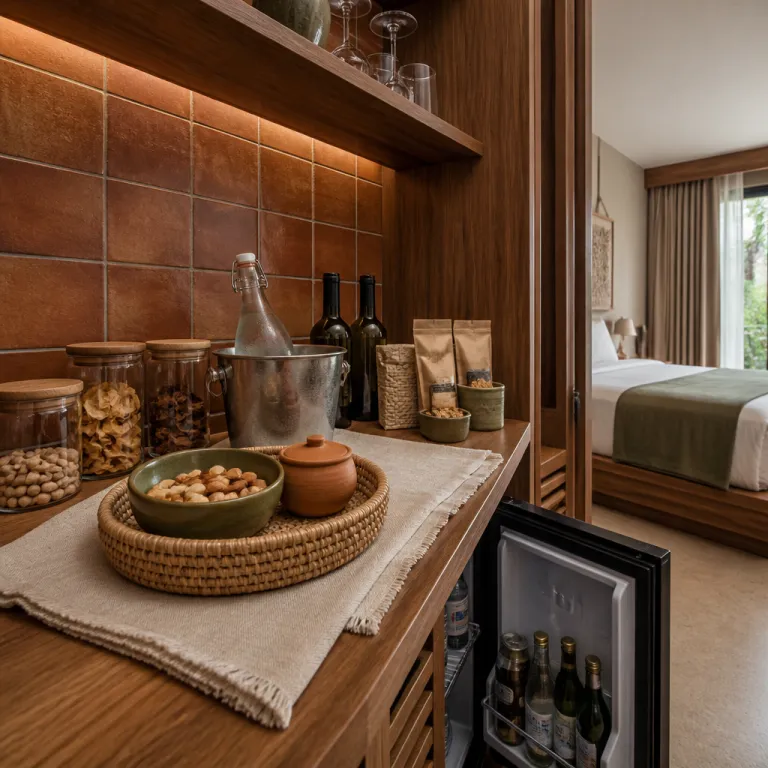
From margin trap to profit center: redefining hotel minibar strategy
For many hotels, the traditional minibar is a silent P&L leak. A static fridge in each hotel room, filled with generic snacks and miniature bottles, rarely aligns with current guest preferences or modern traveler expectations. When hotel guests ignore the minibar, you carry inventory cost, labor for room checks, and write offs on expired items.
Hotel Revenue Managers now treat every minibar room as a micro outlet that must earn its footprint, not just a legacy amenity. They look at RevPAR and TRevPAR by segment, then map which minibar offerings actually move with business travelers, leisure guests, and long stay corporate accounts. The most effective hotel minibar strategy links minibar pricing, assortment, and technology to the same revenue management logic used for bars, restaurants, and room service.
The dataset is clear about the shift in expectations and economics. As one reference notes without ambiguity: "Guests prefer personalized and efficient in-room dining options." That single sentence explains why minibars offer less impact when they are not well stocked with relevant products and why hotels offer new formats such as curated mini bar boxes, lobby grab and go bars, and app based snacks drinks ordering from the room.
When you reframe the minibar as an in room retail shelf, the conversation changes. You stop asking whether to remove minibars and start asking which mini bars, which items, and which pricing architecture will enhance guest satisfaction while protecting margin. The goal is not to sell a single expensive mini bottle of gin, but to support a more satisfying guest experience across the stay and lift total spend per hotel room.
That means segmenting minibar offerings with the same rigor you apply to breakfast or the lobby bar. City center hotels with heavy corporate demand may prioritize functional snacks, RTD cocktails, and premium non alcoholic products, while resort hotels offer more indulgent items and local specialties. In both cases, the winning hotel minibar strategy is data driven, tech enabled, and tightly integrated with room service and wider F&B concepts.
The economics of minibar formats: from static fridge to curated box
The first decision in any hotel minibar strategy is format, because format dictates labor, waste, and achievable pricing. A traditional minibar in every room, checked daily by housekeeping, creates predictable costs and unpredictable revenue, especially when guests dispute charges or avoid the bar entirely. Many hotels now test hybrid models where only suites and premium hotel rooms receive a full minibar room setup, while standard categories rely on grab and go bars in the lobby.
Curated snack boxes and mini bar kits change the cost structure dramatically. Instead of dozens of SKUs sitting in hundreds of hotel rooms, you manage a tighter range of products assembled centrally and delivered to the room on request or pre arrival, often as part of a package. This approach aligns with the data driven product selection and dynamic pricing models highlighted in the dataset, which indicate that optimized minibars can generate a potential revenue increase in the mid teens when assortments match guest preferences, as reported in internal benchmarking by several global chains and summarized in STR and HSMAI conference papers.
For Revenue and Commercial Directors, the key is to model each minibar format like a separate outlet. A static minibar with automatic sensors may support higher pricing on premium snacks and snacks drinks, but only if the hotel minibar is well stocked with brands that resonate with travelers and if disputes are minimal. Curated boxes, by contrast, allow hotels offer themed minibar offerings — wellness, kids, local tasting — with clear per box pricing that is easy to sell at check in and through pre stay emails.
Digital first ordering adds another layer of flexibility and margin control. When guests can order minibar items, RTD cocktails, or late night snacks via the app, you can run dynamic pricing by time of day, occupancy, or length of stay, just as you would for a bar happy hour. This is where the logic of menu engineering and the thinking behind a menu shrink that lifts profit becomes directly relevant to minibar strategy.
To move from theory to execution, many operators now use a simple implementation checklist: define the minibar format by room type, set target contribution per occupied room, limit SKUs to high velocity items, connect ordering to the PMS or POS, and schedule quarterly reviews to prune underperformers. The constant is that minibars offer a clear opportunity to enhance guest experience and RevPAR when they are treated as a flexible, testable F&B channel rather than a fixed amenity.
RTD cocktails and premium beverages: the new minibar revenue line
Ready to drink cocktails have moved from novelty to serious revenue line for bars and hotels. Industry analyses value the RTD cocktail market in the hundreds of millions of dollars, with double digit CAGR, and major hotel groups now stock bartender quality cans in both lobby bars and selected minibar offerings. For a hotel minibar strategy, this category solves several old problems at once.
First, RTD cocktails deliver consistent quality without requiring a bartender in every hotel room. A guest can open a chilled can from the mini bar, pour it over ice, and enjoy a bar level drink while paying a premium price that still offers strong margin compared with traditional spirits miniatures. Second, the format is ideal for smart sensors and app based ordering, because each can is a single SKU with clear pricing and no need to track partial consumption.
Marriott and other international hotels offer RTD cocktails that mirror their signature bar menus, creating a seamless guest experience from lobby to room. This is where a hotel mini concept can shine: a guest tries a shiso highball in the bar, then finds a similar RTD in the minibar room fridge, supported by storytelling about Japanese ingredients and linked content such as chef residency cocktail programs. The same logic applies to non alcoholic RTD options, which respond to clear trends in mindful drinking among business travelers.
From a margin perspective, RTD cocktails in mini bars can outperform classic spirits miniatures. You buy at scale, negotiate with suppliers for co marketing, and set minibar pricing that reflects both convenience and perceived value, often landing at a healthy contribution per can. When you integrate these products into room service menus and pre arrival upsell flows, you create multiple touch points where guests can opt in to a premium in room bar experience.
For F&B directors, the operational question is where to place RTD products across the property. Some hotels offer them only in suites and club rooms to maintain a sense of exclusivity, while others roll them out across all hotel rooms but limit the range to two or three hero items. In both cases, the combination of strong branding, clear pricing, and frictionless billing is what turns RTD cocktails from a trend into a reliable minibar revenue driver.
Technology that works: sensors, apps, and unified billing
The most sophisticated hotel minibar strategy now sits on top of a technology stack, not a paper checklist. Smart sensors in minibars detect when items are removed, while PMS integrated apps allow guests to order additional snacks drinks or mini bar refills without calling room service. When this ecosystem works, it reduces labor, shrinks disputes, and generates clean data on guest preferences.
Real time sales analytics and automated inventory management, as highlighted in the dataset, are no longer optional for large hotels. They allow Revenue Managers to see which minibar offerings move by room type, day of week, and segment, then adjust pricing or swap products quickly instead of waiting for monthly reports. The same systems can flag when a minibar is not well stocked, triggering alerts to the équipe before a new guest checks in and ensuring that minibars offer a consistent experience across all hotel rooms.
Smart room technology also supports the unified transaction flow that guests increasingly expect across hotel amenities. When a guest orders from room service, grabs a snack from the lobby bar, and consumes items from the minibar, all charges should appear in one clear folio, regardless of whether they were triggered by sensors, app orders, or staff postings. This is aligned with the expectation, documented by technology providers in the PMS space, that travelers want one seamless booking and billing journey across rooms, F&B, and ancillary services.
For independent hotels, the barrier is often perceived cost and complexity. In practice, modular solutions now allow you to start with app based ordering for minibar items and snacks, then add sensors and deeper PMS integration as ROI is proven. The priority is to capture structured données on what guests actually consume in the hotel room, rather than relying on anecdotal feedback or incomplete manual counts.
Once you have that data, you can run real A/B tests on minibar pricing, eco friendly packaging, and product mix. You can compare performance between floors with full mini bars and those with partial minibar offerings, or between hotels in the same group that offer different minibar room concepts. Over time, this turns the minibar from a static cost center into a dynamic test bed for in room retail innovation, supported by a clear implementation checklist that covers hardware, software, training, and reporting.
Local curation and eco friendly positioning: telling a destination story in the room
Generic global brands in a minibar rarely move the needle on guest satisfaction. What does move the needle is when minibars offer a curated snapshot of the destination, with local snacks, small batch products, and collaborations with nearby artisans that guests would not find in a supermarket. This approach turns each hotel room into a small tasting room and supports both rate justification and ancillary revenue.
Partnering with regional producers also supports an eco friendly narrative that resonates with many travelers. Instead of flying in the same industrial snacks for all hotels in a group, you can work with local roasters, chocolatiers, and beverage makers to create mini bar assortments with lower transport impact and stronger storytelling. Clear labeling on origin, sustainable packaging, and fair trade credentials helps enhance guest perception of the hotel minibar as a thoughtful, responsible amenity.
For F&B directors, the challenge is to balance authenticity with operational simplicity. You cannot manage fifty different SKUs across hundreds of hotel rooms without robust inventory systems, so the art lies in selecting a small number of hero items that represent the region and perform well in both minibars and lobby bars. These products can then be cross promoted in the bar, in room collateral, and digital channels, with QR codes linking to deeper content such as articles on Japanese ingredients in hotel cocktail programs or local producer stories.
Eco friendly positioning also extends to the hardware of the minibar itself. Some hotels offer glass bottled water and refillable carafes instead of single use plastic, while others remove energy intensive fridges from standard rooms and replace them with ambient mini bar shelves featuring shelf stable snacks and products. In suites, where a powered minibar remains justified, energy efficient units and smart sensors reduce both electricity use and unnecessary door openings by staff.
When local curation and sustainability are executed well, they enhance the guest experience in ways that show up in reviews and repeat business. Guests mention the regional chocolate bar in the minibar room, the locally brewed RTD cocktail in the hotel mini fridge, or the eco friendly packaging that aligned with their values. Over time, this narrative supports higher ADR and strengthens the hotel’s positioning in competitive urban and resort markets.
The grab and go hybrid: when the minibar becomes a self service market
Many urban hotels now question whether every room needs a traditional minibar. For properties with strong lobby flow and limited housekeeping resources, the answer is often a hybrid model where a compact fridge and shelving in the lobby or on each floor function as a self service mini market. Guests then use key cards or apps to purchase snacks, drinks, and light meals, while only premium rooms retain in room mini bars.
This grab and go approach changes the economics of minibar offerings significantly. Instead of stocking hundreds of individual minibars, you concentrate inventory in a few well designed points, reducing waste and simplifying replenishment while still giving guests 24 7 access to snacks drinks and impulse items. Smart fridges and self checkout kiosks integrate with the PMS, so charges flow directly to the hotel room folio, maintaining the seamless billing experience guests expect.
For Revenue and Commercial Directors, the hybrid model opens new pricing and packaging options. You can bundle a nightly credit for the market into certain rate plans, effectively pre selling a portion of F&B spend and encouraging guests to sample higher margin products. At the same time, you can maintain a smaller, more curated minibar in suites, where guests expect a private bar and where the incremental RevPAR uplift from in room consumption justifies the extra labor.
Operationally, the grab and go hybrid also supports better alignment between room service, the lobby bar, and minibar strategy. Items that underperform in the market can be moved to bar menus or used as in room welcome amenities, while bestsellers can be duplicated in mini bars and promoted via in room tablets. This fluidity reduces dead stock and allows hotels offer a consistent F&B identity across all touch points.
For independent hotels and small groups, the hybrid model can be a pragmatic step between removing minibars entirely and investing in full sensor based systems. It preserves the ability to enhance guest satisfaction through convenient F&B access, while freeing housekeeping from time consuming minibar checks in every hotel room. When executed with strong design and clear signage, the self service market becomes part of the hotel’s social space, not just a replacement for a forgotten honor bar.
Key figures and performance benchmarks for minibar strategies
- Industry case studies suggest that optimized minibar programs using data driven product selection and dynamic pricing can deliver ancillary revenue increases in the low to mid teens compared with traditional static assortments, especially when assortments are tailored to guest profiles. For example, an internal analysis by a 300 room city hotel showed minibar revenue per occupied room rising from 1.80 to 2.10 dollars after a six month test, a 16 % uplift.
- Analysts estimate that the global RTD cocktail market is worth roughly 800–900 million dollars, with a compound annual growth rate above 10 %, creating a scalable product pool for minibar and in room bar concepts in both upscale and lifestyle hotels. Recent IWSR and Grand View Research summaries place RTD cocktails among the fastest growing beverage segments worldwide.
- Hotels that integrate smart sensors and automated inventory management into minibars report significant reductions in disputed charges, with some operators citing double digit drops in billing complaints and corresponding improvements in guest satisfaction scores on major OTAs.
- Properties that shift from full traditional minibars in all rooms to a mixed model — minibars only in premium categories plus a lobby grab and go market — often report measurable labor savings in housekeeping and reduced product waste, while maintaining or increasing total F&B revenue per occupied room.
- Guest surveys conducted by technology providers in the PMS and POS space consistently show that a majority of travelers prefer one unified folio for room, F&B, and ancillary charges, reinforcing the case for PMS integrated minibar and grab and go solutions.
FAQ: hotel minibar strategy and in room F&B
Why are traditional hotel minibars declining in performance ?
Traditional minibars rely on generic products, manual checks, and static pricing, which no longer match guest expectations for personalization and transparency. As the dataset states directly: "Guests prefer personalized and efficient in-room dining options." When hotels do not adapt minibar offerings to guest preferences and modern technology, consumption drops and the asset becomes a cost center.
How can a hotel minibar strategy increase RevPAR rather than just costs ?
A profitable hotel minibar strategy treats each minibar as a micro outlet with clear targets, not a fixed amenity. By using real time sales analytics, dynamic pricing, and curated assortments that reflect guest segments, hotels can lift ancillary revenue per occupied room and support higher overall RevPAR. The key is to measure contribution margin per minibar room and adjust formats, items, and pricing based on data, for example by tracking average spend per occupied room, cost of goods sold, and labor minutes per replenishment.
What role do RTD cocktails play in modern minibar offerings ?
RTD cocktails provide bar quality drinks in a convenient, consistent format that works well in minibars and grab and go markets. They often deliver better margins than traditional spirits miniatures, especially when hotels negotiate volume deals and co branding with suppliers. For guests, they enhance the in room experience by bringing the bar into the room without requiring room service or a visit to the lobby bar.
How can technology reduce disputes and improve guest satisfaction with minibars ?
Smart sensors, app based ordering, and PMS integrated billing create a transparent, frictionless minibar experience. Guests see prices clearly, charges post instantly to the hotel room folio, and staff no longer rely on manual checks that can generate errors. This reduces billing disputes, speeds up check out, and supports higher guest satisfaction scores related to in room F&B.
Is it better to remove minibars and use a lobby grab and go concept instead ?
The answer depends on positioning, segment mix, and building layout. Many lifestyle and select service hotels succeed with a hybrid model where only suites and premium rooms have minibars, while a 24 7 grab and go market serves all guests. Luxury and resort hotels, by contrast, often retain minibars in most rooms but upgrade products, technology, and eco friendly positioning to justify rates and enhance guest satisfaction.