Hotel restaurant trends: F&B placemaking that locals actually use
From captive dining room to neighborhood infrastructure
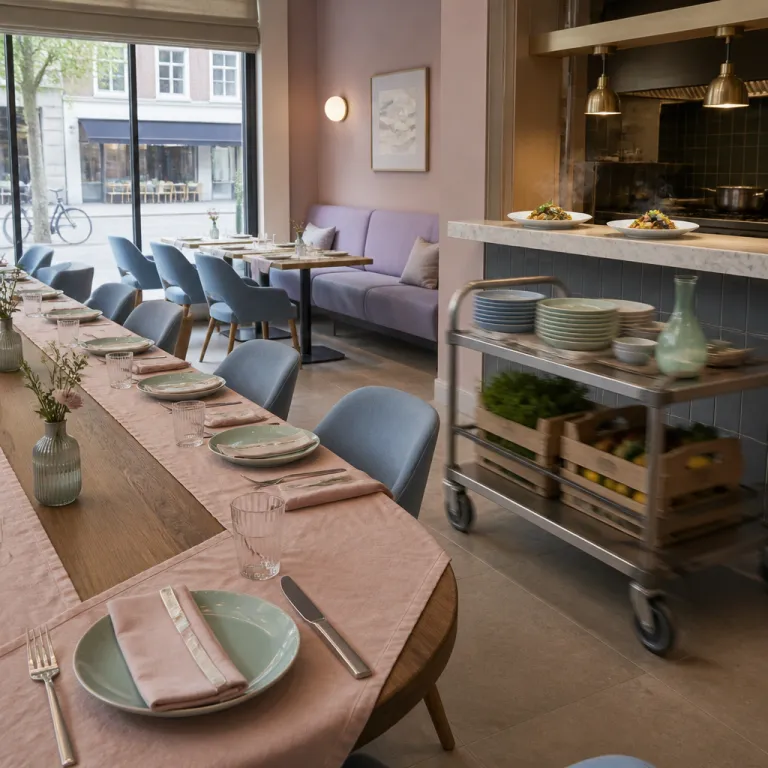
The most powerful hotel restaurant trends right now treat food and beverage as neighborhood infrastructure, not as a captive canteen for in-house guests. When a hotel restaurant becomes a weekly ritual for local residents, it reshapes the hospitality industry P&L by lifting both F&B margins and room rates through stronger brand perception and higher guest satisfaction. That shift in mindset is the real gap between hotels that still see food and beverage as a cost center and hotels and resorts that use restaurants as placemaking engines.
Across the hospitality industry, the directional data is unambiguous: hotels integrating local F&B concepts now represent roughly 75% of new or renovated properties, and they are reporting around 20% higher revenue growth than peers that treat dining as an amenity rather than a strategy. These figures synthesize recent trend reports from Hotel Management Magazine (2023 pipeline analysis, “Global Hotel Development Pipeline Review,” pp. 18–23) and Hospitality.FYI (multi-brand portfolio benchmarking across North America and Europe, 2019–2023, “Restaurant-Centric Hotels,” methodology based on 200+ full-service assets). This is not about chasing vague hospitality trends but about using restaurant concepts to anchor a hotel in its city so that travelers and neighbors share the same dining experiences and talk about them on social media. When your restaurant is on the local short list for a Thursday night dining experience, your hotel F&B suddenly has pricing power and resilience that pure room revenue cannot match.
F&B as placemaking is simple to define yet demanding to execute: hotel management teams design restaurants first for the neighborhood, then for the in-house guest. The Gran Hotel Margalida in Mallorca illustrates this with a seafood restaurant built around local fishermen, where guests and locals queue together for terrace tables and where the guest experience feels authentically Mediterranean rather than generically resort-like. That kind of restaurant experience turns a hotel resort into a recognizable address, and it is these trends shaping portfolio value for hospitality businesses that want durable differentiation.
When you treat the restaurant as neighborhood infrastructure, every operational decision changes, from menu engineering to staffing patterns. The focus moves from capturing a predictable number of guest covers to building repeat business from locals who will visit the restaurant multiple times per month and influence guest expectations through word of mouth. In this context, hotel restaurant trends are less about the latest culinary fashion and more about how consistently you can deliver a dining experience that works for both a health-conscious business traveler and a local family celebrating a birthday.
External covers, profitability and the new F&B scorecard
The single most underused KPI in hotel F&B is the percentage of external covers versus captive guest covers. When external guests represent at least 40% of restaurant covers, we consistently see higher F&B RevPAR, stronger guest satisfaction scores and more resilient performance across seasons. That external mix also correlates with better online reputation, because locals write more detailed reviews about dining experiences than transient travelers do about a single breakfast.
For a VP F&B or asset manager, the new scorecard for hotel restaurant trends should start with four metrics: external cover share, F&B RevPAR, local review velocity and average check by segment. External cover share tells you whether the restaurant has become part of the local dining scene, while review velocity on social media and local platforms shows whether the concept is generating ongoing conversation beyond the hotel website. When those numbers move together, you know the restaurant is functioning as a true third space that serves both guests and neighbors.
Local review velocity matters because it feeds the algorithms that shape how travelers choose hotels and restaurants. A hotel that runs targeted programming for locals — from cooking classes with the executive chef to market dinners with nearby artisans — will generate more frequent mentions, which in turn influence guest expectations before arrival. That pre-stay narrative often matters more for the eventual guest experience than any in-room amenity, especially for health- and wellness-focused travelers who filter hotels by food and beverage options first.
Programming is where hospitality trends become measurable business levers rather than abstract industry talking points. Chef collaborations with local restaurants, seasonal pop-ups and cultural events that mix music, art and food give locals reasons to return and give hotel guests reasons to stay on property instead of defaulting to city-center venues. For a practical playbook on turning a hotel restaurant into a neighborhood magnet before peak traffic, the operational logic is similar to the seasonal strategies outlined in summer season prep for neighborhood magnet restaurants.
From a margin perspective, external covers usually carry better beverage mix and higher average checks than captive guest covers. Locals tend to order more cocktails and shareable plates, while in-house guests often prioritize speed and convenience in their dining experience, especially on arrival nights. The hotels that win are those that design menus and service flows to serve both behaviors without compromising the guest experience for either segment.
Case study: external covers and hotel performance
In one 220-room urban hotel repositioned in 2021 with a street-facing brasserie, external covers rose from 18% to 46% of total covers within 12 months. Over the same period, F&B RevPAR increased by 19%, average daily rate climbed 7%, and annual occupancy improved from 71% to 78%. Internal benchmarking attributed roughly half of the RevPAR uplift to higher beverage mix from local diners and half to improved brand perception that supported premium pricing on rooms.
Programming third spaces that locals and guests actually share
The most interesting hotel restaurant trends now sit at the intersection of experiential dining and third space design. Restaurants and bars are being reimagined as flexible living rooms where guests and locals linger for hours, working, eating, drinking and socializing in the same hospitality spaces. This is where F&B stops being a department and becomes the physical expression of the brand for both hotels and the surrounding community.
Experiential dining in the hospitality industry is no longer limited to tasting menus or theatrical plating; it includes eatertainment concepts like boutique bowling, digital darts and mini golf that Entegra has highlighted as fast-growing amenities in hotels. Entegra’s 2022–2023 client benchmarking across more than 500 full-service properties in the United States and Western Europe shows double-digit year-over-year growth in these hybrid entertainment formats. These experiences work because they extend the dining experience into a full evening, increasing both time on property and total spend per guest, while also giving locals a reason to visit the hotel even when they are not staying overnight. When designed intelligently, such concepts remain eco-friendly and aligned with sustainability goals by using modular equipment, efficient lighting and low-waste food programs.
Programming that bridges guests and locals must be intentional, not an afterthought on the events calendar. Regular cooking classes with the hotel’s culinary équipe, for example, can attract health-conscious locals during off-peak hours while also giving in-house travelers a memorable guest experience they will share on social media. Market dinners that feature local suppliers and artisans turn the restaurant into a stage for regional food stories, reinforcing the hotel’s position as a connector within the hospitality businesses ecosystem. Design supports this third space role by allowing fluid transitions between dayparts and user groups, so that programming, layout and service style work together rather than in silos.
Concept clarity is critical here: the all-day dining room that tries to be everything to everyone rarely becomes a true third space. Single-concept restaurants with sharp positioning — seafood brasseries, plant-forward bistros, izakaya-style bars — tend to perform better in both local markets and hotel review scores, a dynamic explored in depth in the analysis of why single concept hotel restaurants outperform generic all day dining rooms. When the concept is clear, programming becomes easier to align, from health and wellness brunches to late-night industry nights that attract local restaurant professionals.
Design supports this third space role by allowing fluid transitions between dayparts and user groups. A lobby bar that functions as a co-working lounge by day and a cocktail bar by night can host both business travelers and neighborhood regulars without friction, provided the acoustics, lighting and seating are planned for both. In such spaces, guest expectations shift; they no longer see the hotel as a closed box but as part of their daily urban experience.
Technology, sustainability and the next wave of F&B placemaking
Technology is quietly reshaping hotel restaurant trends by making it easier to serve both locals and in-house guests with the same kitchen and bar. Digital waitlists, QR-based menus and integrated POS systems allow restaurants to manage peaks from hotel events while still accommodating walk-in locals without painful waits. When these tools are connected to the hotel PMS and CRM, they also give F&B leaders a unified view of guest experience across rooms, restaurants and bars.
The most advanced hospitality businesses are building full hotel room service and restaurant tech stacks that integrate voice ordering, mobile payment and even robotic delivery where it makes operational sense. These systems free up human staff for higher-value interactions, which is essential when restaurants function as third spaces and the line between dining experiences and casual visits blurs throughout the day. For a detailed breakdown of the economics behind such investments, the analysis of the hotel room service technology stack offers a useful benchmark for capital planning.
Sustainability is the other structural force shaping hotel restaurant trends, especially for health-conscious travelers who choose hotels based on eco-friendly food and beverage practices. Local sourcing, low-waste menus and transparent communication about supply chains are no longer optional for hotels and resorts that want to attract both discerning guests and values-driven locals. In this context, “Experiential dining.”, “Local sourcing.” and “Community engagement.” are not marketing slogans but operational imperatives that influence both cost structures and brand equity.
Health and wellness expectations now extend from the spa to the restaurant, with guests and locals looking for menus that balance indulgence and nutrition. Hotels that offer credible plant-forward options, non-alcoholic pairings and functional beverages see higher guest satisfaction scores, particularly among younger travelers who treat food as part of their personal health strategy. “What is experiential dining?” now has a broader answer in this segment; it is “Immersive, unique culinary experiences.” that respect both the body and the planet.
As F&B becomes central to placemaking, the strategic question for every hotel is no longer whether to invest in restaurants but how to design them for both locals and in-house guests. “Why are hotels focusing on local diners?” has a clear answer in the data; “To boost occupancy and revenue.” and to strengthen the hotel’s role in the urban fabric. “How does F&B impact hotel success?” is equally direct; “Enhances guest experience and brand identity.” and, when executed with discipline, it also enhances asset value.
Key figures shaping F&B as placemaking

F&B placemaking impact snapshot
- Hotels integrating local food and beverage concepts account for approximately 75% of new or repositioned properties globally, according to Hotel Management Magazine’s 2023 development pipeline review (“Global Hotel Development Pipeline Review,” pp. 18–23), and these hotels report stronger guest satisfaction and higher restaurant check averages than properties without local partnerships.
- Properties that position F&B at the center of the guest experience have seen around 20% increases in total revenue, based on Hospitality.FYI analysis of more than 200 full-service hotels between 2018 and 2023 (“Restaurant-Centric Hotels,” portfolio benchmarking methodology), highlighting how restaurant-centric strategies can materially shift overall hotel performance.
- WATG Advisory reports that restaurants and bars designed as third spaces significantly increase time spent on property by both guests and locals, which in turn lifts F&B RevPAR and supports higher average daily room rates in competitive urban markets; their 2022 “Hotel of Tomorrow” study draws on mixed-use projects in London, Dubai and Singapore.
- Entegra’s review of hospitality trends shows rapid growth in eatertainment concepts such as mini golf, boutique bowling and digital darts within hotels, with these experiences driving repeat visits from local residents and extending the average dining experience duration; the 2022 Entegra Insights report aggregates performance data from multi-unit hotel clients across North America.
- Internal benchmarking across multi-brand hotel portfolios indicates that when external guests represent at least 40% of restaurant covers, F&B outlets typically achieve healthier beverage mixes and more stable profitability across seasons than outlets relying mainly on captive in-house demand, although operators must also manage added complexity in reservations, staffing and neighborhood relations.