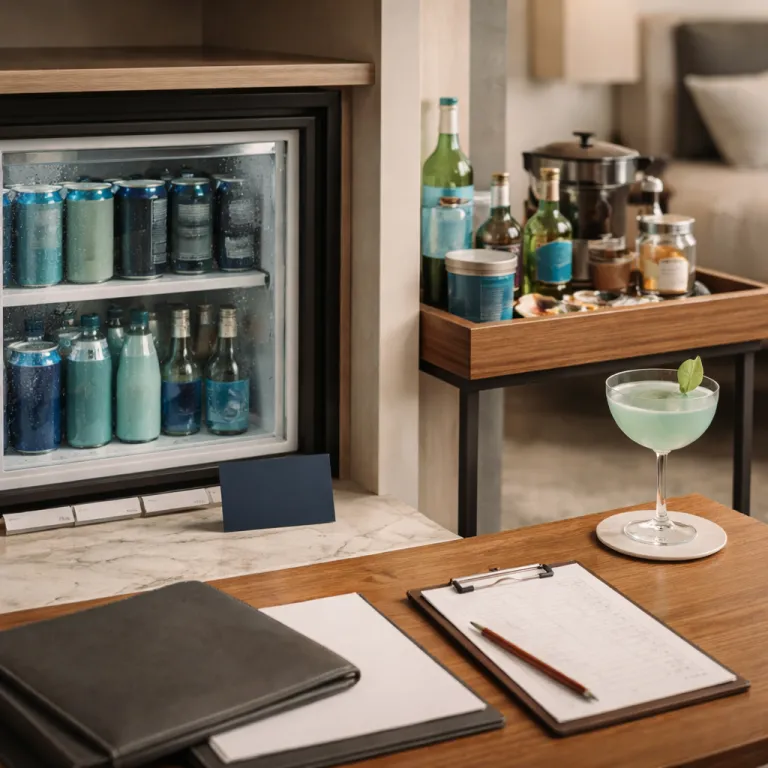
From cost center to profit engine: redefining hotel minibar strategy
Hotel leaders know the traditional minibar has become a stranded asset. When hotel management reviews bar items and minibar items today, the conversation quickly shifts from shrinkage and stock levels to whether ready to drink cocktails can finally turn the hotel minibar into a disciplined revenue line. The prepared cocktails to go segment already exceeds hundreds of millions of dollars globally, and that scale gives hotels the purchasing power to treat every mini bar as a serious retail shelf rather than a nostalgic amenity.
Across many hotels, the old model of a mini fridge filled with random items hotel teams inherited from legacy contracts is collapsing under its own costs. Industry data shows that traditional minibars are costly and underutilized, and that is exactly why hotels are reevaluating every minibar, every hotel room, and every bar hotel workflow to align with modern guest preferences and tighter F&B margins. When a hotel minibar strategy is rebuilt around curated RTD products, clear pricing, and smart inventory management, the same hotel rooms that once leaked profit can begin to support both bar revenue and overall hotel revenue.
Guests have also changed, and their expectations for any minibar experience are now shaped by retail and delivery apps. Many hotel guests arrive with a strong sense of what a premium mini cocktail should cost, and they compare minibar pricing against lobby bars, nearby bars, and even airport grab and go outlets. For a hotel, that means every hotel mini decision — from which minibar items to include to how room service and bars cross sell them — must be grounded in transparent pricing, strong guest satisfaction metrics, and a clear view of how RTDs extend the guest experience beyond the bar counter.
Four RTD channels that reshape minibar economics and hotel revenue
A serious hotel minibar strategy for RTDs starts by mapping four distinct channels. The first is the classic minibar in each hotel room, where mini cans or small bottles sit alongside other bar items and snacks, and where smart sensors and automated inventory management can finally control stock levels and shrinkage. The second is pool and beach service, where RTD cocktails move fast, support higher pricing than beer, and allow bars to serve more guests with a leaner équipe and lower labor cost per drink.
The third channel is the in room tablet or mobile app, which turns every hotel room into a digital bar hotel touchpoint. Here, hotels offer RTD products as part of room service, upselling a chilled mini bar cocktail with a late night burger, or bundling minibar items with premium snacks to enhance guest value perception and guest satisfaction. The fourth channel is retail grab and go, where hotels position RTD mini bars in the lobby or near reception, using clear merchandising and data driven strategies similar to those used for kitchen IoT and predictive prep programs that cut waste by up to thirty percent, as explored in this analysis on kitchen IoT and predictive prep.
Across these four channels, the same RTD products can serve very different guest preferences and price elasticities. In high end hotels, a hotel minibar might feature local craft RTDs at a premium, while pool bars lean on more approachable brands to keep volume high and hotel revenue steady. What matters is that hotels design coherent strategies so that minibar items, lobby bars, and room service menus feel like one integrated hospitality ecosystem rather than disconnected items hotel teams happen to stock wherever space allows.
Pour cost, pricing, and margin: RTDs versus classic bar cocktails
For a Revenue and Commercial Director, the real question is not whether RTDs belong in a minibar, but how their pour cost and pricing compare to a classic bar cocktail. A typical bar hotel cocktail might run a thirty percent beverage cost once you include spirits, fresh juice, garnish, and ice, before you even factor in labor and bar equipment depreciation. By contrast, a hotel minibar RTD with negotiated volume pricing can often land at a twenty to twenty five percent cost of goods, with almost no incremental labor and a predictable shelf life that simplifies inventory management.
That margin gap becomes powerful when multiplied across hundreds of hotel rooms and multiple bars. If hotels offer a signature RTD in every minibar, on every pool bar menu, and through room service, they can smooth demand across the day and reduce the peaks that strain bar équipes during pre dinner rush. RTDs will never replace the theatre of a lobby bar, but they can protect bar revenue by capturing occasions the bar cannot serve, such as late night cravings in a quiet room or a quick pre meeting drink when the guest experience must be frictionless.
There is a risk of cannibalization if minibar pricing undercuts the main bars too aggressively. The smarter hotel minibar strategy positions RTDs as a premium convenience, priced slightly above the bar for the same products, while using half sized formats and tasting flights to differentiate the bar offer, as detailed in this piece on raising average bar spend with tasting formats. In practice, that means hotel guests see the minibar as an extension of the bar, not a cheaper substitute, and hotel revenue benefits from both incremental in room consumption and higher average checks downstairs.
Designing RTD assortments that enhance guest experience and stay on brand
RTDs only work as a minibar engine if the assortment feels curated, local, and aligned with the hotel brand. Many hotels now replace generic items with local products, using minibar items to tell a story about the destination and to enhance guest connection with the neighborhood. That might mean a mini can of a local spritz in a Rome hotel room, or a collaboration with a nearby distillery for a signature hotel mini Negroni that appears in both minibars and lobby bars.
Storytelling matters as much as SKU selection, because guests read the minibar as a signal of how seriously the property takes hospitality. Clear menu cards in hotel rooms can explain why certain products were chosen, highlight local artisans, and suggest pairings with room service dishes or snacks, much like a strategic signature dish such as pasta pescatore can anchor an entire F&B narrative, as analysed in this article on strategic signature dishes for hotel F&B programs. When hotels include QR codes that link to short stories or videos about the RTD producers, guest preferences often shift toward those highlighted items, lifting both minibar revenue and perceived value.
Design also extends to packaging and placement inside mini bars and hotel rooms. Smaller mini formats can encourage trial without intimidating pricing, while premium RTDs deserve eye level placement in the minibar and cross promotion on in room tablets and bar menus. The aim is to enhance guest satisfaction by making the choice feel easy and justified, so that hotel guests see the minibar not as a trap but as a curated bar in miniature, consistent with the rest of the property’s F&B strategies and its promise of thoughtful hospitality.
Data, billing flows, and operational discipline behind profitable minibars
Behind every successful hotel minibar strategy sits a layer of data, technology, and operational discipline. Smart minibars with sensors, mobile apps for ordering, and data analytics for preferences allow hotel management to track which minibar items move in which hotel rooms, at what times, and to which guest segments. That same data can inform bar hotel purchasing, forecast room service demand, and refine pricing strategies across all bars and mini bars on property.
Billing flows and compliance cannot be an afterthought when RTDs become a material revenue stream. Hotels must configure POS systems so that minibar consumption, bar items, and room service RTDs post correctly to the guest folio, with tax handling aligned to local regulation and clear audit trails for every hotel room. When asked why hotels are removing traditional minibars, one industry summary states plainly : "Due to high costs and low usage rates." and the same source explains the shift by noting : "By offering personalized and convenient options." — both comments underline that only a data led, guest centric minibar model will survive.
Operationally, the goal is to keep stock levels tight without running out of key products during peak periods. Automated inventory management tools can trigger replenishment when items hotel teams rely on fall below thresholds, while dashboards highlight outlier hotel rooms where minibar revenue or consumption patterns deviate from norms. When hotels offer curated RTDs, local snacks, and flexible room service bundles through a single integrated system, they enhance guest trust, protect margins, and turn once neglected minibars into a visible proof point that F&B strategy, finance, and hospitality can work in lockstep.
FAQ
Why are many hotels changing their minibar concept instead of removing it entirely ?
Many hotels are shifting from traditional minibars to curated RTD and local product assortments because the old model generated high costs and low usage, while a data driven minibar can increase revenue and guest satisfaction. By focusing on guest preferences, transparent pricing, and better inventory management, a hotel minibar can move from cost center to profit engine. This approach also differentiates the hotel from competitors that offer only basic room amenities.
How can RTD cocktails in minibars avoid cannibalizing bar revenue ?
RTD cocktails avoid cannibalizing bar revenue when they are positioned as a premium convenience rather than a cheaper alternative to the lobby bar. Hotels typically price minibar RTDs slightly above bar cocktails, while keeping exclusive signatures, half sized cocktails, and tasting flights as bar only experiences. In this model, minibars capture occasions the bar cannot serve, such as late night in room consumption, extending total hotel revenue.
What role does technology play in a modern hotel minibar strategy ?
Technology underpins modern minibar operations through smart sensors, mobile ordering, and analytics that track minibar items by room, time, and guest profile. These tools improve inventory management, reduce shrinkage, and support dynamic pricing strategies across minibars, bars, and room service. They also simplify billing flows, ensuring accurate posting of minibar charges to guest folios and compliance with local tax rules.
How should hotels decide which RTD products to stock in minibars ?
Hotels should select RTD products based on guest data, local relevance, and brand alignment, rather than on distributor push alone. A balanced assortment usually includes a few classic cocktails, at least one local or regional collaboration, and a non alcoholic option, all in mini formats suited to in room consumption. Regular performance reviews help refine the mix so that underperforming SKUs are replaced quickly and high margin favorites receive better placement.
Can smaller independent hotels benefit from RTD minibars as much as large groups ?
Independent hotels can benefit significantly from RTD minibars because they can move faster on local partnerships and storytelling. While they may not have the same purchasing power as large groups, they can differentiate through unique local products and more flexible pricing strategies. With disciplined stock levels and simple technology, even a small property can turn its minibars into a meaningful revenue contributor.