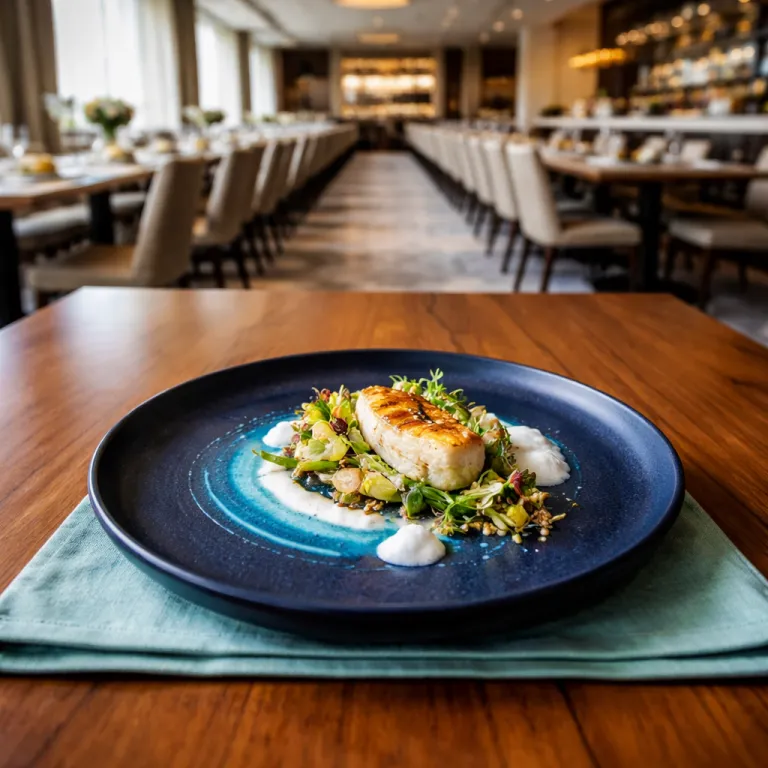
The thesis shift: when the kitchen rewrites the hotel business model
For a growing number of hotels, food and beverage management is no longer a box-ticking exercise for brand standards. When Hospitality Net reports that around 60% of luxury travelers prioritize staying at hotels with great restaurants (Hospitality Net, “Luxury Travelers and Dining Preferences,” 2023), the culinary strategy starts to define the property thesis rather than decorate it. That shift forces every directeur F&B and general manager to treat the department as a primary creator of hotel revenue, not just a guest service cost.
Across the hospitality industry, owners used to accept that food and beverage outlets existed mainly to protect room rates and basic customer service scores. Now, with average F&B revenue contribution to a hotel sitting around 25% of total revenue (CFO Plans, “Hotel Departmental Revenue Mix,” 2022), the question is how much more revenue management discipline you are willing to apply to restaurant and bar operations without damaging the guest experience. The hotels that win are those where the Food and Beverage Manager truly oversees daily operations, manages staff, budgets, and service quality, and where hotel dining is embedded in the overall management narrative presented to investors.
Look at any urban property where the restaurant has a street entrance and a bar concept that attracts local guests as much as in-house guests. In those hotels, hotel food is not a captive amenity but a standalone brand that supports higher average daily rate and stronger positioning in the hotel industry value chain. In that context, food and beverage performance becomes a lever for asset valuation, not just a line in the operations report.
Owners and asset managers now expect F&B leaders to speak the same language as finance and development. That means understanding how beverage operations, room service and banqueting combine to support hotel revenue targets across seasons and segments. It also means being able to explain why a breakfast overhaul or a new beverage concept can move Booking or Google ratings enough to justify capex and higher labor costs.
One critical mindset change is to stop treating food waste, labor and food cost as isolated problems and start seeing them as design variables in the concept. When you build menus, service flows and inventory management rules around a clear positioning, you can reduce waste and protect margin without compromising hospitality. The hotel industry leaders who do this well are the ones who see every plate and every drink as a strategic asset, not just a product.
The dataset on hotel F&B management is clear about the operational backbone required for this shift. It highlights that the supervision of a hotel’s food and beverage services has three core objectives: ensure guest satisfaction, maintain profitability and uphold quality standards. It also underlines that key responsibilities of a hotel F&B manager include overseeing operations, managing staff, budgeting, and ensuring quality service.
Technology is no longer optional in this equation, because it underpins both guest experience and cost control. The same dataset notes that technology impacts hotel F&B management by enhancing efficiency through POS systems, inventory management and customer feedback tools, which directly support better decisions on menu engineering and service design. Trends such as sustainable sourcing, health-conscious menus and technology integration are not marketing slogans but structural shifts that reshape how hotel restaurants and bars allocate capital and talent.
For general managers, the implication is simple but uncomfortable. If you still frame your food and beverage department as a service amenity that must not lose too much money, you are leaving both revenue and brand equity on the table. If you reframe hotel F&B management as a core business, you must be ready to measure it, challenge it and invest in it with the same rigor you apply to rooms.
Showing the math: how to present F&B P&L to owners who care about margin
Asset managers do not fall in love with concepts; they fall in love with numbers that hold up under pressure. To keep F&B at the strategy table, hotel food and beverage management needs a P&L story that links restaurant and bar revenue to total asset performance, not just departmental profit. That means translating guest experience, dining experiences and customer service into measurable impacts on hotel revenue and valuation.
Start by segmenting your operations into clear revenue streams: breakfast, all-day dining, bar and beverage services, banqueting, meetings and events, and room service. For each stream, show revenue per available seat hour, contribution margin after food cost and beverage cost, and the impact on overall hotel revenue per available room. When you can demonstrate that a reworked breakfast concept lifted review scores and allowed a 5% room rate increase, the owner stops seeing the restaurant as a cost center.
Use concrete examples rather than abstract benchmarks. A city-center property that shifted from a generic buffet to a local market breakfast, cut food waste by 18% through better inventory management and menu engineering, and then saw external guests represent 30% of covers has a story that resonates with investors. In that case, the hotel F&B department did not just improve its own margin; it repositioned the property in the local hospitality industry ecosystem.
To make this tangible, build a simple before/after P&L view for one outlet and connect it to room performance:
| Breakfast outlet P&L (monthly) | Before concept change | After concept change |
|---|---|---|
| Total covers | 6,000 | 7,800 |
| External guest share | 5% | 30% |
| Average check | $18 | $22 |
| Food cost % | 34% | 30% |
| Food waste (kg) | 1,000 | 820 |
| Outlet profit margin | 22% | 29% |
In a real case from a 220-room city hotel, a similar breakfast repositioning contributed to a 4% uplift in ADR and a 3.5% increase in RevPAR over twelve months, as higher guest satisfaction scores supported firmer pricing. Linking outlet-level profitability to key hotel KPIs such as ADR, RevPAR and GOPPAR makes the P&L argument unambiguous for owners.
Data discipline is essential, but so is narrative clarity. When you present your P&L, connect the dots between food and beverage initiatives, guest satisfaction metrics, social media sentiment and repeat guest behavior. Owners understand that a strong guest experience in the restaurant and bar reduces acquisition costs by improving direct bookings and loyalty program performance.
One underused lever is to quantify the halo effect of a strong restaurant brand on the hotel. Distinctive dining experiences and beverage operations can justify higher meeting room rates, better group business and partnerships with luxury travel consortia. When you show that your property’s restaurant is driving local press, influencer coverage and social media engagement, you are proving that F&B is a marketing engine as well as a revenue center.
Benchmarking against external case studies helps frame your argument. Analyses of multiconcept restaurant portfolios in hospitality, such as those explored in this piece on menu strategies for elevating multiconcept restaurant portfolios, show how thoughtful menu architecture and concept differentiation can lift both seat utilization and average check. Translating those lessons into your own hotel food and beverage services gives owners confidence that your strategy is grounded in proven industry practice.
Do not ignore the cost side of the equation, because that is where skeptical owners will focus. Break down labor costs, food cost, beverage cost and overheads by outlet, and show how technology, training and process redesign are reducing waste and improving productivity. When you can demonstrate that a new POS and inventory management system cut food waste by 10% and improved stock turns, you are speaking the language of asset protection.
Finally, be honest about risk and time horizons. Some concepts will take longer to reach target revenue, and some beverage services or room service innovations may fail despite solid planning. Owners respect F&B leaders who acknowledge uncertainty, build contingency plans and commit to clear review timelines rather than promising instant success.
From cost center to profit engine: concept, talent and partnerships that move the needle
Once the thesis and the math are clear, the real work of hotel food and beverage management starts in the concept kitchen. The difference between a restaurant that quietly supports guest satisfaction and one that drives hotel revenue lies in how you align food, beverage and service design with your market and your property’s positioning. That alignment requires hard choices about menu focus, talent level, brand partnerships and capex priorities.
Concept discipline is the first filter. A 200-room airport hotel does not need a tasting menu temple; it needs a high-throughput, high-comfort concept that turns transient guests into repeat guests and attracts local office workers at lunch. Conversely, a flagship urban property in a culinary destination can justify a chef-driven restaurant that becomes a city reference and pulls in external guests who might never otherwise enter the hotel.
Look at how some regional hotels have used specific cuisines to reset their F&B narrative. Analyses of how Chinese food in secondary American cities has reshaped hotel and restaurant strategy, such as the case work on Chinese food in Lafayette and its impact on hotel and restaurant F&B strategy, show how a focused food and beverage concept can attract local communities and travelers simultaneously. The lesson for any property is clear: choose a concept that speaks to both the neighborhood and your target guest, then build beverage operations and service rituals that reinforce that story.
Talent is the second non-negotiable pillar. A strong Food and Beverage Manager who oversees operations, manages staff, budgets and service quality is the operational anchor, but you also need a chef and bar leader whose vision aligns with the business model. In many hotels, the missing link is a bar program that treats beverage services as a profit center with its own identity, rather than an afterthought to the restaurant.
Low and no alcohol programs are a good example of where concept and margin intersect. Case studies on profitable no and low alcohol bar programs, such as those detailed in this analysis of pricing, pour cost and positioning for no and low alcohol bars, demonstrate that thoughtful pricing and pour cost management can make these offerings accretive rather than dilutive. For hotel F&B leaders, integrating such programs into lobby bars and pool bars can increase average check while improving guest experience for wellness-focused travelers.
Partnerships with local brands and producers can also transform the perception of hotel food and beverage. When you feature local roasters, brewers, distillers and artisans, you turn your property into a platform for the community rather than an isolated hospitality box. That local integration supports both social media storytelling and genuine guest engagement, which in turn drives repeat visits and positive reviews.
Capex decisions must follow the concept, not the other way around. Investing in an open kitchen, a chef’s counter or a flexible event space only makes sense if your F&B department has a clear plan to monetize those assets through specific dining experiences and beverage services. Too many hotels spend heavily on design and then underinvest in training, menu development and marketing, which leaves beautiful spaces underperforming on revenue.
Finally, do not underestimate the role of systems and processes in turning a strong concept into a reliable profit engine. Inventory management, prep lists, station design and service choreography all influence food cost, labor productivity and guest experience. The hospitality industry leaders who consistently outperform peers are those who treat these operational details as strategic levers, not as back-of-house housekeeping.
When F&B should remain a service amenity, and what that choice costs
Not every property should turn its restaurant into a destination or its bar into a cocktail laboratory. In some segments of the hotel industry, especially limited service and certain resort models, hotel food and beverage management is rightly focused on reliability, safety and basic guest satisfaction. In those cases, food and beverage services function as a support system for the core lodging product rather than a standalone business.
For a highway hotel or a budget airport property, the priority is often to provide consistent breakfast, simple evening options and efficient room service or grab-and-go offerings. Here, the F&B department is optimized for low costs, minimal food waste and streamlined operations, with inventory management and standardized menus playing a central role. The guest experience is about predictability and speed more than about memorable dining experiences or elaborate beverage services.
Choosing this amenity-first model has clear trade-offs. You accept that hotel food will rarely attract local guests, that social media buzz will be limited and that your property will not leverage F&B to justify higher room rates or to qualify for high-end travel programs. In exchange, you gain simplicity in management, lower capex requirements and a clearer focus on rooms-driven revenue management.
Even in these models, though, discipline matters. A well-run limited service F&B operation still needs a competent Food and Beverage Manager or supervisor who oversees operations, manages staff, budgets and service quality at the appropriate scale. Technology such as POS systems, basic inventory management tools and structured customer feedback loops can still reduce waste and protect thin margins.
The key is to be explicit with owners and teams about the chosen strategy. If F&B is an amenity, set realistic revenue and profit targets, and design menus, service flows and staffing models accordingly. Do not pretend that a low-investment breakfast room will suddenly become a neighborhood hotspot without marketing, concept work and serious upgrades to both food and beverage operations.
For general managers, the hardest part is often resisting the temptation to sit in the middle. A half-hearted attempt at a destination restaurant, without the necessary talent, capex and marketing, usually delivers the worst of both worlds: high costs, inconsistent customer service and mediocre guest experience. Clarity about whether your property is playing the amenity game or the profit engine game in F&B is therefore a core management responsibility.
Over time, portfolio-level thinking becomes essential. A hotel group might decide that certain flagship hotels will run ambitious F&B concepts that drive brand halo and media attention, while others will focus on efficient, standardized food and beverage offerings that support loyalty members on the road. Suppliers, investors and local partners will respond better when they see that each property’s F&B strategy is intentional, data-informed and aligned with its market position.
Key figures shaping hotel F&B strategy
- Average F&B revenue contribution to a hotel is around 25% of total revenue, according to industry reports such as CFO Plans’ “Hotel Departmental Revenue Mix” (2022), which means food and beverage is now too large a share of the P&L to be treated as a secondary service.
- Luxury traveler surveys reported by Hospitality Net (“Luxury Travelers and Dining Preferences,” 2023) indicate that 60% of high-end guests prioritize staying at hotels with great restaurants, directly linking food and beverage quality to room demand and rate potential.
- Analysis from CFO Plans (“Hotel Food & Beverage Profitability Benchmarks,” 2022, Table 3) shows that hotel F&B profit margins recently sat at 27.5%, slightly down from the previous period’s 28.3%, a change that reflects tighter cost control and mix optimization rather than structural decline when concepts are well aligned.
- Research from JLL (“Global Hotel Investment Outlook,” 2023, Section 4.2) highlights that distinctive hotel restaurants and bars can support higher room rates and help properties qualify for programs such as MICHELIN, Virtuoso and Forbes Travel Guide, reinforcing the strategic value of strong F&B operations.
- Operational studies in the hospitality industry consistently show that implementing modern POS systems, inventory software and structured customer feedback tools in F&B departments can reduce food waste by 10 to 20%, while improving labor productivity and guest satisfaction scores.