Room service innovation as a strategic F&B channel, not a legacy cost center
Room service innovation is no longer about saving a dying amenity; it is about reframing the hotel room as a high-margin, data-rich F&B outlet. For Directeurs F&B and hotel owners, the operators winning today treat in-room dining as a distinct restaurant concept with its own P&L, its own management systems and its own guest experience design, not as a side task for the front desk or the night équipe. In the current hospitality landscape, where hotels offer multiple outlets and food delivery apps compete for the same guest, the properties that integrate technology, chef curation and disciplined order management are quietly lifting RevPOR and overall revenue.
The hospitality industry has already seen that digital menus on in-room tablets can increase the average in-room dining check by as much as 20 %, and that is before layering in upsell prompts, real time availability and targeted offers based on guest data. When you treat the hotel room as a private dining room, you can architect menus by daypart, align production with kitchen capacity and use property management integrations to time the ordering process around arrivals, late check-outs and spa bookings. The result is a room service operation that behaves like a well-run restaurant, with clear KPIs on guest satisfaction, attach rate and food cost, instead of a reactive service that sends trays whenever a phone rings.
Technology is the enabler, not the story, and the most effective hotels use a stack rather than a single shiny tool; tablets or TV entertainment systems host the digital menu, QR codes and mobile ordering capture incremental demand, and robotics or streamlined human delivery handle the last ten metres from lift to door. Platforms such as CAMO, Breeze Technologies and HCN’s DineIN show how hotels can extend menus beyond the main kitchen, integrate local restaurant partners and still keep control of the guest experience and the point of sale. For F&B leaders, the strategic question is no longer whether to keep room service, but how to redesign room service systems so that every order, from a single club sandwich to a chef-curated patio dinner, contributes visibly to profitability and brand positioning.
The three layers of modern room service: merchandising, delivery and chef curation
The most advanced hotels treat room service innovation as a three-layer stack: merchandising on screens, delivery logistics in corridors and chef-driven food on the tray. At the merchandising layer, digital menus on tablets, TVs or mobile apps replace static paper menus and allow real time menu engineering, from dynamic pricing on late-night snacks to geo-targeted offers for specific floors or suites. Breeze Technologies has shown how a QR-code based digital menu can simplify the ordering process for the guest while giving management access to granular données on what sells, at what time and in which type of hotel room.
At the delivery layer, robots and streamlined runners are not about theatre; they are about predictable service times and labour efficiency that protect margin on every order. Canary Technologies and other vendors highlight how robotic delivery systems can handle contact-free delivery and even corridor cleaning in parallel, but the real value for hotel owners lies in integrating these systems with property management and F&B management systems so that each room, each lift bank and each service elevator is optimised. When the front desk, kitchen and housekeeping see the same real time order data, they can coordinate tray pick-up, linen drops and minibar checks in a single corridor pass, which quietly reduces cost per delivery.
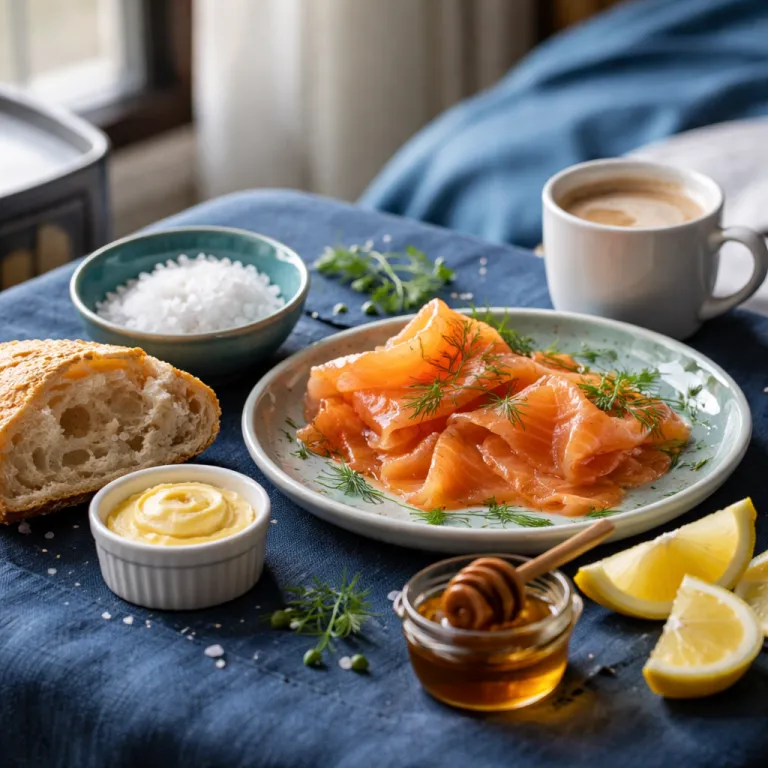
The third layer is chef curation, and this is where many hotels either win or lose the guest; a beautifully merchandised menu and slick technology mean nothing if the food arrives lukewarm or visually tired. Elevated in-room offerings, from picnic-style baskets to plated tasting menus on private terraces, are reframing room service as an experiential channel that competes with the lobby bar or rooftop restaurant for spend. For F&B directors who already work on profitable beverage programs and bar concepts, such as those analysed in this no and low alcohol bar profitability playbook, the same discipline applies: define the concept, engineer the menu, then align production and delivery systems so that every tray feels intentional, not improvised.
When robots earn their capex and when they stay a vanity project
Robotic delivery has become the poster child of room service innovation, but not every property should rush to sign a lease. Robots earn their capex in hotels where corridor distances are long, lift banks are complex and order volumes justify a predictable, repeatable delivery pattern that human runners struggle to maintain. In compact urban hotels with short distances between kitchen and room, a well-trained équipe with handhelds and clear routing can often beat a robot on both speed and cost per delivery.
The key is to model the full ordering process, from digital menu interaction to tray retrieval, and then test where automation actually removes friction for both guest and staff. In a resort with multiple towers, for example, a robot integrated with the property management system and the room service management systems can batch orders by floor, coordinate with entertainment systems to send a “your food is outside” notification and free up the front desk from constant status calls. In a small boutique hotel, the same robot might become a slow-moving novelty that blocks corridors, confuses guests and adds little to guest satisfaction scores.
F&B and tech leaders should borrow from cruise line bar programs, which have long used automation and routing logic to maximise revenue per square metre, as analysed in this cruise F&B benchmarking report. The same logic applies on land: map your hotel, quantify your average orders per occupied room, then decide whether robots, runners or a hybrid model best support your hospitality strategy. A simple ROI model helps: if a midscale resort currently runs three overnight runners at a fully loaded cost of 25 € per hour each and handles 45 orders per night, replacing one runner with a leased robot at 2 000 € per month that can reliably deliver 15–20 of those orders can reduce labour spend by roughly 1 500–2 000 € per month, allowing the robot to cover its capex or lease within 12–18 months while keeping service times consistent.
Packaging, plating and eco friendly logistics that make chef-curated trays feasible
Most conversations about room service innovation fixate on apps and robots, yet the tray itself is where the guest decides whether to order again. Packaging and plating must protect temperature, texture and aroma across the journey from kitchen pass to hotel room, while still aligning with eco friendly commitments that hotel owners have made publicly. Sabert’s 2023 “Hotel In-Room Dining Performance Snapshot” (survey of 120 European and North American properties) reports that around 60 % of hotels adopting tech-based room service models see a measurable uplift in in-room dining performance, and that is closely linked to packaging and menu presentation that match the digital promise.
For chef-curated menus, the logistics are even more demanding; a medium-rare steak, a delicate sauce or a composed salad must survive a ten-minute ride in a lift without arriving as a lukewarm compromise. This is where collaboration between the culinary équipe, the F&B management and the tech or innovation lead becomes critical, because menu engineering, packaging selection and delivery routing are one integrated system, not three separate decisions. Hotels that treat packaging as an afterthought often see guest satisfaction scores dip specifically on “food arrival quality”, even when the underlying recipes and ingredients are strong.
There is also a sustainability and brand story to manage, as guests increasingly expect eco friendly materials without sacrificing performance or aesthetics. Compostable containers, reusable cloches and modular tray layouts can all support that narrative, but they must be tested in real time with actual delivery runs, not just in a meeting room. For operators who have already rethought their restaurant concepts to attract local diners, as explored in this analysis of turning the hotel restaurant into a neighbourhood magnet, the same design discipline should now be applied to in-room dining trays, because the room is simply another seat in your overall F&B network.
Menu architecture by daypart and the power of data-driven merchandising
Room service innovation lives or dies on menu architecture, and the most profitable hotels now treat in-room menus as living merchandising tools rather than static PDFs. Breakfast, late lunch, pre-theatre snacks and private patio dinners each deserve their own tailored menu logic, with different price points, portion sizes and prep times aligned to kitchen capacity. Digital menus and TV-based entertainment systems allow you to surface different items by hour, by segment and even by room type, turning the hotel room into a personalised storefront that reflects both guest data and operational reality.
For breakfast, the goal is often to increase attach rate on beverages and sides while protecting buffet capacity, so a digital menu might highlight barista coffee, fresh juices and premium pastries for in-room delivery to suites and high-value guests. Late lunch and all-day grazing menus can focus on dishes that travel well and support labour efficiency, using data from the property management system and the point of sale to identify which items generate the best margin per minute of production. Evening and patio menus, by contrast, can lean into chef-curated experiences, pairing food with beverage programs and using voice commands or in-room tablets to simplify ordering for guests who are already settled in.
Platforms such as CAMO and HCN’s DineIN illustrate how hotels can extend their menus beyond the main kitchen by integrating local restaurant partners while still controlling the guest experience and the ordering process. CAMO’s 2022 “Virtual Brands in Hospitality” briefing (sample of 80 partner hotels) describes “a tech-enabled service offering virtual restaurant brands to hotels”, while Hotel Communication Network’s 2021 DineIN impact note (covering 60 North American properties) presents “a tablet-based system allowing guests to order from local restaurants.” These models show how virtual brands and local partnerships can coexist within a single room service interface without confusing the guest. When F&B and tech leaders use these systems to test different menu layouts, price anchors and cross-sells in real time, they turn in-room dining into a continuous merchandising experiment that quietly lifts revenue per occupied room.
The KPIs that matter: from attach rate to guest satisfaction on arrival quality
For all the noise around apps and robots, room service innovation only earns its place in the budget when it moves hard numbers. The first KPI is in-room dining attach rate, measured as the percentage of occupied rooms that place at least one food or beverage order during their stay. When digital menus, clear ordering systems and well-designed menus are in place, many hotels see attach rates climb by several points, which translates directly into incremental revenue without adding new seats or outlets.
RevPOR, or revenue per occupied room, is the second critical metric, because it captures the combined impact of room rate, F&B spend and ancillary services such as entertainment systems or spa. A hotel that uses property management integrations, digital menu prompts and targeted offers can nudge guests toward higher-margin items, late check-out packages with breakfast in the room and bundled experiences that include both food and entertainment. Guest satisfaction on “food arrival quality” and “ease of ordering” then becomes the qualitative counterweight, ensuring that the push for revenue does not erode trust in the hospitality promise.
To track these KPIs properly, F&B and tech leaders must ensure that room service orders flow cleanly through the point of sale, the property management system and any third-party delivery or virtual brand platforms. “Guests scan a QR code to access and order from digital menus.” is not just a user-experience detail; it is a data capture moment that allows management to analyse ordering patterns by segment, by time and by channel. When attach rate, RevPOR and guest satisfaction scores are reviewed together in weekly F&B meetings, room service stops being a legacy line on the P&L and becomes a managed, optimised channel that reflects the best of the hospitality industry’s creativity and operational discipline.
Key figures on room service innovation
- According to Sabert’s 2023 “Hotel In-Room Dining Performance Snapshot” (120 hotels across Europe and North America), around 60 % of hotels adopting tech-based room service models report a measurable uplift in in-room dining performance, showing that digital menus and streamlined ordering systems are now mainstream rather than experimental.
- The same Sabert report notes that some properties have seen up to a 30 % increase in in-room dining orders after modernising packaging and menu presentation, which underlines how tray design and food arrival quality directly influence guest satisfaction and repeat ordering.
- Hotel Communication Network reports in its 2021 DineIN impact summary (sample of 60 properties) that tablet-based in-room programs such as DineIN can lift average check value by up to 20 %, as guests respond to visual merchandising, real time specials and frictionless ordering from the comfort of their hotel room.
- Vendors such as Canary Technologies, in their 2022 “Automation in Hotel Operations” briefing (covering 50 pilot sites), highlight that robotic delivery systems are increasingly used not only for room service but also for corridor cleaning and amenity drops, which helps justify capex by spreading utilisation across multiple operational tasks.
FAQ: room service innovation for hospitality leaders
How does a QR-code based digital menu improve room service performance ?
A QR-code based digital menu allows the guest to access the full room service offer instantly from their own device, without waiting for a paper menu or a phone line. Because “Guests scan a QR code to access and order from digital menus.”, hotels capture structured data on every interaction, from items viewed to orders placed, which supports menu engineering and targeted promotions. This approach also reduces printing costs, enables real time updates on availability and integrates easily with point of sale and property management systems.
What is CAMO’s room service platform and how does it fit a hotel strategy ?
CAMO operates a tech-enabled room service platform that brings virtual restaurant brands into hotels without requiring a full new kitchen build. “What is CAMO's room service platform?” and “A tech-enabled service offering virtual restaurant brands to hotels.” describe a model where the hotel can expand its food delivery and in-room dining options while keeping control of the guest relationship and the billing. For F&B directors, this can be a way to test new concepts, extend menus by daypart and increase revenue per occupied room with limited capex.
How does HCN’s DineIN program change the guest experience ?
HCN’s DineIN program uses in-room tablets to present a curated selection of menus from both the hotel kitchen and local partner restaurants. “What is HCN's DineIN program?” and “A tablet-based system allowing guests to order from local restaurants.” show how the guest can enjoy a broader range of food without leaving the room, while the hotel still orchestrates the ordering process and the service standards. This model strengthens the hotel’s positioning as a hospitality hub and can increase guest satisfaction by offering more choice and clearer delivery times.
When should a hotel invest in robotic room service delivery ?
Robotic delivery makes the most sense in properties with long corridors, multiple towers or high order volumes where human runners struggle to maintain consistent service times. In such hotels, robots integrated with property management and F&B management systems can batch orders, optimise routes and reduce labour cost per delivery. Smaller boutique hotels with compact layouts may achieve better ROI by focusing on well-trained staff, handheld ordering and efficient tray logistics instead of robots.
Which KPIs should F&B leaders track to evaluate room service innovation ?
The core KPIs are in-room dining attach rate, average check value, RevPOR and guest satisfaction on food arrival quality and ease of ordering. Leaders should also monitor delivery times from order to door, tray retrieval times and the percentage of orders placed through digital menus versus phone. When these metrics are tracked consistently and linked to specific initiatives, such as new packaging or a revised digital menu layout, room service becomes a controllable, optimisable revenue channel rather than a fixed cost.