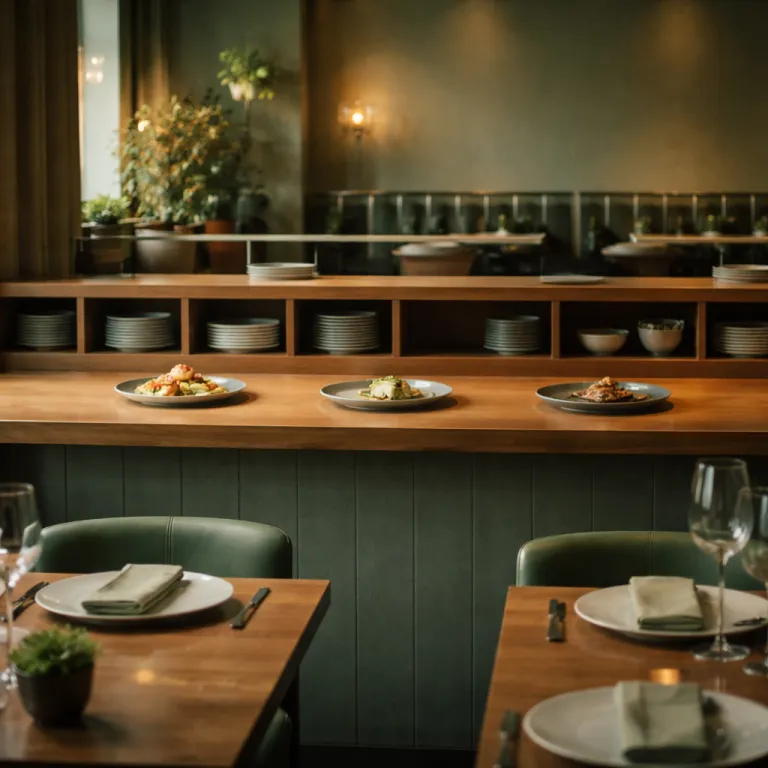
Why a smaller menu is the most powerful FB cost control lever in hotel operations
In every FB cost control hotel discussion, the quiet hero is often a smaller menu. When hotel management and the finance department model the full cost of each menu item across procurement, prep, waste and labor, the numbers usually show that fewer items generate more reliable revenue and profit. A trimmed food and beverage offer gives your équipe a sharper focus on food quality, guest satisfaction and consistent service.
Hotel F&B operates on a heavy cost base, with industry analyses from sources such as STR, HotStats and HFTP benchmarking studies indicating that F&B often runs at roughly a 70 to 80 percent cost structure while rooms sit closer to 20 to 30 percent, so every point of food cost and beverage cost saved matters. For example, a 2023 HotStats sample of full service hotels in Western Europe reported average F&B departmental profit margins of 22 to 28 percent versus 70 percent plus for rooms, underlining how sensitive restaurant operations are to cost drift. When you cut the restaurant food range by 25 to 30 percent, you reduce f&b costs on ingredients, simplify control of inventory, and free staff to execute the remaining dishes with better technique and tighter portion sizes.
For a GM or Directeur F&B, the key is to stop treating menu size as a marketing decision and start treating it as a cost sales equation. Each menu item carries direct food costs, indirect labor costs and an opportunity cost in kitchen complexity, which all influence hotel operations and the ability to maintain high service standards. When the procurement team and local suppliers align on a leaner list of food beverage SKUs, the hotel gains a structural competitive advantage that compounds month after month in lower monthly food waste and more predictable f&b cost ratios.
The math of menu shrink in FB cost control hotel strategies
Once you frame FB cost control hotel decisions in hard numbers, menu reduction becomes less about taste and more about contribution margin. Industry benchmarks put target food cost between 28 and 35 percent of food sales depending on service level, while healthy flow through means that each additional euro of revenue should generate 0.60 to 0.80 euro of profit. In that context, a menu that is overloaded with low margin items quietly erodes revenue quality even when sales headline figures look strong.
Consider a steak at a selling price of 40 euros with a food cost of 38 percent versus a salad at 12 euros with a food cost of 22 percent, because the steak’s absolute contribution margin is still higher, it can add more cash to hotel operations than the apparently efficient salad. This is why menu engineering must rank dishes not only by popularity but also by contribution margin, prep complexity and impact on f&b costs across the entire restaurant food system. When you remove low contribution menu items that clog the line, you improve cost control, reduce waste and give the brigade time to control food quality on the plates that truly drive guest satisfaction.
A 2022 internal review at a 220 room city hotel in Germany illustrates the impact. Before the project, the main restaurant carried 68 dishes, food cost averaged 36 percent and monthly kitchen waste ran at 5.4 percent of food revenue. After a three month menu engineering exercise that cut the card to 46 items and rebalanced prices, food cost dropped to 32.5 percent, waste fell to 3.1 percent and departmental profit improved by 4.2 percentage points without any decline in guest satisfaction scores. Detailed cost sales analysis also reveals how sales mix can sabotage even a well designed menu if staff push the wrong items, which is why training and incentives must support the new structure.
How fewer SKUs reshape procurement, labor and waste in hotel hospitality
Menu reduction in an FB cost control hotel context is really SKU reduction, and that is where the compounding savings live. When the procurement team cuts overlapping food items and standardizes specifications, supplier negotiations become sharper, storage needs shrink and automated inventory management systems finally work as intended. Budget analysis from Hotel Management Magazine and Hospitality Financial and Technology Professionals shows that average hotel operating cost percentages and labor cost shares leave little room for sloppy control of ingredients.
With fewer SKUs, kitchen staff can batch prep more efficiently, which reduces prep labor per cover and stabilizes portion sizes across services. Cross training the équipe on a tighter set of recipes means that even with leaner staffing levels, execution quality improves and service speed increases, both of which support guest satisfaction and higher perceived value for the selling price. When hotels align scheduling, cross training and menu engineering, they can reduce overtime, cut waste from overproduction and still maintain the level of hospitality that guests expect from full service hotels.
Waste is the hidden enemy of every FB cost control hotel project, and a bloated menu is its best ally. Each rarely ordered menu item generates slow moving stock, higher risk of spoilage and more complex control procedures for the finance department and Hotel Management. By focusing on a core of high velocity restaurant food dishes and a disciplined monthly food review, operators can align costs, sales and service quality in a way that protects both margin and brand reputation.
Technology, AI and real time FB cost control in hotel restaurants
Technology has finally caught up with the complexity of FB cost control hotel operations, and the smartest operators are using it to make menu reduction decisions data driven. AI powered menu engineering tools now analyze contribution margin, ingredient availability, preparation complexity and even guest review sentiment to flag which menu items deserve to stay and which quietly destroy margin. When these systems integrate with financial software and inventory management platforms, they give Hotel Management and the finance department a live view of food cost, beverage cost and overall f&b cost trends.
AI procurement software can also monitor supplier price movements and suggest alternative food beverage products in real time, which is critical when volatile markets threaten carefully planned costs. When a key protein spikes in cost, the system can propose a different cut or a plant forward alternative that keeps the selling price stable while protecting contribution margin and guest satisfaction. This kind of automated cost control aligns perfectly with the industry shift toward adoption of automated cost tracking systems and sustainable practices to reduce costs without compromising hospitality standards.
For GMs and Directeurs F&B, the practical play is to connect these technology tools to daily operations rather than leaving them as back office dashboards. Line chefs and front of house staff should see simple tips on which dishes to push based on current sales mix, stock levels and cost control priorities, so that every service becomes a live optimization exercise. When the équipe receives a concise report after each shift showing food costs, cost sales ratios and waste, they start to internalize FB cost control hotel goals as part of their craft rather than as a finance only obsession.
Designing a leaner menu that still grows revenue and guest satisfaction
Cutting 25 to 30 percent of a menu in an FB cost control hotel project does not mean cutting personality ; it means curating it. The starting point is a hard look at sales data, food cost percentages, prep time and guest feedback to identify which menu items truly define the concept and which are legacy dishes that no longer earn their place. When you align the trimmed menu with a clear positioning, such as a breakfast led strategy or a comfort food anchor like an elevated mac and cheese, you can still attract external covers and grow revenue.
From there, menu engineering becomes the bridge between finance and creativity, using data to set the right selling price, portion sizes and pairing suggestions for each remaining dish. A focused list of restaurant food options also makes it easier for staff to upsell intelligently, steering the sales mix toward high margin plates and beverages that support overall f&b costs targets. When the équipe understands that every recommendation at the table influences both guest satisfaction and the P&L, service becomes a strategic tool rather than a scripted routine.
Operationally, Hotel Management should formalize this approach into a recurring cost control implementation cycle with clear objectives to reduce operational costs, improve profit margins and maintain service quality. The finance department, procurement team and local suppliers can then collaborate on a quarterly report that tracks cost trends, waste, and the impact of menu changes on revenue and guest metrics. As one internal FAQ on cost control methods states, “Budgeting, expense tracking, and supplier negotiations.” and “How can hotels reduce labor costs? Implementing efficient scheduling and cross-training staff.” and “Why is cost control important in hotels? To maintain profitability and competitive pricing.” — don’t forget that these basics, applied rigorously to a leaner menu, are what turn FB cost control hotel theory into sustained competitive advantage.
FAQ
How does menu reduction improve FB cost control in a hotel ?
Menu reduction improves FB cost control in a hotel by cutting low velocity items that create waste, complexity and inconsistent portion sizes. With fewer dishes, procurement can negotiate better prices on a tighter list of ingredients, and kitchen staff can prep more efficiently with less labor per cover. The result is lower food costs, more predictable f&b cost ratios and a cleaner cost sales profile that supports higher flow through to profit.
What role does technology play in hotel F&B cost control ?
Technology supports hotel F&B cost control by providing real time data on food cost, beverage cost, inventory levels and sales mix. AI driven menu engineering and procurement tools can flag supplier price spikes, suggest alternative items and highlight underperforming menu items that should be removed. When integrated with financial software and inventory management systems, these tools give Hotel Management and the finance department a live dashboard to guide daily decisions.
How can hotels reduce labor costs without hurting guest satisfaction ?
Hotels can reduce labor costs without damaging guest satisfaction by simplifying menus, cross training staff and using efficient scheduling based on demand patterns. A leaner menu reduces prep complexity, which allows smaller teams to deliver consistent quality and faster service. When staff are trained across multiple stations and service roles, hotel operations become more flexible and resilient during peak and off peak periods.
Why is cost control especially important for hotel restaurants compared with rooms ?
Cost control is especially important for hotel restaurants because F&B typically operates at a much higher cost base than rooms, leaving thinner margins. Small deviations in food costs, portion sizes or waste can quickly erode profit even when sales appear strong. Tight control of f&b costs, supported by menu engineering and disciplined procurement, is therefore essential to keep the overall hotel P&L healthy.
What are practical first steps to launch an FB cost control project in a hotel ?
Practical first steps include conducting a budget analysis of current F&B performance, implementing detailed expense tracking and reviewing supplier contracts for negotiation opportunities. Hotel Management should form a cross functional équipe with the finance department and procurement team to map the full cost of each menu item and identify candidates for removal. From there, setting clear KPIs for food cost percentage, waste and labor productivity will guide the ongoing cost control implementation and ensure that service quality and guest satisfaction remain protected.