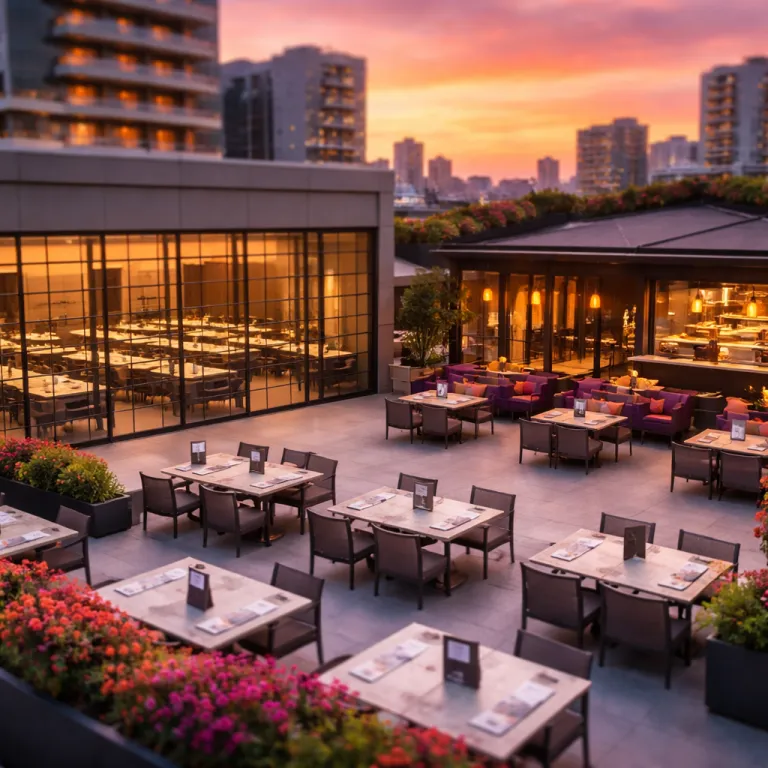
The strategic case against the generic all day dining room
Across the global hotel landscape, the classic all day dining room is quietly losing its strategic relevance. Hotel restaurant trends now show that one sharply defined restaurant concept usually creates more revenue impact than three unfocused outlets that try to please every guest at every meal period. In the hospitality industry, owners and asset managers are increasingly accepting that a single strong restaurant identity can be a better business decision than a sprawling, anonymous buffet hall.
The shift is structural, not cosmetic, and it touches every part of the hospitality business model. Industry data since the early 2010s shows a clear move away from generic hotel food offers toward restaurants that behave like independent venues, with their own brand, their own social media presence, and their own loyal guests. A 2023 Hospitality Net review of full service hotels, for example, highlighted that properties with at least one named, concept driven restaurant generated materially higher F&B revenue per occupied room than comparable hotels relying on a single, multi purpose dining room. As one recent analysis framed it with brutal clarity: “Why are hotels moving away from all-day dining?” and the answer was equally direct: “To offer unique experiences and boost profitability.”
For Directeurs F&B and chefs exécutifs, the question is no longer whether this trend will reach their hotels, but how fast they can adapt their food beverage strategy. Guests now benchmark every dining experience against the best restaurant industry operators in their city, not just against other hotels in the same chain. When hospitality businesses cling to a tired all day dining format, they signal to health conscious travellers and local diners that the experience will be safe, but forgettable.
Look at the most talked about luxury openings in hospitality; they do not lead with one large, free flow buffet restaurant hidden behind the lobby. Raffles London at The OWO, opened in 2023, launched with three distinct restaurants by Mauro Colagreco, each with a precise culinary narrative, rather than one oversized dining room trying to cover every cuisine and every guest expectation. Airelles Palladio Venice is opening with Nobu, Jean Georges Vongerichten, and Norbert Niederkofler as separate restaurants, proving that hotel restaurant trends now reward depth of concept over breadth of offer.
This is not just a luxury play, because the same logic applies to upper midscale hotels and lifestyle brands that rely on local guests to fill seats. When a hospitality business runs one clear concept restaurant with a focused menu, the kitchen brigade can manage food cost, waste, and prep more tightly than in a sprawling all day operation. That operational discipline translates into better guest satisfaction, because the dining experiences feel intentional, not improvised around a steam table.
There is also a hard data story behind the emotional appeal of stronger dining experiences. STR’s 2022 “Global Hotel Study” reported a 3.6% year-on-year decline in room service revenue for full service hotels, and that erosion pushed many properties to rethink how food beverage reaches the guest, both in the room and in the restaurant. As guests adopt mobile ordering and expect digital convenience, the old model of a half empty all day dining room plus a loss making room service operation looks increasingly misaligned with hospitality trends.
Single concept restaurants also align better with how guests now use hotel spaces as third places for work, socialising, and informal meetings. WATG and Hospitality Net have both highlighted, in design and performance case studies published between 2019 and 2023, how restaurants are being reimagined as placemaking infrastructure, not just as back of house support for rooms revenue. When one restaurant becomes the social heart of the hotel, the guest experience improves, the bar check average rises, and the property’s reputation in the wider restaurant industry strengthens.
For investors in the hospitality industry, this is where the margin story becomes compelling. One well executed restaurant can generate higher covers per square metre, stronger beverage mix, and better staff to guest ratios than several half empty outlets scattered across the lobby level. In practice, that means a single concept restaurant can lift overall hotel RevPAR by driving both premium room rates and incremental local dining revenue, while reducing the fixed labour burden that drags on profitability.
Evidence from leading hotels that bet on culinary identity
The most influential hotel restaurant trends are now written by properties that treat their restaurants as standalone brands, not captive canteens for in house guests. Raffles London at The OWO is a textbook case: three distinct restaurants by Mauro Colagreco, each with its own menu engineering, pricing architecture, and target dining experience. Instead of one anonymous all day dining room, the hotel uses multiple single concept restaurants to attract both hotel guests and London locals who might never book a room.
This strategy is echoed at The Savoy in London, where management chose to expand to three Gordon Ramsay run restaurants rather than maintain one large, catch all dining hall. Each restaurant delivers a different guest experience, but all share a clear culinary identity that reinforces the overall hospitality brand. The result is a portfolio of dining experiences that generate press coverage, social media buzz, and premium pricing power far beyond what a generic hotel restaurant could achieve.
In Venice, Airelles Palladio is aligning with Nobu, Jean Georges Vongerichten, and Norbert Niederkofler to anchor its restaurants with globally recognised culinary signatures. These partnerships show how hospitality businesses now view food beverage as a primary driver of positioning, not a secondary amenity. When a hotel aligns with chefs whose restaurants already command waiting lists, the guest expectations shift from “acceptable hotel food” to “destination dining experience” that just happens to be inside a hotel.
For F&B leaders, the lesson is that culinary identity is now a core asset class within the hospitality business, not a decorative extra. A single concept restaurant with a strong narrative can support targeted foodservice advertising strategies that speak directly to local diners, corporate bookers, and health conscious travellers. Thoughtful campaigns, like those analysed in this piece on how strategic foodservice advertising reshapes hospitality F&B performance, show how digital channels can turn a hotel restaurant into a standalone business engine.
Mobile technology is amplifying this shift, because guests now expect frictionless booking, mobile ordering, and real time menu information before they commit to a dining experience. A single concept restaurant can invest in one coherent digital journey, from social media storytelling to mobile booking and payment, instead of spreading limited resources across several half defined outlets. That focus improves guest satisfaction, because every touchpoint feels consistent with the restaurant’s promise, from the first Instagram post to the last espresso.
There is also a clear operational upside when hotels move away from all day dining formats that try to be everything to everyone. One restaurant with a tight menu allows chefs to control mise en place, negotiate better with suppliers, and reduce waste, which directly improves the food cost percentage. In practice, many hotels that have consolidated from two or three outlets to one lead restaurant report food cost reductions of 2–4 percentage points and labour productivity gains of 5–10% within the first full year of operation. When the brigade is not stretched across breakfast buffets, lobby snacks, and underused specialty corners, the quality of each plate improves and the guest experience becomes more reliable.
Critically, these hotel restaurant trends are not limited to the luxury tier, even if the headline examples sit at the top of the market. Lifestyle hotels, select service properties with strong bars, and independent hospitality businesses in secondary cities are all using single concept restaurants to differentiate from chain competitors. The pattern is consistent: where there is a clear concept, there is usually stronger guest satisfaction, higher average checks, and more resilient revenue during demand shocks.
For investors and owners, the message is that culinary identity now carries tangible asset value that can be underwritten. A restaurant that builds a loyal local following, independent of in house guests, stabilises cash flow and supports higher valuations for the overall hospitality asset. In contrast, a tired all day dining room that only captures captive breakfast trade is increasingly treated as a drag on performance, not a neutral amenity.
How to decide whether to consolidate or differentiate your outlets
Before closing any all day dining room, F&B leaders need a disciplined framework to decide whether to consolidate outlets into one concept or differentiate them into several. The starting point is brutally honest data on guest expectations, guest satisfaction scores, and actual usage patterns across every restaurant and bar. If your main dining room is full only at breakfast and then limps through lunch and dinner with low covers, you already have a signal that the concept is not resonating.
Analyse your POS data by daypart, segmenting between in house guests and external diners, to understand where the real business sits. Many hotels find that their bar or small specialty restaurant quietly outperforms the large all day venue on revenue per square metre, beverage mix, and repeat visits. When that happens, the rational move is often to consolidate food production into the kitchen that supports the winning concept and repurpose the underperforming space into something that aligns with current hospitality trends.
Guest feedback is your second non negotiable input, and it must go beyond generic satisfaction scores. Read open text comments about dining experiences, both positive and negative, and look for patterns in how guests describe the restaurant, the food, and the service. If the language is consistently bland — “fine”, “okay”, “standard hotel food” — your restaurant is probably failing the differentiation test that defines modern hotel restaurant trends.
Health conscious travellers, in particular, are quick to abandon all day dining rooms that feel stuck in a buffet era. They expect clear menu labelling, eco friendly sourcing, and visible culinary craft, not just a long line of chafing dishes. A single concept restaurant can build a menu around lean cuts, seasonal produce, and transparent sourcing, as explored in this analysis on elevating menus with lean cuts of pork, which shows how thoughtful food choices can improve both perception and margin.
Technology is the third pillar in your decision, because digital behaviour often reveals what guests really value. Track how many guests use mobile ordering, how often they browse menus online before arrival, and which restaurants generate the most engagement on social media. If one outlet consistently wins the digital battle, that is usually the concept with the strongest future, and the one that should anchor your consolidated restaurant strategy.
From there, you can model different scenarios for consolidating or differentiating outlets, using clear financial assumptions. One scenario might close the all day dining room and expand the successful specialty restaurant into an all day but still single concept operation, with a breakfast offer that matches the brand. Another scenario might keep two restaurants but sharpen their identities, for example one casual dining experience for families and one higher end restaurant for external guests and corporate entertainment.
In every case, the goal is to align your restaurant portfolio with how guests actually use the hotel, not with legacy floor plans. That means being willing to sacrifice some internal convenience, like having a free seating buffet for large groups, in favour of a restaurant that locals will cross the city to visit. When you make that shift, the hotel stops thinking of restaurants as cost centres and starts treating them as independent businesses with their own P&L, their own brand equity, and their own loyal guests.
The financial model behind fewer, stronger hotel restaurants
The financial logic behind killing the generic all day dining room is simple: fewer outlets, run with conviction, usually outperform multiple mediocre venues on both margin and reputation. A single concept restaurant concentrates demand, which lifts covers per service and allows you to staff more efficiently without compromising service quality. When the brigade is focused on one menu and one style of service, labour productivity improves and the guest experience becomes more consistent.
Food cost is the next major lever, because a focused menu reduces the number of SKUs, simplifies prep, and cuts waste. In an all day dining room, chefs often carry a bloated inventory to cover every possible guest preference, which leads to spoilage and complex purchasing. A single concept restaurant can negotiate better with suppliers, plan production more accurately, and use cross utilisation of ingredients to protect margin while still delivering memorable dining experiences.
Revenue mix also improves when you move from a captive buffet model to a destination restaurant model. All day dining rooms rely heavily on in house guests, especially for breakfast, and struggle to attract local diners who have many restaurant choices. A strong concept restaurant, by contrast, can build a loyal external following, which stabilises revenue across seasons and reduces dependence on room occupancy cycles that affect the wider hospitality industry.
Digital channels amplify this effect, because a clearly branded restaurant is easier to promote through social media, online reviews, and targeted campaigns. Guests are more likely to share their dining experience when the restaurant feels like a standalone venue with its own story, not just “the hotel restaurant downstairs.” That organic exposure functions as free marketing for the hotel, reinforcing its positioning in both the hospitality industry and the local restaurant industry.
From a capital allocation perspective, consolidating outlets frees up space and investment capacity for higher yielding uses. The square metres once dedicated to a half empty all day dining room can be repurposed into meeting rooms, co working lounges, or an expanded bar that captures more beverage revenue. This flexibility allows hospitality businesses to respond faster to industry trends, whether that means adding a chef’s table, a grab and go concept, or a more experiential bar programme.
Room service is also being rethought in parallel with restaurant consolidation, as hotels test new models that align with guest expectations for convenience and quality. Some properties are replacing traditional room service with chef curated in room dining experiences that leverage the main restaurant kitchen, as seen in concepts like plated room service on the patio. This approach uses the same food beverage production engine to serve both the restaurant and the rooms, improving utilisation and reducing the incremental cost of each additional cover.
For investors and owners, the key is to model the full P&L impact of moving from multiple outlets to one or two strong concepts. That means quantifying not only direct restaurant revenue, but also the halo effect on room rates, length of stay, and overall guest satisfaction scores. When a hotel becomes known for its restaurant, it often commands a rate premium, attracts more corporate business, and benefits from higher repeat visitation, all of which support stronger asset valuations.
The final test is simple: if your all day dining room disappeared tomorrow, would any local guests miss it, and would any in house guest choose another hotel because of it? If the honest answer is no, then the space is not working as hard as it should for your hospitality business. In a market where culinary identity is a primary driver of choice, the hotels that win will be those that treat their restaurants as strategic assets, not as lorem ipsum amenities buried in the basement.
Key figures that frame the end of all day dining
- STR’s 2022 “Global Hotel Study” reported a 3.6% decline in room service revenue for full service hotels versus 2021, signalling that traditional in room dining models linked to all day dining kitchens are losing relevance and pushing hotels to rethink food beverage delivery.
- Since the early 2010s, global hospitality trends have shown a steady transition from generic all day dining rooms to single concept restaurants, with the shift accelerating in the 2020s as guests benchmark hotel food against top local restaurants rather than against other hotels.
- Leading luxury openings such as Raffles London at The OWO (2023) and Airelles Palladio Venice have launched with three or more distinct restaurant concepts, demonstrating that investors now allocate significant capital to culinary identity as a core driver of hotel positioning and RevPAR.
- Industry observations from Hospitality Net and WATG highlight that restaurants are increasingly designed as third spaces and placemaking anchors, meaning that one successful restaurant can generate higher revenue per square metre than several underused all day outlets.
- Guest feedback analysis across multiple hospitality businesses consistently shows that properties with clear, single concept restaurants achieve higher guest satisfaction scores for dining experiences than those relying on large, multi purpose all day dining rooms.