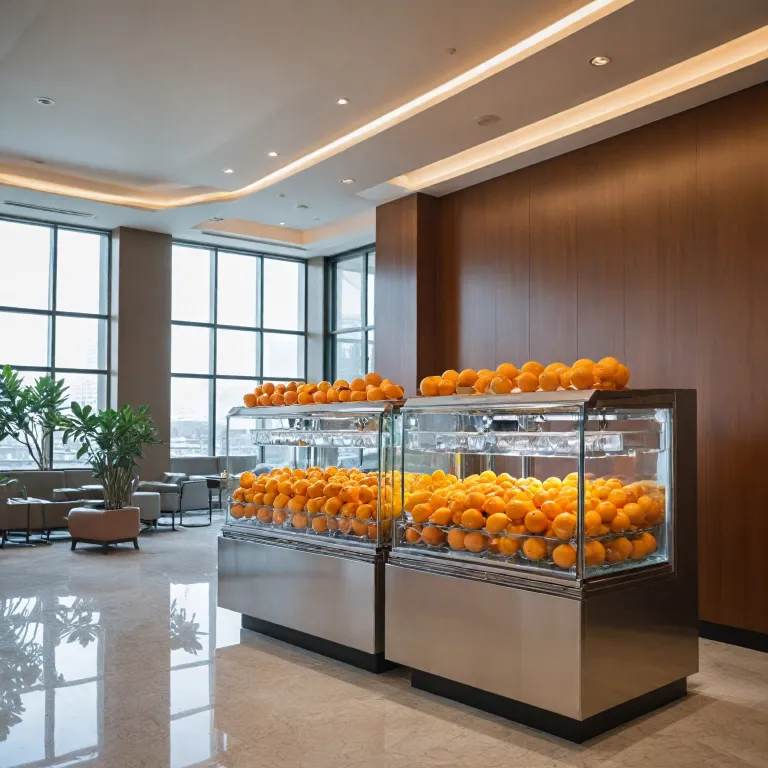
From breakfast buffet to lobby icon: why robotics orange juice vending machines matter
Robotics orange juice vending machines are moving from novelty to strategic asset. For directeurs F&B and hotel groups, these machines now sit at the crossroads of guest experience, labor optimization, and brand positioning. In a market where fresh juice and healthy choices drive loyalty, ignoring this equipment category is becoming risky.
Manufacturers such as OEJuice, IJOOZ, and JuiceBot are reshaping what a vending machine can deliver. Their robotics and AI driven juice vending concepts use robotic arms and machine vision to handle each orange with precision and consistency. This technology allows hotels to offer fresh orange juice around the clock, without adding headcount to the breakfast shift.
At the heart of these machines is a fully automatic process that keeps quality visible and reassuring. Transparent housings showcase the bright color of each squeezed orange, while a touch screen guides customers through custom drink options. The result is a smart vending focal point that feels closer to a live show kitchen than to a traditional vending corner.
Reliability is critical for any machine commercial deployment in high traffic lobbies or airport hotels. OEJuice reports a reliability rate of 99.9 %, which directly supports uptime KPIs and revenue forecasts. With an average of four oranges per cup, operators can calculate a precise rate of fruit usage and negotiate moq with suppliers accordingly.
For investors in restauration and independent operators, the appeal lies in predictable margins and clear data. Robotics orange juice vending machines generate real time sales and waste analytics through IoT connectivity. This level of transparency helps benchmark performance against other automatic fresh beverage formats such as bottled fruit juice or apple juice dispensers.
Engineering freshness: how robotics and cooling systems protect product quality
Behind the glass, every robotics orange juice vending machine is a compact production line. Robotic arms grip each orange, align it under the squeezing module, and manage pulp and peel separation with industrial precision. AI powered vision systems verify fruit quality in real time, rejecting damaged pieces before they affect fresh juice output.
To maintain flavor and safety, the machine cooling architecture is as important as the squeezing mechanism. A dedicated cooling system keeps fresh orange stock within a narrow temperature band, even in busy lobby environments. For larger properties, specifying machine cooling performance becomes a key line in the equipment tender.
These machines are designed as fully automatic units, yet they still allow a high degree of custom configuration. Operators can define portion size, sugar free recipes, and mixed fruit juice options that combine orange juice with apple juice or other blends. Smart vending software then translates these custom settings into intuitive touch screen journeys for customers.
For hotel groups, robotics orange juice vending machines also unlock new commercial models. A machine automatic lease with revenue sharing can reduce upfront capex while preserving cash for other F&B projects. This approach is particularly attractive for resorts already investing in strategic snack imports and healthy grab and go offers, as explored in this analysis of elevating guest experiences through strategic snack import in hospitality.
Freshly squeezed quality remains the non negotiable expectation for directeurs F&B. Modern juice vending machines answer this by squeezing oranges on demand, discarding juice that has been held too long, and logging every cycle. This combination of robotics, automatic fresh handling, and verifiable data reassures both chefs exécutifs and brand auditors.
For suppliers F&B, the shift toward smart vending creates opportunities to bundle fruit supply, maintenance, and data services. They can monitor machine commercial performance remotely, adjust moq and delivery frequency, and optimize the rate of replenishment. In practice, the machine becomes a connected node in a broader hospitality beverage ecosystem.
Guest experience, theater, and the new language of lobby vending
Guests no longer perceive a vending machine as a purely functional box in a corridor. When a robot prepares fresh squeezed orange juice behind glass, the experience becomes a micro performance that enhances perceived value. Children watch the robot arm move, while business travelers appreciate the speed and hygiene of a fully automatic process.
For resort hotels, robotics orange juice vending machines can complement live cooking classes and wellness programming. A property that already invests in guest engagement through cooking classes can extend its narrative into the lobby with smart vending theater. The same focus on ingredients, transparency, and craftsmanship is simply translated into an automated format.
Design details matter when integrating these machines into premium environments. Operators can specify custom colors and finishes so the equipment aligns with brand guidelines and lobby aesthetics. The vivid color of fresh orange segments inside the chamber becomes part of the visual merchandising, reinforcing the promise of fresh juice.
Touch screen interfaces now support multiple languages, allergen information, and upsell prompts in real time. Hotels can promote fresh orange and fresh juice bundles with breakfast, or cross sell fruit juice and apple juice combinations for families. Smart vending software also allows A/B testing of pricing and portion sizes to optimize the rate of conversion.
From an operational standpoint, robotics orange juice vending machines reduce pressure on breakfast teams. Instead of dedicating staff to manual squeezed orange preparation, chefs exécutifs can reallocate labor to à la minute hot dishes. The robot handles repetitive juice vending tasks consistently, while staff focus on high touch guest interactions.
Independent operators can also use these machines to extend service hours without adding payroll. A single vending machine in the lobby or near the spa can provide freshly squeezed beverages late at night. This automatic fresh availability supports incremental revenue and improves perceived value for wellness oriented guests.
Financial modeling, labor strategy, and the ROI of robotic juice vending
For investors restauration and hotel asset managers, robotics orange juice vending machines must justify their footprint. The business case typically combines labor savings, reduced waste, and higher average checks from premium fresh juice. When modeled correctly, these factors can deliver an attractive payback period for both single properties and groups hôteliers.
Labor is often the most visible benefit of a fully automatic vending machine. By automating squeezed orange production, hotels can reduce the time staff spend on manual juicing and cleaning. This freed capacity can be redirected toward upselling, guest engagement, or higher value culinary tasks.
Waste reduction is another strong lever in the financial model. Because the machine commercial software tracks every orange and every cup, operators gain precise visibility on yield and shrinkage. Real time data allows them to adjust moq with suppliers, refine ordering, and calibrate the rate of replenishment to actual demand.
Revenue upside comes from positioning fresh squeezed orange juice as a premium yet accessible option. Smart vending interfaces can present custom recipes, mixed fruit juice, and apple juice add ons that increase average ticket. Dynamic pricing by time of day, enabled through the touch screen, further enhances margin management.
Strategic F&B leaders are also using these machines to support broader marketing initiatives. When integrated with loyalty programs and digital campaigns, robotics orange juice vending machines become measurable touchpoints in the guest journey. This aligns with the wider shift toward data driven foodservice advertising examined in this article on how strategic foodservice advertising reshapes hospitality F&B performance.
Finally, the capex versus opex debate can be addressed through flexible procurement models. Some suppliers offer machine automatic leasing, bundled maintenance, and guaranteed uptime, which smooths cash flow for independent operators. For groups hôteliers, fleet level agreements can standardize equipment, cooling system specifications, and service levels across multiple properties.
Operations, hygiene, and technical standards for hotel deployment
Operational excellence is non negotiable when deploying robotics orange juice vending machines in hospitality. Directeurs F&B must define clear SOPs for cleaning, refilling, and monitoring each vending machine. These procedures should align with brand standards, local regulations, and the technical requirements of the equipment.
Modern machines are designed to simplify hygiene management through automatic fresh rinsing cycles and guided cleaning steps. The touch screen can walk staff through daily, weekly, and monthly tasks, reducing training time and error rates. Sensors monitor the machine cooling performance, door closures, and product levels, triggering alerts when intervention is needed.
From a technical perspective, the integration of robotics, machine vision, and IoT connectivity requires robust infrastructure. Properties must ensure stable power, secure network access, and adequate ventilation around the machine cooling system. For high volume sites, specifying redundancy or multiple machines can protect the rate of service during maintenance windows.
Suppliers F&B and manufacturers like OEJuice, IJOOZ, and JuiceBot typically provide remote monitoring dashboards. These platforms show real time data on sales, errors, and component status for each vending machine. They also help schedule preventive maintenance, ensuring that the robot arm, squeezing module, and cooling system operate within design parameters.
Guest facing details such as touch screen responsiveness and payment options also influence perceived quality. Smart vending software should support contactless payments, room charge integration, and loyalty recognition to streamline the juice vending experience. Clear communication about fresh orange sourcing and freshly squeezed preparation reinforces trust and justifies premium pricing.
For chefs exécutifs, the key is to integrate these machines into the broader menu and mise en place. Robotics orange juice vending machines can supply base fresh juice for cocktails, mocktails, and breakfast recipes during off peak times. This dual role as both guest facing vending and back of house support equipment maximizes utilization and strengthens the investment case.
Future directions: AI, customization, and multi beverage robotic platforms
The next generation of robotics orange juice vending machines will push further into personalization. AI algorithms will analyze time of day, guest profiles, and purchase history to suggest custom drinks on the touch screen. This evolution from static vending to smart vending aligns with broader trends in hospitality personalization.
Multi beverage capabilities are also emerging as a way to increase revenue per square metre. Machines that handle fresh orange, apple juice, and other fruit juice combinations can serve a wider range of customers. For groups hôteliers, standardizing on such platforms simplifies training, spare parts, and machine commercial management.
Color, design, and branding options will continue to expand as manufacturers court premium hotels. Custom finishes, lighting, and digital content on the machine exterior can transform each unit into a branded storytelling surface. The visible movement of the robot and the bright color of squeezed orange segments will remain central to this theater.
As AIoT integration deepens, operators will gain even richer real time insights. Dashboards will not only show sales and reliability rate, but also predict demand, optimize moq, and propose maintenance windows. This level of intelligence turns each machine automatic into a strategic data source for F&B planning.
Guest expectations around health and transparency will keep favoring freshly squeezed options over industrial alternatives. Robotics orange juice vending machines, with their fully automatic yet visible process, are well positioned to answer this demand. They bridge the gap between artisanal squeezed orange preparation and scalable, repeatable hotel operations.
In this context, partnerships between manufacturers, technology firms, and supply chain providers will shape the competitive landscape. Hotels that move early, specify the right equipment, and integrate these machines into coherent F&B strategies will set new benchmarks. Those that hesitate may find their vending spaces looking dated next to smart, fresh squeezed robotic platforms.
Key quantitative insights on robotic orange juice vending performance
- Reliability rate for leading robotics orange juice vending machines reaches 99.9 %, supporting high uptime in hotel environments.
- Average oranges per cup stand at four oranges, enabling precise forecasting of fruit usage and cost per serving.
- Robotic automation, machine vision, and AIoT integration are the three core methods driving consistency and quality in fresh juice vending.
- Global deployment is focused on high footfall locations such as malls, offices, airports, and hotel lobbies.
Frequently asked questions about robotics orange juice vending machines
How do robotic juice vending machines work?
They use robotic arms and AI to select, cut, and squeeze oranges on demand.
Are the juices from these machines fresh?
Yes, they are freshly squeezed from whole oranges upon order.
Where can I find these vending machines?
In high-footfall areas like malls, offices, and airports.