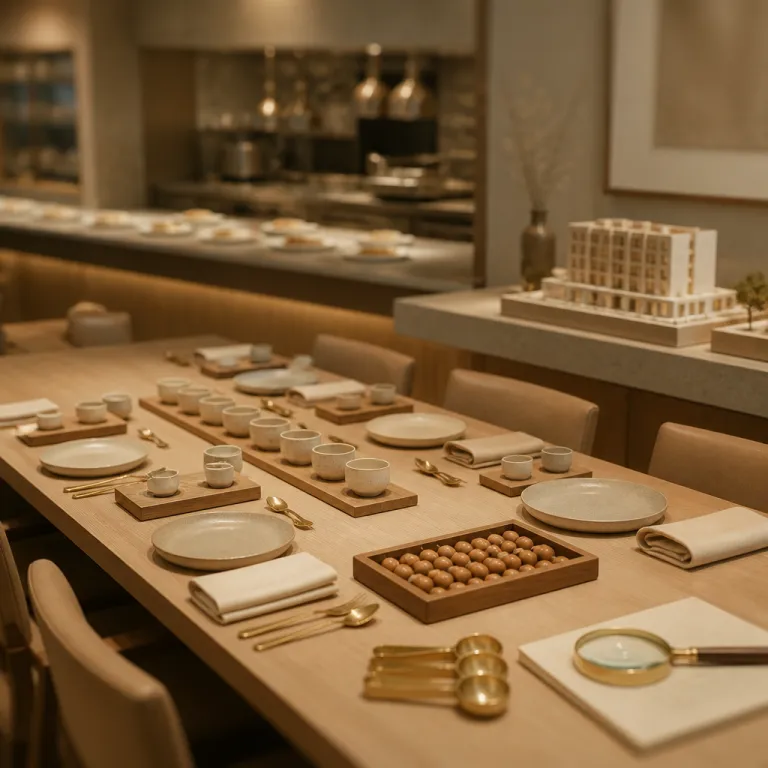
Why experiential dining now sits at the center of hotel restaurant trends
Experiential dining has moved from side show to core strategy in hospitality. Across city hotels and destination resorts, leadership teams now treat chef’s tables, wine dinners and cooking classes as serious levers for revenue and guest satisfaction. These formats are no longer just creative food stories; they are structured hospitality businesses that must justify their space, staffing and capital against rooms and traditional restaurants.
For any revenue or commercial director, the key question is simple yet unforgiving. Among all the hotel restaurant trends being pitched by chefs and marketing équipes, which dining experiences actually move the P&L and which only generate social media noise? The hospitality industry has reached a point where experiential dining experiences must be evaluated with the same discipline as room pricing, because opportunity cost on prime ground floor space is now too high to ignore.
Interactive meals such as chef led pasta stations or live dessert preparation consistently generate higher per cover spend and better guest experience scores than passive formats. In one anonymized 220 room urban hotel, a monthly chef’s table for 16 guests lifted the average check from $58 to $92 (+59%) while adding 1.1 points to post stay dining satisfaction on a 10 point scale. That pattern holds across city hotels, resorts and mixed use properties, making it one of the clearest industry trends in current restaurant industry analysis. Eatertainment concepts licensed into hotel restaurants show that guests will pay a premium for experience, but the spread between concept fees and incremental revenue decides whether the business case works.
In this context, hospitality trends around experiential dining are being shaped by three converging forces. First, health conscious and plant based preferences are pushing culinary teams to design menus that feel both interactive and nutritionally credible. Second, sustainability expectations from every guest segment are forcing eco friendly sourcing and low waste food beverage operations even in theatrical formats.
Third, technology from CRM systems to artificial intelligence tools is finally mature enough to track the full guest journey from booking to review. This allows hotel f&b leaders to connect a single dining experience to future stays, ancillary spend and long term guest expectations. The result is a new generation of hotel restaurant trends where experiences are engineered not only for wow moments but for measurable lifetime value.
Building a measurement framework that treats experiences like assets
To treat experiential dining as a real asset class, you need a clear measurement framework. The most effective hospitality businesses structure this around three phases of the guest journey, aligning Hotel F&B managers, marketing teams and finance departments on shared metrics. Pre event planning, during event monitoring and post event analysis become the backbone of a repeatable process rather than a one off experiment.
Pre event, the focus sits on baselines and forecasts that reflect both hotel and restaurant realities. Track current dining experiences revenue per cover, average check by segment, capture rate of in house guests and share of external guests in your restaurants. For each new experience, define target uplift in per cover spend, expected impact on guest satisfaction scores and specific guest expectations you aim to influence, such as breakfast ratings or bar spend.
During the experience, measurement shifts to engagement and operational efficiency. Simple technology such as tablet based feedback, QR code surveys and POS tagging of experiential menus allows you to capture real time data without slowing service. This is where artificial intelligence can help by clustering comments about food, service and atmosphere into clear themes that show which elements of the dining experience resonate most strongly.
Post event, the framework must extend beyond immediate revenue to capture long tail effects. Use CRM data to compare repeat visit rates, room booking frequency and total food beverage spend for guests who attended experiences versus those who did not. Link this to review sentiment velocity on platforms where hospitality trends are shaped, tracking how often your hotel restaurants are mentioned for specific experiential formats.
One practical benchmark from experiential marketing suggests that the average ROI from experiential marketing is 3 to 10:1. Industry summaries from organizations such as the Event Marketing Institute and EventTrack have repeatedly reported ranges in this order of magnitude, even though methodologies differ. While this spread is broad, it gives hotel f&b leaders a directional target when evaluating whether a chef table, wine dinner or cooking class is pulling its weight. For concept design, case studies such as pasta pescatore positioned as a strategic signature dish for modern hotel F&B programs show how a single interactive plate can anchor multiple experiences and simplify measurement.
To make this discipline operational, build a single checklist that every experiential format must follow: (1) KPIs: set targets for covers, revenue per cover, total experience revenue, labor hours, space utilization, average check uplift and post stay dining satisfaction; (2) CRM tags: create a dedicated “experience code” for each format, link it to guest profiles and stays, and flag whether the guest is in house or local; (3) POS tags: assign menu level buttons for experiential packages, pairings and add ons so you can isolate mix, margin and upsell performance; (4) survey questions: ask at least three consistent questions after each event—overall satisfaction with the experience, likelihood to recommend the hotel restaurant, and impact on intent to return to the property—plus one open text field that AI tools can mine for themes.
Pricing experiential formats along the willingness to pay curve
Pricing is where many experiential concepts in hospitality fail, not because guests lack interest but because the structure ignores willingness to pay dynamics. A chef table with ten seats and three extra cooks on the line must be priced differently from a lobby wine tasting that uses existing staff and open bottles. Revenue directors who treat these formats like fixed menu surcharges rather than distinct products leave money on the table and distort industry trends data.
The first step is to map your experiential formats along a spectrum from low touch to high immersion. At one end sit light touch dining experiences such as guided tastings or themed menus that run inside normal restaurant operations, with minimal incremental food beverage cost. At the other end are fully immersive experiences that require dedicated space, bespoke culinary production and often external partners, which must be priced with full cost allocation.
For each format, build a simple willingness to pay curve using historical data and controlled tests. Start with a base price that covers direct food, beverage and labor costs plus a margin aligned with your restaurant industry benchmarks, then test higher price points on different guest segments. Hotels that segment in house leisure guests, corporate travelers and local residents often find that local guests will pay more for rare access to hotel restaurants, especially when the experience feels exclusive.
Health conscious and plant based experiences deserve special attention because they often attract a premium audience. These guests expect transparency on sourcing, sustainability and eco friendly practices, and they tend to share detailed feedback that influences hospitality trends. When priced correctly, such experiences can lift both average check and guest satisfaction, while reinforcing the hotel brand as a responsible player in the hospitality industry.
Marketing strategy also shapes the pricing envelope more than many finance teams assume. Strategic foodservice advertising that clearly positions experiential formats as limited, high value events can justify higher price points without discounting the core dining experience. For revenue leaders, the goal is to align pricing with perceived value so that experiential formats enhance rather than cannibalize everyday menus and bar business.
A simple pricing test plan makes this concrete. Imagine a 12 seat chef’s table currently priced at $95 per person with an average of 10 covers per event. Run a four week A/B test with three cohorts: Week 1–2 at $95 (control), Week 3 at $110 and Week 4 at $125, keeping menu and marketing constant. With a minimum sample of three events per price point, compare (a) covers per event, (b) total revenue per event and (c) guest satisfaction scores. If revenue at $110 remains within 5% of control covers and satisfaction stays stable, you have evidence to shift the base price upward and redraw your willingness to pay curve.
Allocating costs, programming cadence and the risk of over experience
Once pricing is set, the harder work begins with cost allocation and programming cadence. Experiential dining may look like pure upside on a busy Saturday, but the true picture only emerges when you assign labor, equipment and space opportunity costs with discipline. Finance departments that collaborate closely with Hotel F&B managers can prevent well intentioned experiences from eroding margins in both restaurants and banqueting.
Start with a granular view of labor, because hospitality is still a people heavy industry. Track incremental hours for culinary brigades, service équipes, marketing teams and any external partners such as event planners or data analysts. Allocate these costs to each experience rather than burying them in general hotel f&b overhead, so you can compare formats on a like for like basis and identify which trends shaping your calendar actually pay off.
Space is the next major variable, especially in urban hotels where every square metre has a clear revenue potential. When you dedicate a lounge corner to a recurring chef table, you must compare its performance to alternative uses such as an all day dining extension or a lobby bar seating expansion. This is where tools like room service menu optimization, which can cut the card in half to double the margin, remind leaders that not every square metre needs a theatrical concept to outperform.
Programming cadence is often underestimated, yet it directly affects guest expectations and perceived value. Run an experience too rarely and you fail to build awareness among local guests and repeat visitors; run it too often and it becomes just another option on the menus, losing its pricing power. The most successful hospitality businesses treat experiential formats like limited series, with clear seasons, pauses and refresh cycles that keep both staff and guests engaged.
Over programming also carries operational risks that can damage the broader guest experience. When teams are stretched across too many events, core dining experiences in hotel restaurants and bars may suffer, dragging down review scores and undermining hospitality trends you worked hard to build. A disciplined cadence, backed by data on occupancy, restaurant covers and guest satisfaction, helps ensure that experiences enhance rather than exhaust your hotel.
An anonymized resort example illustrates the impact of disciplined allocation. A quarterly wine dinner series for 40 guests generated $8,000 in top line revenue per event at a $200 average check. Direct food and beverage costs were $3,200, and incremental labor totaled 38 hours at an average fully loaded rate of $28, or $1,064. With $400 in allocated space and equipment costs, total incremental cost reached $4,664. Incremental profit per event was therefore $3,336, and ROI on direct costs was calculated as: ROI = (Incremental Profit ÷ Incremental Cost) = $3,336 ÷ $4,664 ≈ 0.72. Expressed as a percentage, this is 72% because 0.72 × 100 = 72, which can then be compared to broader experiential marketing benchmarks.
Attribution, technology and turning experiences into repeatable revenue
The final piece of the framework is attribution, which remains the most complex challenge for revenue and commercial directors. You are not just measuring what happened during a single dining experience, but how that moment influenced future bookings, ancillary spend and long term loyalty. Without a clear attribution model, experiential dining risks being treated as a marketing cost rather than a strategic revenue engine.
Effective attribution starts with clean data capture at the point of sale and reservation. Tag every experiential booking in your CRM, link it to the guest profile and ensure that spend on food beverage, rooms and spa is consolidated under a single identifier. This allows artificial intelligence tools and more traditional analytics to compare behavior between guests who attend experiences and those who only use standard hotel restaurants.
From there, build simple but robust models that track repeat visit rates, total revenue per guest and review sentiment over time. Use survey platforms to ask targeted questions about specific dining experiences, then feed that data into financial software that can estimate the incremental value of each format. As one practical guideline, experts often advise to use pre event, during event, and post event metrics when measuring experiential dining ROI, and to rely on CRM systems, survey platforms, financial software as the core toolset.
Technology also enables real time course correction that was impossible when hospitality relied only on anecdotal feedback. When you see that a particular interactive format is driving strong guest satisfaction but weak ancillary bar sales, you can adjust pairings, timing or upsell scripts within days. Over time, this creates a virtuous loop where hospitality trends in your own property are shaped by live data rather than generic industry trends reports.
For revenue leaders, the endgame is clear and unapologetically commercial. Experiential dining should raise RevPAR indirectly by lifting review scores, increase total revenue per stay through higher dining experiences spend and attract local guests who treat the hotel as their preferred third space. When that happens consistently, experiential formats stop being side projects and become core business drivers that justify their place in the evolving landscape of hotel restaurant trends.
To close the attribution loop, calculate incremental revenue and lifetime value using transparent formulas. First, estimate incremental experience revenue per guest as: Incremental Experience Revenue = (Average Check During Experience − Baseline Average Check) × Number of Covers. Second, estimate incremental total revenue per guest over 12 months as: Incremental Total Revenue = (Average Annual Revenue of Experience Guests − Average Annual Revenue of Non Experience Guests) × Number of Unique Experience Guests. Finally, derive experiential ROI by dividing incremental profit by total incremental cost: Experiential ROI = (Incremental Revenue − Incremental Cost) ÷ Incremental Cost. In this definition, ROI is always expressed as profit divided by cost, while marketing style ratios such as 3:1 simply describe revenue returned per dollar invested. Applying these formulas to tagged CRM cohorts, with clear control groups, defined attribution windows and minimum sample sizes, turns experiential dining from a creative idea into a repeatable revenue engine.
FAQ
How should a hotel measure ROI on experiential dining events ?
A hotel should measure ROI on experiential dining by combining pre event baselines, during event engagement metrics and post event financial analysis. Track incremental revenue per cover, total food beverage spend, labor and space costs, then compare these to similar periods without the experience. Layer in guest satisfaction scores and review sentiment to understand both financial and reputational returns.
Which tools are most useful for tracking experiential dining performance ?
The most useful tools for tracking experiential dining performance are CRM systems, survey platforms and financial software that can integrate point of sale data. CRM systems connect each dining experience to a specific guest profile and stay history. Survey platforms capture qualitative feedback, while financial tools consolidate revenue, cost and margin data across restaurants and hotels.
Why should hospitality businesses invest in experiential dining at all ?
Hospitality businesses should invest in experiential dining because it can increase revenue, strengthen brand loyalty and differentiate the hotel from local competitors. Interactive formats often drive higher average checks and better guest satisfaction than standard dining experiences. When measured correctly, these experiences also stimulate repeat visits and positive word of mouth that support long term business growth.
How often should a hotel program special dining experiences ?
The optimal cadence for special dining experiences depends on hotel size, market and staffing, but the principle is to keep them special. Many hotels find that weekly or monthly flagship events balance awareness with exclusivity, while smaller activations can run more frequently. The key is to monitor guest expectations and avoid over programming that dilutes perceived value or strains operations.
What role does sustainability play in experiential dining concepts ?
Sustainability plays a growing role in experiential dining concepts as guests become more health conscious and eco friendly in their choices. Hotels that integrate local sourcing, low waste practices and plant based options into experiences often see stronger engagement and better review sentiment. These practices also align with broader hospitality trends and can reduce long term operating costs.