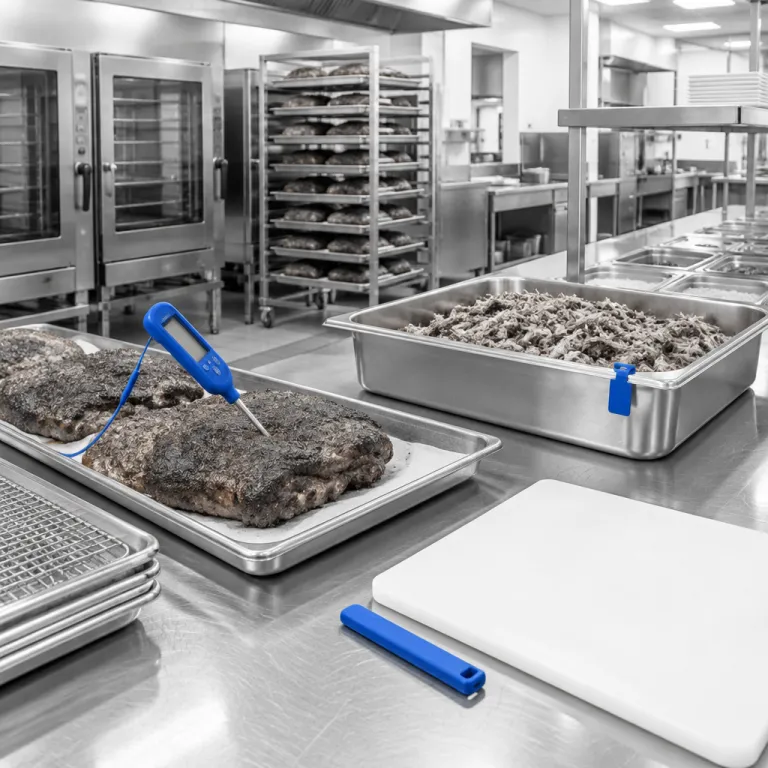
Why the internal temp of pork butt is a critical food safety control
For any hotel or resort kitchen, the internal temp of pork butt is not just a culinary preference, it is a food safety control point. When pork meat from the butt or shoulder is cooked for long time at low temperature, the risk of survival for pathogens such as Salmonella must be managed with precision. In most industrialised countries, commercial pork has a very low prevalence of Trichinella thanks to controlled feeding and inspection programmes, but undercooked meat can still present a risk in some regions or when sourcing from non-standard suppliers. A clear internal temperature standard, verified with a calibrated meat thermometer, will protect guests and your brand while stabilising operational performance.
Food safety teams should define a minimum safe internal temperature for every pork butt and every pork shoulder served as smoked pork or pulled pork on property. In most regulated markets, whole cuts of pork meat are considered safe when the internal temp reaches at least 63 °C and is held for a defined cook time, as outlined in current United States Department of Agriculture guidance, but pulled pork from a heavily worked butt or shoulder usually targets 90–96 °C to fully break down connective tissue. This higher internal temperature range gives both a safety margin and the texture that guests expect from premium smoking pork programmes.
In banqueting or high volume bbq outlets, the risk is amplified because one incorrectly cooked butt pork can generate dozens of unsafe portions. Standard operating procedures must specify how to probe the internal temp of pork butt in the thickest part of the meat, away from bone and large seams of fat, and how many pork shoulders per batch must be checked. Clear corrective actions, such as extending cooking time or returning a shoulder to the smoker when temp pork readings are below target, will keep your Hazard Analysis and Critical Control Point plan aligned with daily reality.
Designing HACCP procedures around internal temperature, time and traceability
Directeurs F&B and chefs exécutifs should treat the internal temp of pork butt as a formal Critical Control Point in their HACCP documentation. Each batch of pork shoulders or individual pork butt must have a recorded cook time, target internal temperature and verification signature from a qualified team member. This structured approach to temperature and time data allows you to prove due diligence during inspections and internal audits.
For hotel groups, central specifications should define approved suppliers for pork meat, the required fat cap thickness on each butt, and the acceptable weight range that will influence cook time and stall behaviour. When smoking pork at low heat, the stall phase, where internal temp seems to freeze around 65–75 °C, must be anticipated in production planning to avoid service delays. Documented guidance on when to wrap foil or use butcher paper around each butt pork during the stall will help teams manage both moisture retention and food safety.
Traceability must extend beyond the smoker and into holding, blast chilling and regeneration, with precise date and time controls for every batch of pulled pork. For ready to eat pork shoulder used on banqueting buffets or room service menus, labelling systems should align with best practice on time and temperature controls for ready to eat TCS food. When internal temperature logs, time records and labelling are integrated into your Property Management System or kitchen management software, you create a defensible chain of evidence that reassures both regulators and investors.
Operational discipline at the smoker: managing stall, heat and holding
In hospitality operations, the romance of smoking pork must never override the discipline of food safety and consistency. The internal temp of pork butt will rise steadily until evaporative cooling from surface moisture creates the stall, which can last one to several hours depending on smoker load and airflow. If teams panic and raise heat aggressively, they risk drying the meat and compromising both texture and safety margins.
Clear line checks should specify acceptable smoker temperature ranges, usually between 105 and 130 °C for low and slow bbq cooking, and define when to wrap foil or switch to butcher paper around each pork butt. Wrapping a pork shoulder in foil butcher style will accelerate the passage through the stall by reducing evaporation, but it also changes bark formation and can soften the rub crust. Using breathable butcher paper instead of tight wrap foil can be a better guide for premium smoked pork in luxury hotels, where texture and visual appeal carry higher expectations.
Once the internal temperature of each butt pork reaches the target range for pulled pork, holding procedures become critical for banqueting and all day service. Hot holding cabinets must maintain safe temperature above 60 °C, and the internal temp of pork butt should be checked at defined time intervals to prevent drift. For allergy aware concepts or nut free venues, signage and kitchen design principles similar to those used in nut free sign systems that protect guests can be adapted to communicate pork handling zones, smoker areas and cross contamination risks.
From raw pork shoulder to pulled pork service: a practical guide for hotel kitchens
Transforming a raw pork shoulder into consistently safe and tender pulled pork across multiple outlets requires a structured guide, not just chef intuition. Start by specifying the cut, whether you buy bone in pork butt, boneless pork shoulders or a mix, and define the ideal weight range to standardise cook time and internal temp targets. A typical 4 kilogram butt pork will need 8 to 10 hours in the smoker at low heat, but your own equipment, load and smoking pork style will influence the final schedule.
Before cooking, apply a measured bbq rub with controlled salt and sugar levels to manage both flavour and Maillard reaction during smoking. Many hotel chefs inject a mix of apple juice and cider vinegar into the meat to balance fat richness and support moisture retention during long cooking. Whatever your method, the internal temperature of the thickest part of the pork butt must be monitored with a calibrated meat thermometer, and temp pork readings should be logged at defined intervals for HACCP compliance.
Once the internal temp of pork butt reaches around 90–96 °C and the connective tissue has softened, the shoulder can be rested in wrap foil or butcher paper to stabilise juices. Pulling should be done with clean, gloved hands or dedicated tools in a controlled area, separating excess fat and any remaining gristle from the meat. Final seasoning with a light mop of warm apple juice and cider vinegar can refresh flavour before service, but the internal temperature must remain above 60 °C if the pulled pork is held hot on buffets or passed to banqueting teams.
Menu engineering, yield management and the internal temp of pork butt
For Directeurs F&B and investors, the internal temp of pork butt is directly linked to yield, margin and guest satisfaction. Overcooking pork shoulders to excessively high internal temperature will cause unnecessary moisture loss, reducing saleable meat yield and inflating plate cost. Undercooking, on the other hand, leaves connective tissue intact, creates a chewy texture and can trigger food safety concerns that damage brand equity.
Accurate yield studies should compare raw weight of each pork butt with trimmed, ready to serve pulled pork after cooking and resting. By correlating internal temp readings, cook time and smoker loading patterns, you can identify the sweet spot where connective tissue is fully broken down but fat has not rendered out excessively. These data driven insights support menu engineering decisions, such as whether to position smoked pork as a premium à la carte item or as part of a buffet rotation with controlled portion sizes.
When reviewing menu profitability, consider how low and slow bbq items interact with broader strategies such as menu rationalisation to lift profit margins. A well executed smoke pork programme, with stable internal temperature controls and predictable cook time, can turn lower cost pork meat into a signature experience that anchors beverage sales. Consistent internal temp of pork butt across properties also supports brand standardisation, making it easier for groups hôteliers to roll out regional bbq concepts with confidence.
Training brigades and suppliers around temperature, tools and specifications
Achieving reliable internal temp of pork butt in a hotel environment depends on aligned training for kitchen brigades and suppliers. Every chef de partie and commis working near the smoker must understand why internal temperature matters more than visual cues or subjective feel when cooking pork butt or pork shoulder. Regular calibration of each meat thermometer, with documented checks, will reduce variance and reinforce a culture of measurement.
Supplier specifications should define acceptable ranges for fat coverage, marbling and trimming on pork shoulders, because these factors influence heat transfer, stall duration and final texture. When fat caps are too thick, the external layer can insulate the meat and delay internal temp rise, forcing longer cook time and complicating service planning. Clear communication with your butcher about desired butt pork format, whether for traditional smoking pork or hybrid combi oven methods, will stabilise both quality and safety outcomes.
On the training side, create visual guides that show correct probe placement, typical stall curves and target internal temperature ranges for different service formats such as sliced pork, chopped meat or pulled pork. Simulated service drills, where teams must react to a delayed stall or a smoker running below target heat, will build confidence and reduce last minute improvisation. Over time, a shared language around internal temp, time planning and connective tissue breakdown will align chefs exécutifs, Directeurs F&B and suppliers around the same operational objectives.
Key statistics on pork safety, cooking temperatures and guest expectations
- According to guidance from the United States Department of Agriculture, whole cuts of pork are considered safe when cooked to a minimum internal temperature of 63 °C and rested for at least 3 minutes, while many professional kitchens target 90–96 °C for pulled pork to ensure full connective tissue breakdown and a tender texture.
- Foodborne illness surveillance data from the European Food Safety Authority, summarised in recent annual zoonoses reports, indicate that pork and pork products account for a significant share of Salmonella outbreaks in food service, which reinforces the need for strict internal temp monitoring and documented cook time controls in hotel and resort kitchens.
- Operational reviews in large scale catering environments show that using calibrated digital meat thermometers can substantially reduce undercooked portions compared with relying on visual cues alone, directly improving both food safety and guest satisfaction scores.
- Menu engineering analyses in full service hotels often find that low cost cuts such as pork butt and pork shoulder can deliver attractive gross margins when converted into smoked pork or pulled pork dishes, provided that yield loss from overcooking is controlled through precise internal temperature management.
- Guest research from major hospitality groups indicates that consistent texture and juiciness are among the top drivers of repeat orders for bbq items, which means that controlling the internal temp of pork butt is not only a compliance issue but also a key lever for revenue and loyalty.
Table 1 below summarises typical target core temperatures and holding limits for hotel and resort kitchens working with pork butt and pork shoulder:
- Whole pork roast for slicing: minimum internal temp 63 °C, rest at least 3 minutes before carving.
- Pulled pork from pork butt or shoulder: target internal temp 90–96 °C, rest 30–60 minutes in controlled conditions.
- Hot holding of cooked pork: maintain internal temperature at or above 60 °C, with documented checks every 2 hours.
FAQ: internal temp of pork butt in professional hospitality kitchens
What internal temperature should I target for pulled pork in a hotel kitchen ?
Most professional kitchens target an internal temp of pork butt between 90 and 96 °C for pulled pork, measured in the thickest part of the meat with a calibrated meat thermometer. This range ensures that connective tissue has broken down fully while maintaining moisture and a tender texture. Always verify several points in large pork shoulders to confirm consistent internal temperature before service.
How long does it take to cook a pork butt safely at low temperature ?
As a general guide, plan around 1.5 to 2 hours of cook time per kilogram of pork butt when smoking at 110–120 °C, while allowing extra time for the stall phase. The actual time ratio will vary with smoker load, airflow and fat coverage on the shoulder. Build at least a 2 hour buffer into production plans so that internal temp targets are reached well before service.
Is it safe to hold pulled pork for banquets after reaching the target internal temp ?
Yes, pulled pork can be held safely for banquets if it is maintained at or above 60 °C in hot holding equipment and monitored regularly. After the internal temp of pork butt has reached the target range and the meat is pulled, use covered pans and controlled heat to prevent drying. Implement time and temperature logs to document holding conditions for food safety compliance.
Should I wrap pork shoulder in foil or butcher paper during the stall ?
Wrapping pork shoulder in foil will speed up the stall and protect moisture, but it can soften the bark and slightly change texture. Using butcher paper allows more breathability, which preserves the rub crust while still helping the internal temperature climb steadily. The choice depends on your brand positioning, with luxury properties often preferring butcher paper for a more defined bark and midscale outlets favouring foil for operational predictability.
How can I standardise internal temp controls for pork across multiple hotel properties ?
Standardisation starts with unified specifications for pork cuts, smoker settings and target internal temperature ranges, documented in group level HACCP and recipe manuals. Provide each property with calibrated digital meat thermometers, clear logging templates and training modules that explain stall behaviour, cook time planning and corrective actions. Regular audits and cross property tastings will ensure that the internal temp of pork butt translates into consistent guest experiences across the portfolio.