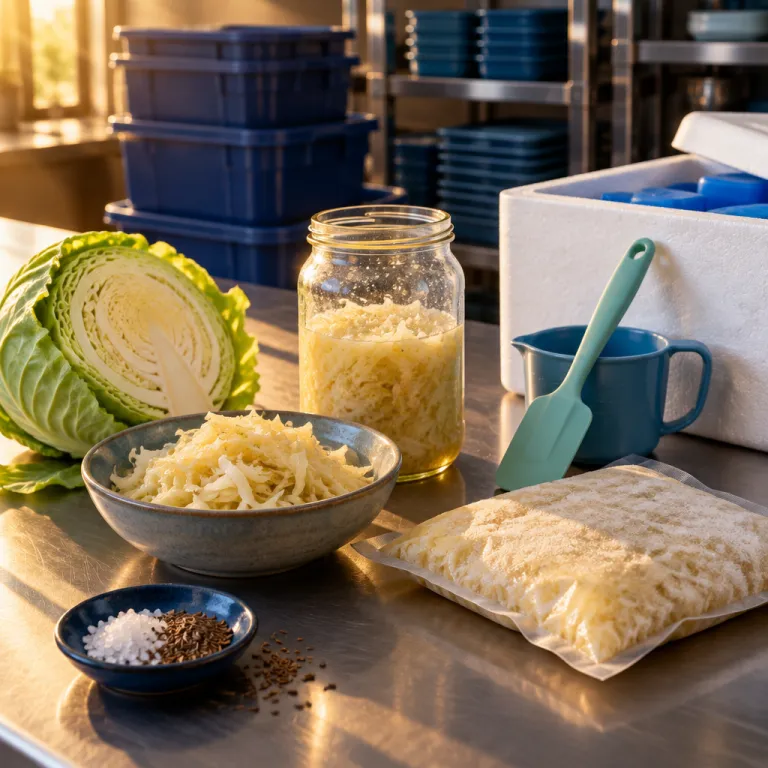
Can you freeze sauerkraut safely in professional hospitality operations ?
For hotel and restaurant teams asking can i freeze sauerkraut, the short answer is yes when controls are rigorous and documented. In a professional Food & Beverage operation, you can freeze sauerkraut safely if you treat it as a ready to eat fermented food with the same discipline you apply to cooked foods and chilled mise en place. This means aligning every batch of fresh fermented sauerkraut with your HACCP plan, your cold chain monitoring, and your validated freezing process, rather than treating it as a low risk side dish.
From a microbiological standpoint, properly fermented sauerkraut starts as a relatively low risk food because lactic acid bacteria, salt, and low pH inhibit most pathogens. Industry guidance and the FDA Food Code indicate that fermented vegetables are typically stabilised when the finished pH is ≤ 4.2 and salt is around 2–2.5 percent of vegetable weight, but you must confirm these targets in your own plan. Once you move that sauerkraut into a freezer, you are not sterilising the product but simply pausing microbial activity, so any upstream failure in fermentation, salinity, water content, or hygiene will be carried into the frozen phase and will resume once thawing occurs.
Directeurs F&B and chefs exécutifs therefore need clear specifications for suppliers of fermented foods and for in house production, including pH targets, salt levels, and validated cooling times before freezing. A practical SOP might require each batch of sauerkraut or sauerkraut kimchi to reach ≤ 5 °C within six hours, be portioned into 2–3 kg containers, and be transferred to a blast freezer operating at −30 °C or below until the core temperature is ≤ −18 °C. Recording these figures in production logs gives auditors confidence that your frozen fermented foods are controlled with the same precision as other ready to eat items.
Food safety, TCS rules and compliance when you freeze sauerkraut
Many operators assume that because sauerkraut is fermented it automatically falls outside Time Temperature Control for Safety (TCS) rules, yet that is not always the case. The FDA Food Code and comparable European regulations classify foods as TCS when their pH and water activity support pathogen growth, so recipes with added vegetables, fruits, or sugars may still require strict temperature control. Once you answer can i freeze sauerkraut for your concept, you must also decide whether your specific fermented foods qualify as TCS under local codes, especially when you add ingredients with higher water activity or sweet marinades.
For compliance, the workflow should mirror your approach to other ready to eat foods that require precise time and temperature tracking. That means logging the cooling curve from hot or ambient to a safe fridge temperature, documenting the point at which you move containers into the freezer, and recording the freezing date alongside production data and batch identifiers. Align this with your broader controls for ready to eat TCS food labelling, as outlined in guidance on date and time controls for chilled items, so that frozen sauerkraut never becomes a blind spot in your HACCP documentation.
Once frozen, sauerkraut remains safe as long as the freezing process is uninterrupted and the packaging prevents water migration and contamination. Food safety authorities such as the USDA and EFSA recommend maintaining freezers at or below −18 °C and fridges between 0 and 4 °C, and these same ranges work well for fermented cabbage. However, the moment you start thawing frozen sauerkraut, it reenters the TCS zone and must be handled like any other high moisture food, with clear rules for time out of refrigeration and maximum holding in a fresh fridge. Train teams not to skip content in logs when they move containers from freezer to fridge, because those gaps are exactly where auditors and insurers will focus after an incident.
Managing texture and flavor when freezing fermented foods at scale
From a culinary perspective, the main trade off when you freeze sauerkraut is not safety but texture and flavor. Ice crystals form inside the cabbage cells because of the high water content, and this can soften the texture once the product is thawed, especially in finely shredded styles. Peer reviewed research on vegetable freezing shows that rapid freezing at −18 °C or colder produces smaller ice crystals and better texture retention than slow freezing in overloaded cabinets. For premium outlets, the key question becomes not only can i freeze sauerkraut, but in which recipes can a slightly softer texture still deliver a good guest experience.
To protect texture flavor balance, chefs should choose the right cut size, salinity, and fermentation time before freezing, because these factors influence how much free water is available to crystallise. A firmer, shorter fermented batch with slightly higher salt often holds its crunch better after the freezing process, while long fermented sauerkraut kimchi with more brine may lose more bite but gain intensity of flavor and acidity. Packaging also matters ; vacuum sealing reduces air exposure and limits freezer burn, helping both single portion packs and bulk containers maintain a more appealing texture when reheated or served chilled as a garnish.
Operations that rely heavily on fermented foods, including sauerkraut, kimchi, and pickles, should segment their production according to end use. Batches destined for hot recipes, such as braised pork with sauerkraut, stews, or plant based casseroles, can be frozen with minimal concern for texture loss because heat will soften the cabbage anyway. For cold applications like salads, hot dogs, or tasting menus, keep a separate line of fresh fermented product in the fresh fridge, supported by clear allergen and signage systems such as those used in nut free sign programmes, so guests understand when they are served fresh versus previously frozen ferments.
Operational benefits and cost control from freezing sauerkraut in hotel kitchens
For Directeurs F&B and investors, the question can i freeze sauerkraut quickly becomes a question of labour, yield, and procurement strategy. Centralising the production of fermented foods in a commissary or main kitchen, then using the freezer as a buffer, can stabilise costs across multiple outlets and reduce last minute purchases. This approach also supports tariff proofing strategies, where you lock in cabbage and salt prices during low seasons and convert them into value added fermented food for later use in high demand periods.
When you freeze sauerkraut in well planned batches, you reduce small scale repetitive prep in satellite kitchens and free chefs exécutifs to focus on higher value tasks. A simple internal standard might define weekly production volumes, target pH, and a maximum frozen storage time of three to four months for best quality, with periodic sensory checks to confirm that flavor and texture remain acceptable. The freezer becomes a strategic asset rather than a dumping ground, especially if you align it with a structured procurement and inventory model such as those described in procurement strategy for hotel kitchens. Clear par levels for both fresh fermented and frozen stocks help you avoid emergency purchases of inferior products when demand spikes unexpectedly.
From a waste perspective, freezing sauerkraut allows you to capture surplus cabbage from banqueting or breakfast mise en place before it becomes a loss. Industry waste audits in European hotels have found that vegetable trimmings, including cabbage, can represent up to 15 percent of kitchen food waste by weight, highlighting the potential benefits of redirecting surplus into fermented foods that can then be frozen. Instead of letting fresh foods age in the fridge, you can redirect trimmed cabbage into a controlled fermentation programme, then move mature batches into the freezer at peak flavor. This cycle turns what might have been food waste into a gut healthy, high margin garnish or side dish that supports both sustainability KPIs and guest perception of quality.
Nutrition, gut health and the impact of freezing on probiotic benefits
Many guests now choose fermented foods such as sauerkraut for their perceived gut healthy benefits, so chefs must understand how freezing affects these expectations. The live probiotic cultures in fresh fermented cabbage are sensitive to temperature extremes, and some will be damaged during the freezing process, especially if the product is frozen slowly in a busy service freezer. Studies on lactic acid fermented vegetables published in food microbiology journals report that freezing can reduce viable probiotic counts by roughly 25 to 50 percent compared with continuous refrigeration, depending on freezing speed and storage duration.
When you evaluate can i freeze sauerkraut for a wellness focused concept, separate the marketing promise from the scientific reality. Frozen sauerkraut will usually retain some viable probiotic bacteria, but counts are likely lower than in a batch kept chilled in a fresh fridge and consumed within a short window of production. Vitamins, minerals, and organic acids remain relatively stable in both frozen and thawed sauerkraut, so the food still offers fibre and flavor even when probiotic levels decline. If your brand narrative leans heavily on gut healthy messaging, reserve the freshest fermented foods for those menus and use frozen stocks primarily in cooked recipes where probiotic survival is less relevant.
Communication with guests should be transparent yet practical, especially in resorts and spas where nutrition claims are scrutinised. You do not need to skip content about freezing on menus, but you should avoid overstating probiotic benefits when using previously frozen ferments in hot dishes. A balanced message might highlight the good flavor, reduced food waste, and plant based fibre of sauerkraut, while reserving explicit probiotic claims for raw, never frozen servings that are handled under strict cold chain controls and consumed promptly.
Best practice for freezing, storing and thawing sauerkraut in hospitality kitchens
To implement can i freeze sauerkraut as a standard practice, kitchens need precise technical guidelines that line up with HACCP documentation. Always cool freshly fermented sauerkraut to a stable fridge temperature before transferring it to the freezer, because loading warm containers directly into the freezer stresses the equipment and risks partial freezing that damages texture. Use shallow gastronorm pans or small pouches, ideally no deeper than 5–7 cm, to accelerate both cooling and freezing, reducing the time the food spends in the temperature danger zone.
Packaging should minimise free water movement and oxygen exposure, since both factors influence ice crystal size and long term quality. Vacuum sealed bags or tightly lidded food grade containers help control water content distribution, which in turn protects texture flavor when the product is reheated or served cold. Label every unit with production date, freezing date, pH, and intended recipes, so teams know whether a given batch is meant for hot dishes, cold garnishes, or blended applications such as sauces. Internal policies should also define a maximum frozen holding time, after which the batch is downgraded to cooked use or discarded.
When thawing frozen sauerkraut, always move containers from freezer to fresh fridge, never to ambient counters, to keep the food out of the danger zone. Plan thawing at least one service in advance, and train staff to record the transfer time in your logs rather than skip content in busy periods, because this is a critical control point. Once thawed, treat the sauerkraut like any other chilled ready to eat food, applying strict shelf life limits based on your validation work and discarding any portions that show off odours, unusual colour, or signs of freezer burn that could compromise both safety and guest trust.
Key figures on freezing sauerkraut and fermented foods
- Studies on lactic acid fermented vegetables show that freezing can reduce viable probiotic counts by 25 to 50 percent compared with continuous refrigeration, depending on freezing speed and storage duration (data reported in food microbiology journals) ; this is significant for concepts that market gut healthy menus and rely on live cultures as a selling point.
- Research on vegetable freezing indicates that rapid freezing at temperatures of −18 °C or lower produces smaller ice crystals and better texture retention than slow freezing at higher temperatures, which is relevant when specifying blast freezers for central kitchens handling large volumes of fermented foods.
- Food safety authorities typically recommend maintaining freezers at or below −18 °C and fridges between 0 and 4 °C, creating a clear operational framework for separating frozen sauerkraut stocks from fresh fermented batches and for defining acceptable thawing conditions.
- Industry waste audits in European hotels have found that vegetable trimmings, including cabbage, can represent up to 15 percent of kitchen food waste by weight, highlighting the potential benefits of redirecting surplus into fermented foods that can then be frozen and used in high margin recipes.
- Consumer surveys in hospitality show rising interest in fermented foods, with kimchi, sauerkraut, and pickles frequently cited as desirable sides, which supports investment in robust fermentation and freezing programmes for large properties and multi outlet groups.
FAQ about freezing sauerkraut in professional kitchens
Can I freeze sauerkraut without losing too much texture ?
You can freeze sauerkraut successfully, but some softness is inevitable because of its high water content and the formation of ice crystals. Using rapid freezing, vacuum packaging, and slightly firmer fermentation helps preserve more crunch and a good mouthfeel. Reserve previously frozen batches for hot recipes where texture changes are less noticeable and where flavor intensity is more important than crispness.
How long can frozen sauerkraut be stored safely ?
From a safety perspective, sauerkraut kept continuously frozen at −18 °C remains safe for several months, provided packaging is intact and the freezing process is not interrupted. For best quality in hospitality settings, many operators set an internal limit of three to four months, based on sensory checks of texture and flavor. Beyond that, texture and aroma may deteriorate even if the food is still microbiologically safe, so older stocks are often redirected into cooked dishes.
Does freezing sauerkraut destroy all probiotic benefits ?
Freezing reduces but does not necessarily eliminate live probiotic bacteria in fermented cabbage. Some cultures survive the freezing and thawing cycle, although counts are usually lower than in fresh fermented batches held under refrigeration and consumed quickly. If probiotic benefits are central to your concept, prioritise raw, never frozen servings for those menu items and use frozen sauerkraut mainly in cooked recipes where probiotic survival is less critical.
What is the safest way to thaw frozen sauerkraut in a hotel kitchen ?
The safest method is to move sealed containers from the freezer to a fridge kept between 0 and 4 °C, allowing slow thawing under controlled temperature and preventing the product from entering the danger zone. Avoid thawing at room temperature or under warm water, as these practices can push the product into unsafe temperature ranges and affect texture. Once thawed, apply a defined refrigerated shelf life, usually a few days depending on your validation work, and never refreeze.
Should I use frozen or fresh fermented sauerkraut for buffets ?
For high end buffets where texture and probiotic positioning matter, fresh fermented sauerkraut is usually preferable because it offers better crunch and higher live culture counts. Frozen and thawed sauerkraut works well in hot buffet dishes or stews, where texture changes are masked by cooking and the focus is on flavor and consistency. Many hotels use a mixed strategy, keeping fresh batches for raw applications and frozen stocks for cooked recipes, banqueting, and room service where operational flexibility is more important than maximum probiotic benefits.