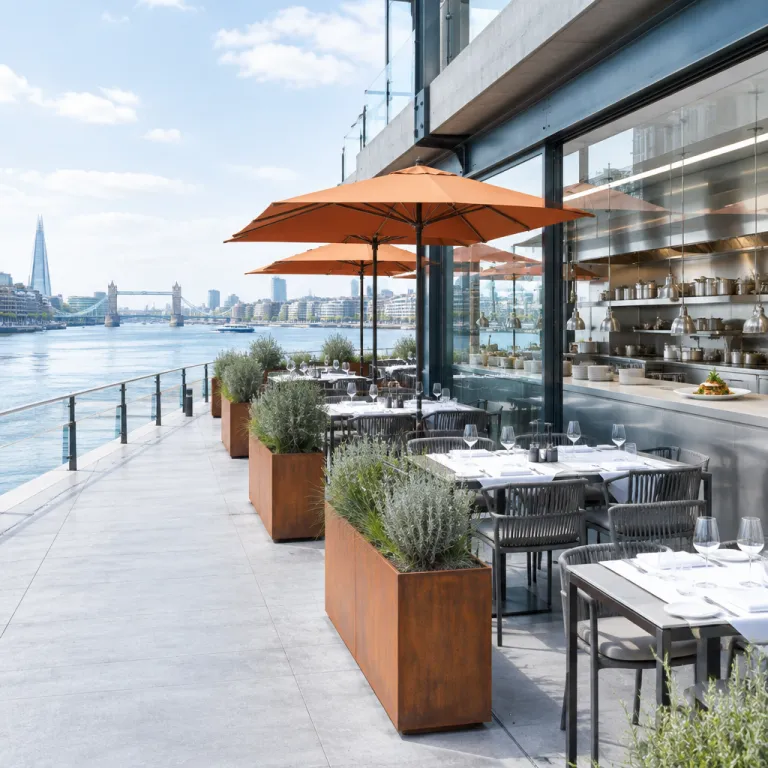
How Gordon Ramsay at Sea Containers reframes hotel culinary branding
Gordon Ramsay at Sea Containers opens as an all day riverside restaurant inside the Sea Containers London hotel, and it instantly shifts the property’s hotel culinary branding from solid design hotel to culinary destination. For F&B management teams, this kind of hospitality branding move is not about a single restaurant brand or one more food and beverage outlet ; it is about using a marquee chef partnership to reposition the entire hospitality brand, influence the hotel brand rate story, and build a long term guest experience platform that justifies higher ADR and stronger brand loyalty. The new restaurant operates from breakfast through dinner with a Sunday roast, and that all day culinary strategy turns a single hotel restaurant into a continuous guest experience engine that touches in house guests, local residents, and external covers from across London.
The partnership between Gordon Ramsay Restaurants Global and Lore Group shows how a strong restaurant branding strategy can anchor hotel culinary branding for both independent hotels and multi asset real estate portfolios. Sea Containers London is not an anonymous chain hotel ; it is effectively a culinary hotel now, where the restaurant brand and the hotel brand share one integrated brand identity, one hospitality branding narrative, and one set of marketing strategies aimed at both rooms and F&B revenue. For investors and asset management leaders, this kind of culinary branding deal is a way to build a differentiated hospitality brand strategy without carrying the full creative and operational risk of developing an in house restaurant brand from scratch.
From a pure P&L perspective, a marquee chef partnership trades margin for momentum, and F&B directors need to model that trade with precision. A Gordon Ramsay level restaurant brand will typically command management fees, a share of restaurant revenue, and tight control over culinary content, which can dilute outlet level margins while lifting total hotel revenue per available room through stronger guest loyalty and higher external demand. The question for every independent hotel or hotel group is whether the incremental food beverage revenue, the uplift in guest experience scores, and the halo on the overall hospitality brand outweigh the loss of menu control, the constraints on local sourcing strategy, and the long term dependency on a single hospitality brand partner.
What the Ramsay deal signals about branded partnerships versus in house concepts
Gordon Ramsay Restaurants Global announcing two hotel partnerships in one year, including Gordon Ramsay at Sea Containers and a planned fine dining opening with Fairmont Cheshire, is a clear signal that branded restaurant groups and hotels are converging around shared branding strategies. For hotel culinary leaders, this means the choice is no longer between a generic hotel restaurant and a fully independent restaurant brand ; it is between building an in house culinary branding strategy or plugging into an established hospitality brand with proven marketing strategies, social media reach, and global brand loyalty. The Ramsay group brings a ready made brand identity, tested menu engineering, and international food media attention, while Lore Group brings a design led hotel, prime real estate on London’s South Bank, and a pipeline of hotel guests and local diners.
Directeurs F&B weighing a chef partnership against an internal concept need a structured brand strategy framework. A marquee hospitality branding deal tends to win when the hotel needs rapid external awareness, when the local market is crowded with strong independent restaurant brands, and when the property’s F&B management lacks the in house culinary content engine to sustain daily social media storytelling and seasonal menu innovation. In contrast, an in house hotel culinary strategy can outperform when the hotel already has a strong hospitality brand, deep local food relationships, and the operational discipline to run a restaurant branding play that keeps more margin and more control in the owner’s hands.
Operationally, Gordon Ramsay at Sea Containers is an all day restaurant, not just a dinner destination, and that matters for hotel culinary branding economics. Breakfast, lunch, afternoon, dinner, and Sunday roast service create multiple dayparts to spread fixed labour and real estate costs, but they also require tight management of food cost, staffing, and guest experience standards across every service. For F&B directors exploring chef partnerships, the decision is less about celebrity and more about whether the restaurant branding model, the culinary strategy, and the revenue share structure align with the hotel’s existing F&B systems, its long term asset plan, and its broader portfolio of chef pop ups and concept strategies, as analysed in this piece on chef pop ups as a concept strategy.
Decision checklist for hotel groups and independent owners
Before signing a marquee chef deal, hotel owners and F&B leaders need a hard nosed checklist that connects hotel culinary branding to the actual F&B P&L. First, clarify how restaurant revenue, management fees, and capital expenditure are allocated between the hotel and the restaurant brand, and how the deal will appear in departmental versus total hotel reporting over the full term. Second, stress test brand exit scenarios ; if the hospitality brand partner leaves, the hotel restaurant still needs a viable culinary identity, a loyal local guest base, and a marketing strategy that can stand without the chef’s name.
Rate strategy and guest mix also need explicit modelling. A signature culinary hotel concept like Gordon Ramsay at Sea Containers can justify higher room rates and attract more external guests, but only if the guest experience is consistent from breakfast to late night and if the restaurant branding does not alienate core segments who want simpler food or specific dietary options, such as those analysed in this guide to gluten free pasta for hotel menus and guest diets. Terrace seasonality, riverside footfall, and local competition all influence whether the restaurant brand can sustain volume in shoulder months, and whether the hotel brand can rely on that F&B revenue stream for debt covenants and asset valuation.
Finally, portfolio strategy matters as much as single asset performance. A hotel group VP deciding between multiple chef partnerships and a unified in house restaurant branding platform should benchmark against other hospitality brand plays, such as the integrated dining strategy at Soho House Tokyo discussed in this analysis of the Japan F&B playbook. The goal is to build a coherent hotel culinary ecosystem where each hotel restaurant, each culinary hotel flagship, and each local food partnership reinforces overall brand identity, deepens brand loyalty, and turns food beverage operations into a strategic lever for both real estate value and long term hospitality branding power.