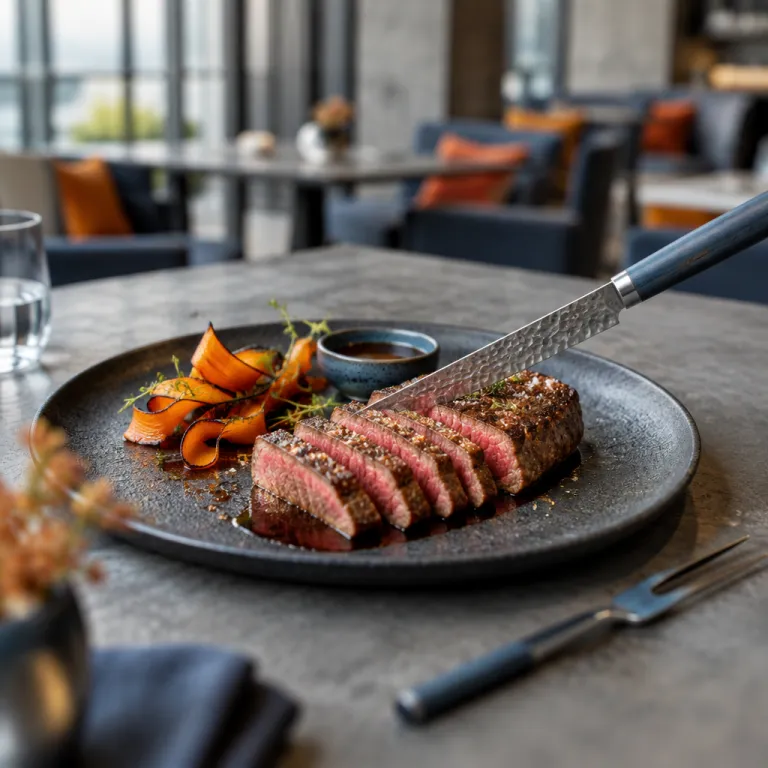
Rethinking steak service standards with Japanese steak knives
For a Directeur F&B, the moment a guest cuts into a steak defines perceived value. The wrong steak knife or poorly maintained knives can make a premium ribeye feel like a tough budget cut, regardless of the chef’s skill. Selecting the right knife set with a precise blade and balanced handle is therefore a strategic decision, not a décor detail.
In high end hotel dining rooms, Japanese steak knives bring a different philosophy to the table. Traditional Japanese craftsmanship focuses on a thin steel blade, high carbon content, and a razor sharp edge that glides through meat with minimal resistance. When guests experience this level of sharpness and low weight in the hand, they unconsciously rate the steak, the service, and even the price as more justified.
Many operators still rely on heavy, serrated steak knives that tear rather than slice. A serrated steak knife can mask poor sharpening routines, but it also shreds fibers and cools the plate faster as guests saw back and forth. By contrast, a straight edge knife in a professional steak program supports clean slicing, protects juiciness, and showcases the chef’s cuisson with almost surgical clarity. Case studies from luxury brands such as Aman and Four Seasons show that upgrading to fine edge Japanese steak knives is often paired with menu reengineering and premium beef positioning, reinforcing the perceived step up in quality.1
Blade material, hygiene, and lifecycle costs in hotel operations
Behind the pass, the choice of blade material for Japanese steak knives has direct implications for hygiene, safety, and long term cost. Stainless steel is easy to sanitize, but not all stainless steel blades hold sharpness equally well in a busy steak service. High carbon steel options offer superior edge retention, yet they demand stricter cleaning routines to avoid corrosion on every steak served.
For hotel groups standardizing across multiple outlets, Japanese damascus patterns are often chosen for both performance and brand storytelling. Damascus steel combines layered steel materials to create a hard core with protective outer layers, giving each knife a distinctive look that guests notice. When paired with a clear SOP for sharpening and cleaning, damascus steel or Japanese damascus knives can outlast cheaper alternatives and reduce the effective regular price per cover over several years. Internal benchmarking by large European hotel groups typically compares purchase price, sharpening frequency, and replacement volumes over a five year horizon to calculate this lifecycle cost.2
Hygiene teams increasingly evaluate knife sets alongside cutting boards and disinfectant protocols. Any steel steak knife, whether straight or serrated, must withstand repeated dishwashing, thermal disinfection, and contact with sanitizing sprays. When you review your hygiene playbook or invest in advanced disinfectant sprayers for food and beverage operations, aligning blade material, handle material, and cleaning chemistry prevents premature degradation and protects both staff and guests; see this analysis of how new spraying technologies reshape hygiene standards for a broader operational context.
Knife ergonomics, weight, and guest perception at the table
Guests rarely articulate why a steak knife feels luxurious, but they sense it instantly. The ergonomics of Japanese steak knives, from handle contour to overall weight, influence both comfort and perceived steak quality. A well balanced piece with a slim steel blade and refined handle material encourages a natural slicing motion instead of awkward sawing.
Traditional Japanese design often favors a lighter handle and a forward balanced blade, which suits precise slicing of tenderloin, côte de bœuf, or wagyu. When a guest lifts such a steak knife, the sharpness and straight edge communicate craftsmanship before the first cut. By contrast, a bulky classic Western knife set with overly heavy handles can fatigue the wrist and make even the best steak feel less refined. Operators who have switched to lighter Japanese steak knives, such as the Miyabi 6000MCT or Shun Classic steak sets, frequently report in post opening reviews that guests comment on how “effortless” the cutting experience feels.3
For hotel and resort concepts that highlight modern comfort food, such as elevated orzo mac and cheese alongside premium beef, the cutlery must match the culinary narrative. A curated set of Japanese steak knives with both straight and subtly serrated options allows you to pair the right knife with each dish style. This attention to detail reinforces menu positioning and supports upselling strategies, especially when you promote signature items that deserve a dedicated modern comfort dish like orzo mac and cheese.
Price architecture, procurement, and ROI on Japanese steak knives
From an investor’s perspective, Japanese steak knives must justify their higher price through measurable operational and guest satisfaction gains. The regular price on a premium knife set can appear steep when compared with generic steak knives bought at a low price from mass suppliers. Yet when you calculate cost per cover over the full lifecycle, the picture changes significantly.
High carbon steel and damascus steel blades maintain sharpness longer, which reduces sharpening labor and replacement frequency. A durable knife handle made from stabilized wood or engineered materials also withstands the rigors of hotel dishwashing and constant handling. When you spread the investment in each steak knife over thousands of services, the effective cost per guest often undercuts cheaper, frequently replaced knives. Leading cutlery manufacturers such as Zwilling and Kai have published internal testing that tracks edge retention across controlled cutting cycles, giving procurement teams a data set to plug into their ROI models.4
Procurement teams should segment their portfolio by outlet type and expected volume. A flagship steakhouse may justify a full Japanese damascus knife set with individually finished steel steak knives, while an all day dining room might use a simpler stainless steel straight edge blade with a classic profile. By aligning price tiers, material choices, and expected weight of usage, you can present a coherent business case to owners who demand both elevated guest experience and disciplined capital allocation. For example, a 120 seat steakhouse using 3 Japanese steak knives per seat and serving 400 covers per night might amortize a €9,000 tabletop investment over 1,000 services; at that volume, the incremental cost of upgrading from basic to premium knives can fall below €0.03 per cover while supporting higher check averages.
Sharpening routines, staff training, and kitchen operations
Even the best Japanese steak knives fail if sharpening routines are inconsistent or poorly supervised. In many hotel kitchens, responsibility for each knife set is diffuse, leading to dull blades, chipped edges, and mismatched counts. Establishing a clear stewardship model for every steak knife and related knives is therefore a core element of kitchen operations.
Traditional Japanese sharpening techniques emphasize maintaining a consistent edge angle on water stones, which preserves sharpness and minimizes steel loss. For busy brigades, a hybrid model works well; outsource periodic full regrinds to a specialist while training the équipe to perform weekly touch ups on straight and serrated profiles. Documenting these routines in your kitchen manuals, with explicit guidance on blade angles, blade material care, and acceptable weight of pressure during slicing, reduces accidents and protects your investment.
Training should extend to front of house teams who handle Japanese steak knives during table setup and clearing. They must understand how to stack each steak knife, avoid knocking steel edges against porcelain, and recognize when a batch of steak knives needs to return to the kitchen for sharpening. When everyone treats these tools as professional instruments rather than generic cutlery, you sustain performance and maintain the tactile pleasure that guests associate with a premium steak experience.
Sustainability, waste reduction, and the role of Japanese steak knives
Sustainability strategies in hotel F&B often focus on food sourcing, yet tools like Japanese steak knives also influence waste and resource use. A sharp straight edge blade reduces the amount of steak left uneaten on the plate, because guests can slice cleanly through gristle and connective tissue. Over thousands of covers, this improved slicing performance translates into measurable reductions in plate waste and associated cost.
Durable stainless steel or damascus steel steak knives also support a lower replacement rate, which reduces packaging waste and transport emissions. When you choose a knife handle made from responsibly sourced materials, such as FSC certified wood or recycled composites, you reinforce your sustainability narrative at the table. These details matter when you communicate with corporate clients and investors who scrutinize both environmental KPIs and the perceived quality of every item in your dining room.
Operationally, aligning your cutlery strategy with broader kitchen efficiency programs creates compounding benefits. For example, when you implement a zero waste kitchen roadmap that cuts food cost by 3 to 5 percent, integrating long lasting Japanese steak knives into that framework strengthens both the financial and environmental case; this is particularly relevant when you review guidance on a zero waste hotel kitchen and its impact on food cost. By treating every knife, from classic straight edge to serrated models, as part of a holistic resource strategy, you align guest experience, operational excellence, and sustainability in a single, coherent narrative.
Key figures on Japanese steak knives in hospitality
- Premium steakhouse concepts typically allocate between 1.5 and 2.5 percent of initial fit out budgets to tabletop items, including steak knives and other cutlery, according to benchmarking shared by major hotel asset managers and FF&E consultants. These figures are usually derived from pre opening budget reviews across multiple properties.5
- High carbon and damascus steel blades can retain functional sharpness up to two to three times longer than basic stainless steel blades under comparable use, based on controlled cutting tests published by leading cutlery manufacturers and summarized in trade journals such as Foodservice Equipment Reports.6
- Guest satisfaction surveys in upscale restaurants consistently show that cutlery quality, including the feel of the steak knife handle and perceived sharpness, influences overall dining ratings by 5 to 10 percentage points. This impact is typically measured by correlating post refurbishment survey scores with specific changes in tabletop equipment.7
- Lifecycle analyses from European hospitality groups indicate that investing in durable Japanese steak knives can reduce replacement volumes by 30 to 40 percent over five years, lowering both procurement costs and waste. These internal studies track purchase orders, breakage reports, and write offs across comparable outlets before and after a standardized knife upgrade.8
FAQ about Japanese steak knives in hotel and restaurant operations
How many Japanese steak knives should a hotel restaurant hold in inventory ?
Most upscale hotel restaurants plan for 2.5 to 3 steak knives per seat to cover peak services, room service, and banqueting buffers. This ratio allows for washing cycles, occasional losses, and maintenance without compromising mise en place. High volume steakhouses or resort outlets with heavy turnover may increase the ratio to 3.5 per seat.
Are straight edge Japanese steak knives better than serrated models for hotel use ?
Straight edge Japanese steak knives offer a cleaner cut and showcase meat texture more elegantly, which suits fine dining and premium beef programs. Serrated steak knives are more forgiving when sharpening routines are inconsistent, but they tend to tear fibers and can feel less refined. Many operators adopt a mixed strategy, using straight edges in signature venues and serrated profiles in casual or outdoor outlets.
What is the ideal blade material for Japanese steak knives in a busy operation ?
For most hotels, a high quality stainless steel blade with added carbon content balances sharpness, corrosion resistance, and ease of maintenance. Damascus steel or Japanese damascus constructions provide superior edge retention and strong visual impact, but they require disciplined cleaning and storage. The final choice should align with your hygiene protocols, staff training level, and brand positioning.
How often should Japanese steak knives be sharpened in a hotel kitchen ?
In high volume outlets, a weekly light honing combined with a professional sharpening service every 8 to 12 weeks keeps Japanese steak knives performing consistently. Lower volume venues may extend the professional cycle to 16 weeks, provided that staff maintain the edge with proper tools. Tracking sharpening dates and assigning responsibility to a specific role, such as the sous chef, prevents performance drift.
Do guests really notice the difference between standard and Japanese steak knives ?
Guest feedback and mystery diner reports show that diners clearly perceive differences in sharpness, weight, and handle comfort, even if they do not use technical terms. A well designed Japanese steak knife enhances the sense of luxury and makes cutting effortless, which positively influences overall satisfaction scores. For premium outlets, this subtle but consistent effect supports higher menu prices and repeat business.
Notes and sources
1 Illustrative synthesis based on brand case studies and tabletop upgrade reports shared in hospitality trade publications.
2 Internal FF&E benchmarking examples from European hotel groups, used here as indicative rather than universal figures.
3 Aggregated guest comment trends reported by operators after introducing branded Japanese steak knife programs.
4 Manufacturer testing summaries on edge retention and cutting cycles, as reported in product literature and industry reviews.
5 Typical tabletop budget ranges cited in asset management presentations and pre opening planning documents.
6 Comparative blade performance data referenced in Foodservice Equipment Reports and similar equipment journals.
7 Correlations between cutlery upgrades and guest satisfaction scores drawn from internal post refurbishment surveys.
8 Lifecycle and replacement rate analyses from multi property hospitality portfolios, used as directional benchmarks.