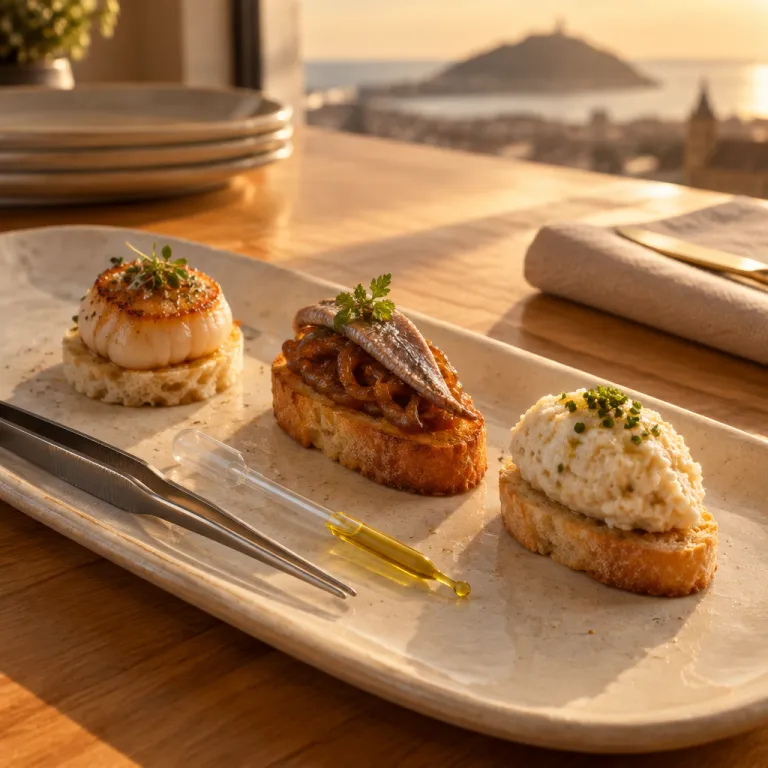
San Sebastián food: a live laboratory for hotel F&B strategy
San Sebastián food as a live laboratory for hotel F&B strategy
San Sebastián is a compact city where food culture drives tourism strategy. For any Directeur F&B or chef exécutif, the way this Basque town aligns hospitality, bars, and restaurants around one shared vision offers a powerful model. The result is that San Sebastián food has become shorthand for excellence, consistency, and profitable creativity.
The old town, or Parte Vieja, concentrates dozens of pintxos bars within a few streets, turning every bar and every pintxos counter into a micro R&D lab. Guests move from one place to another in minutes, comparing each pintxo, each glass of wine, and each service touchpoint. This density means that the best ideas spread quickly across the city map, while weak concepts disappear just as fast.
For hotel groups and independent operators, the lesson from this Basque city is clear. Treat your F&B outlets as an integrated ecosystem, not isolated restaurants or a single lobby bar. When you study San Sebastián food in detail, you see how a whole town behaves like one coordinated culinary destination.
In Donostia–San Sebastián, Basque identity is not a theme but an operating system. From the smallest pintxos bars to the most refined starred restaurants, the same Basque Country narrative runs through sourcing, menu language, and guest experience. This shared story allows very different places, from a noisy bar on Fermín Calbetón kalea to a quiet dining room near La Concha Beach, to reinforce each other instead of competing blindly.
For investors in restauration, this alignment reduces risk and increases average spend per visitor. Guests arrive with a clear expectation that they will eat San Sebastián food that is both rooted in Basque tradition and open to innovation. That expectation allows operators to price confidently, manage margins, and still be perceived as offering great value.
Hotel F&B leaders can map their own properties the way they would map the Parte Vieja. Identify which outlet plays the role of the classic pintxos bar, which one mirrors a contemporary wine-led bar, and which one aspires to a Michelin-starred or near-starred restaurant positioning. When every place has a defined role, the overall city-style experience can be recreated at the scale of a single property or resort.
Pintxos culture as a blueprint for agile menu innovation
The heart of San Sebastián food is the pintxos culture, where small bites carry big ideas. In the Parte Vieja, a single bar might serve twenty different pintxos at once, with hot pintxos coming from the kitchen and cold options displayed along the counter. This constant rotation creates a live testing ground that hotel kitchens can adapt for their own menu engineering.
In streets such as Fermín Calbetón kalea and Agosto kalea, operators use pintxos bars as a low-risk format to trial new flavor combinations, new textures, and new price points. A slow-cooked beef cheek on a slice of bread can be introduced for a few days, tracked informally through order volume, and then either scaled up or quietly retired. For chefs exécutifs managing large brigades, this agile approach to menu development is far more efficient than seasonal overhauls that lock in untested dishes.
Atari Gastroleku, located near the Basílica de Santa María, shows how a single pintxos bar can bridge locals, tourists, and high-spending gastronomes. Their hot pintxos menu evolves constantly, yet the operational backbone remains stable, with mise en place designed for speed and consistency. Hotel bars can borrow this logic by creating a rotating slate of small plates that sit alongside a core of high-margin signatures.
For suppliers F&B, San Sebastián food offers a clear message about format and packaging. Products that work well in pintxos bars must be portion-flexible, easy to regenerate, and compatible with both bar counters and seated restaurants. When a town like Donostia–San Sebastián runs on small bites, logistics and product design naturally adapt to that scale.
There is also a lesson in how Basque operators integrate global influences without losing identity. You will see Middle Eastern spices, Asian condiments, and Latin American acids appear in pintxos, yet the overall experience remains unmistakably Basque. Hotel kitchens exploring new pantry shifts, such as the use of za’atar or harissa, can study this balance in depth, and resources like this analysis of Middle Eastern ingredients in hotel kitchens align perfectly with the San Sebastián food mindset.
For Directeurs F&B, the key is to formalize what San Sebastián operators do instinctively. Build a structured tasting calendar, rotate pintxo-style items weekly, and track which combinations of bar snacks and drinks generate the best check averages. As a practical benchmark, many hotels report mid–single digit percentage uplifts in bar revenue when they introduce a clearly promoted, limited-time pintxos-style offer and review performance every two weeks.
From pintxos bar to Michelin-starred dining room : one guest journey
San Sebastián is one of the few cities where a guest can move from a crowded pintxos bar to a Michelin-starred dining room in the same evening. This fluidity between casual and fine dining is a central strength of San Sebastián food, and it offers a template for hotel F&B zoning. Guests do not think in silos ; they think in journeys across the town and across the property.
In the Basque Country, starred restaurants and informal bars often share suppliers, techniques, and even staff movement, which keeps standards high at every level. A guest might start with a glass of Txakoli and a single pintxo in a bar on Fermín Calbetón kalea, then walk to a reservation at one of the city’s Michelin-starred restaurants. For hotel groups, the equivalent is a guest moving from lobby bar to signature restaurant, then perhaps to a rooftop bar for a final drink.
Operators like Borda Berri in the Parte Vieja show how slow-cooked dishes can feel as refined as tasting menu courses when portioned as hot pintxos. Their famous slow-cooked veal cheeks or risottos served in small bowls demonstrate how technique, not formality, defines perceived quality. A hotel can apply the same logic by using fine dining techniques in bar snacks, making the bar a credible prelude to a high-end dinner.
At the upper end, Donostia–San Sebastián’s starred restaurants translate the Basque pantry into structured tasting experiences. The same Basque cheesecake that appears in casual restaurants might be reinterpreted with different textures, temperatures, or plating. For investors, this vertical integration of products across bars and restaurants increases purchasing power and reduces waste.
San Sebastián food also shows how beverage programs can knit the journey together. Many bars and restaurants work with overlapping wine lists, local ciders, and a focused selection of spirits, including German liquors and other European references that appear in creative cocktails. Hotel F&B teams exploring heritage spirits can draw inspiration from this approach and from resources such as this deep dive into heritage and innovation in German liquors, then adapt the learnings to their own city context.
For Directeurs F&B, the strategic question is how to design a property-level map that mirrors the city-level journey. Define which outlet plays the role of the energetic pintxos bar, which one aspires to Michelin-starred precision, and which spaces act as connective tissue. When the guest can move naturally between these places, your hotel begins to feel like a small version of San Sebastián itself.
Operational discipline behind the chaos of Parte Vieja
To an outsider, the Parte Vieja can look chaotic, with crowded bars, loud conversations, and plates of food everywhere. Behind this apparent disorder lies a strict operational discipline that any hotel F&B équipe can study and adapt. The efficiency of San Sebastián food service is not accidental ; it is engineered.
In a typical pintxos bar on Kalea Donostia or Agosto kalea, mise en place is organized with almost military precision. Cold pintxos are prepared in batches, displayed on the bar, and refreshed constantly, while hot pintxos are fired to order from a compact but highly optimized kitchen. This dual system allows high-volume service with minimal wait times, even when the bar is full and guests stand shoulder to shoulder.
For hotel operators, the lesson is to separate clearly what must be cooked à la minute from what can be prepared in advance without compromising quality. Slow-cooked items, such as stews or braised meats, are ideal candidates for pintxo-style portions that can be reheated quickly and plated elegantly. This approach stabilizes labor costs and reduces stress on the brigade during peak periods.
Places like Borda Berri on Fermín Calbetón kalea illustrate how a tiny kitchen can produce a focused menu of hot pintxos with remarkable consistency. Their team relies on a narrow range of core preparations, then varies garnishes and presentations to keep the offer fresh. Hotel kitchens with larger footprints can use the same principle, concentrating on a few high-impact preparations that feed multiple outlets.
Inventory management in San Sebastián’s bars and restaurants is also instructive. Because the town is compact and suppliers are close, operators can work with short delivery cycles and minimal stock, which reduces waste and keeps food quality high. While not every city allows such frequency, hotel F&B leaders can still shorten internal cycles, moving products quickly from central production to each bar and restaurant.
For suppliers F&B, the operational model of San Sebastián food suggests new product formats. Pre-trimmed cuts suitable for slow-cooked applications, sauces designed for quick regeneration, and pastry bases for Basque cheesecake all support the high-turnover reality of pintxos bars. When suppliers align their offer with these needs, they become strategic partners rather than simple vendors.
Reinventing hotel bars with a San Sebastián mindset
Many hotel bars still operate as generic lounges, disconnected from local food culture and from the rest of the property. San Sebastián food offers a radically different vision, where every bar is a destination and every drink is anchored in the town’s culinary identity. For Directeurs F&B, this is an opportunity to reposition the bar as a revenue engine rather than a cost center.
In Donostia–San Sebastián, guests rarely sit for hours in a single bar ; they move. Each pintxos bar competes to be the best next stop, using one or two signature pintxos and a focused beverage list to stand out. Hotel bars can emulate this by designing a few iconic bites and drinks that make the outlet a must-visit place within the property and within the wider city.
Atari Gastroleku is a strong example of how a bar can become a social landmark. Located near San Telmo Museum and the church, it uses a mix of classic pintxos, hot pintxos, and a sharp beverage program to attract both locals and visitors. A hotel bar near a cultural or business hub can play a similar role, using San Sebastián food references to signal quality and authenticity.
For beverage strategy, the Basque model favors depth over breadth. Rather than offering an endless list, many bars focus on a tight selection of wines, ciders, and spirits that pair well with their pintxos and larger food menu. Hotel F&B teams looking to elevate their wine-by-the-glass program can study this approach and complement it with tools such as premium pour systems, as analyzed in this article on wine by the glass and margin math.
From a design perspective, the bar counter in San Sebastián is both stage and service engine. Plates of pintxos, chalkboard menus, and visible bottles create a sense of abundance that encourages guests to order more and to eat San Sebastián food spontaneously. Hotel bars can recreate this visual richness with displays of small plates, Basque cheesecake slices, and clear signage that guides guests through the offer.
For investors, the key metric is revenue per square meter. The density of guests in San Sebastián’s bars, especially around Parte Vieja and La Concha Beach, shows how a small footprint can generate high turnover when the concept is sharp. Applying a San Sebastián food mindset to hotel bars means designing for flow, visibility, and impulse ordering, rather than for static seating alone.
Translating San Sebastián food into scalable hotel concepts
The challenge for groupes hôteliers and large investors is not to copy San Sebastián literally, but to translate its principles into scalable concepts. San Sebastián food is deeply tied to the Basque Country, yet its operational and strategic lessons can travel to any city. The goal is to capture the spirit of the town, not to imitate every pintxo or every bar.
First, define the narrative that will play the role of Basque identity in your own context. In San Sebastián, references to the sea, the mountains, and local producers appear across bars and restaurants, from simple pintxos bars to refined starred restaurants. A hotel in another region can build a similar through line around its own terroir, using local products and stories to connect outlets.
Second, design a property-level map that mirrors the density of the Parte Vieja without overwhelming guests. Identify one outlet that behaves like a high-energy pintxos bar, one that aspires to Michelin-starred finesse, and one or two hybrid spaces that bridge casual and formal. Each place should have a clear role in the guest journey, just as each street in the old town, from Fermín Calbetón kalea to Kalea Donostia, contributes a different mood.
Third, build supplier partnerships that support agile menu development. In San Sebastián, the proximity of producers allows rapid iteration on pintxos, hot pintxos, and seasonal dishes, including desserts such as Basque cheesecake. Hotel F&B leaders can negotiate similar flexibility, asking suppliers to provide formats suitable for slow-cooked preparations, small plate presentations, and cross-outlet use.
Finally, invest in training that aligns teams around a shared vision of hospitality. The best bars and restaurants in Donostia–San Sebastián operate with a strong sense of pride and collective identity, which guests feel immediately when they enter a bar or sit down to eat. When your équipe understands why you are adopting a San Sebastián food inspired model, they can explain it to guests and make it real.
For Directeurs F&B, chefs exécutifs, exploitants indépendants, and investors, the message is simple. Study how this Basque town turned its food culture into a coherent, profitable ecosystem, then adapt those principles to your own city and your own map of outlets. When done well, your property can offer guests the same sense that every bar, every restaurant, and every place is part of one great culinary story.
Key figures shaping San Sebastián food and global hospitality
- San Sebastián and the wider Basque Country are frequently cited as having one of the highest concentrations of Michelin stars per capita in the world, with recent editions of the Michelin Guide listing numerous stars across the province, which positions the city as a benchmark for starred restaurants in urban destinations.
- Pre-pandemic estimates from Basque tourism authorities suggested that gastronomy motivated roughly one third of visits to Donostia–San Sebastián, showing how strongly food and bar culture drive overall tourism demand, even if exact percentages vary by study and year.
- Average spend on food and beverage per visitor in San Sebastián has been described in local tourism analyses as being in the tens of euros per day, often higher than many other cities in Spain, which underlines the revenue potential of a dense network of bars and restaurants.
- Industry surveys of hotel F&B performance in Europe indicate that properties with a clear local food identity can generate materially higher F&B revenue per available room compared with generic concepts, a pattern that aligns closely with the San Sebastián food model even though results depend on market and positioning.
- Consumer research on small plate formats, including tapas and pintxos, indicates that guests are willing to order significantly more items when presented with visually rich counters and clear pricing, which mirrors the behavior observed in the Parte Vieja’s pintxos bars and can be replicated in hotel bar displays.
FAQ : applying San Sebastián food lessons to hotel F&B
How can a hotel without Basque roots use San Sebastián food as inspiration ?
A hotel does not need Basque roots to learn from San Sebastián food, but it must translate the principles rather than copy the dishes. Focus on dense choice in small plates, strong local storytelling, and a clear map of outlets that guide guests through different moods. Use your own region’s products the way San Sebastián uses Basque Country ingredients.
What is the most relevant element of pintxos culture for hotel bars ?
The most relevant element is the combination of small, high-impact bites with a focused beverage list that encourages movement and repeat orders. Hotel bars can introduce a rotating selection of pintxo-style items, including hot pintxos and slow-cooked specialties, displayed visibly on the counter. This approach increases check averages and turns the bar into a destination.
How can F&B directors manage labor when adopting a pintxos style offer ?
Labor can be managed by designing menus around a few core preparations that feed multiple dishes, as seen in places like Borda Berri. Slow-cooked items, cold preparations, and Basque cheesecake style desserts can be produced in batches, then finished quickly during service. Clear station design and cross training help maintain speed even at peak times.
Are Michelin-starred standards compatible with high volume hotel operations ?
Michelin-starred standards are compatible with high volume when technique and sourcing are applied intelligently across outlets. San Sebastián shows that the same quality mindset can appear in both starred restaurants and busy bars, with different price points and formats. Hotels can use fine dining techniques in bar snacks and casual dishes to raise perceived value without replicating full tasting menus.
What role should suppliers play in a San Sebastián inspired F&B strategy ?
Suppliers should act as partners in innovation, not just product providers. They can offer formats suitable for small plates, slow-cooked dishes, and cross-outlet use, as well as support menu testing with flexible minimums. When suppliers understand the San Sebastián food logic, they can help hotels maintain agility and consistency across bars and restaurants.
References
- Basque Tourism Agency – Gastronomy and tourism reports (consult the latest editions for updated visitor motivation and spending data).
- Michelin Guide – Listings and star ratings for San Sebastián and the Basque Country (recent guides confirm the high density of starred restaurants in the region).
- STR and industry F&B benchmarking reports for European hotels – Comparative performance data for properties with strong local food positioning versus generic concepts.