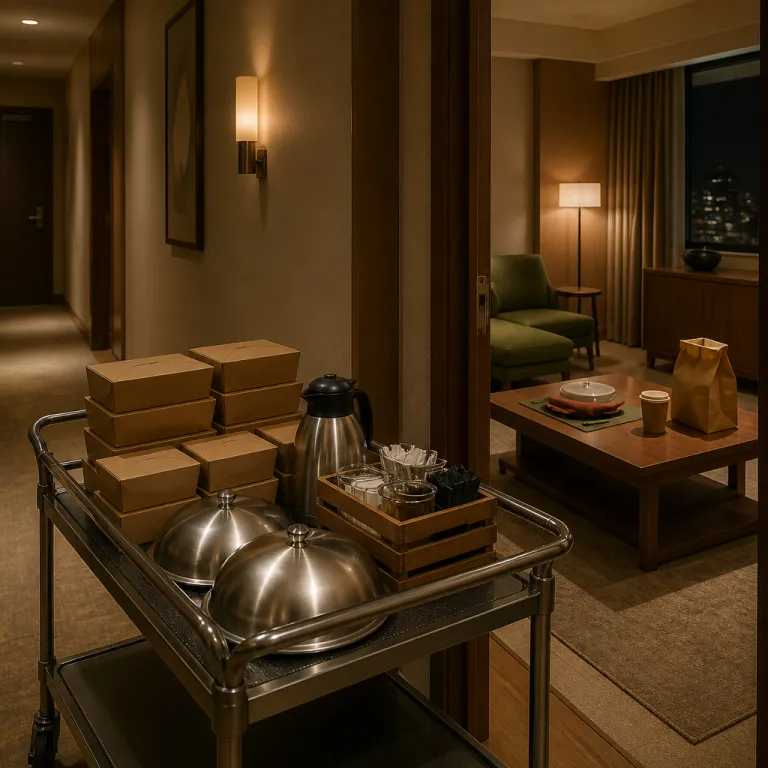
Why late-night room dining is the most underused profit lever
Most hotels treat late-night room dining as a sleepy amenity, not a profit center. Yet from 22:00 to 02:00, the typical hotel guest returning from a delayed flight or event has a higher willingness to pay for food than at any other moment of the stay. In the hospitality industry, that window is where room service innovation can quietly add six figures of annual revenue without adding a single extra restaurant seat.
Late-night demand is not random ; it follows clear patterns across rooms and segments. Corporate guests landing after transcontinental flights, event attendees coming back from banquets, and leisure guests extending a night out all generate concentrated spikes in room dining orders between 22:30 and 01:30. When hotel management maps these guest experiences against labor rosters, the gap between potential revenue and actual revenue becomes painfully visible.
Industry data shows late-night dining as one of the fastest growing dayparts in the wider food industry, with double digit annual growth in some urban markets. In New York, for example, a 300 room property near major venues can see 60 to 80 potential late-night room service orders on peak nights, yet many hotels cap capacity at half that because staff levels and service design still reflect daytime assumptions. That is where targeted service innovations and hotel innovation in technology, menu engineering, and hotel operations can transform a cost center into a self funding program.
Understanding who actually orders late at night
When you analyze real time data from your online ordering system, three late-night customer archetypes usually emerge. First, the exhausted solo business guest who wants reliable, hot food in the hotel room within 25 minutes and will pay a premium for certainty. Second, the social group returning to the boutique hotel after bars or events, looking for shareable food and drinks that extend their experiences without leaving the room again.
The third archetype is the family or couple arriving on a late flight, often with children, who value speed, clarity, and comfort food over culinary experimentation. These guests order differently from daytime room service customers ; they want fewer choices, clearer photos, and transparent check out flows on the app. For hotel management, the key is to align service design and staffing so that each type of guest experience is supported with minimal friction and minimal labor.
In practice, that means segmenting late-night demand by floor, room type, and day of week, not just by total volume. Airport hotels, convention hotels, and urban lifestyle hotels will show very different curves, but all can use AI driven demand forecasting to predict when staff should be on the floor versus on call. The dataset from New York illustrates this approach, where a late-night room dining program was planned over two months, implemented in one month, and then evaluated on an ongoing basis to refine service innovation and labor deployment.
Why willingness to pay is highest between 22:00 and 02:00
By late evening, many guests have already absorbed the sunk cost of the hotel stay and are thinking in terms of comfort, not budgets. The guest who would argue over a 4 USD coffee at breakfast will happily pay a 12 USD service charge at 23:30 if the food arrives quickly and the experience feels frictionless. This is where room service innovation should focus on perceived value, not just plate cost.
Psychologically, late-night orders are often tied to emotional states such as relief after travel, celebration after events, or simple fatigue, which makes guests more receptive to premium pricing. Hotels that understand this dynamic design room dining menus with high margin, low complexity items that still feel indulgent in the hotel room context. When the hospitality industry leans into this behavior, revenue per labor hour in late-night service can surpass daytime restaurant shifts, even with a skeleton staff.
From a P&L perspective, the benchmark to watch is revenue per labor hour, not just average check. With an average late-night order value of around 25 USD in many urban markets, a 100 room property only needs 10 to 12 incremental orders per night to justify one additional cross trained staff member. When hotel operations use technology to batch production and optimize delivery routes across rooms, those extra orders can be handled without compromising guest experiences or food quality.
Menu engineering for a skeleton crew: what actually works at 01:00
A profitable late-night room dining menu is not a slimmed down version of the all day room service offer. It is a separate service design exercise built around reduced staff, limited mise en place, and ruthless control of holding times. The goal is to create a compact set of dishes that travel well to any hotel room, maintain temperature for at least 20 minutes, and can be executed by one or two people without compromising safety.
In the New York case study, the executive chef, operations manager, and hotel management team aligned on three pillars for the late-night menu. First, a limited menu of 10 to 15 items, each with a food cost under 28 percent and a preparation time under eight minutes, supported by pre portioned components. Second, a mix of comfort classics and one or two signature items that reinforce the hotel innovation story and justify a premium price point.
Third, a clear separation between items that can be fully cooked to order and those that are pre made but elevated at plating, such as braised meats, soups, or desserts. This structure allows the skeleton staff to handle spikes in guests order volume without sacrificing the guest experience or creating long waits in rooms. It also reduces waste, since the same components can support both late-night room service and next day outlets, protecting revenue and margin.
Designing for speed, safety, and sensory appeal
Every item on a late-night menu should be tested for how it behaves after a 12 minute journey through corridors and lifts. Burgers, flatbreads, grain bowls, and fried chicken sandwiches often outperform more delicate dishes in terms of texture retention and perceived value in the hotel room. Soups and stews can be strong performers too, especially when the hospitality industry is pushing eco friendly packaging that maintains heat without excessive plastic.
From a safety standpoint, the reduced overnight brigade must be able to execute Hazard Analysis and Critical Control Points without shortcuts. That means limiting high risk items, using proper holding equipment, and designing room dining packaging that keeps hot and cold components separate. When service innovations include clear labeling and allergen information on every tray, the hotel protects both the guest and the brand.
Sensory appeal matters even more at 01:00, when lighting is low and guests are tired. Simple touches such as a warm bread roll, a small garnish, or a thoughtful condiment selection can elevate the guest experiences beyond the basic expectation of hot food. These details support the broader guest experience narrative and reinforce that room service innovation is not just about technology, but about human centric service design that respects the late-night state of mind.
Balancing variety with operational discipline
Operators often overestimate how much variety late-night guests actually want. Data from digital ordering platforms consistently shows that a small cluster of items generates the majority of room service orders after 22:00. Hotels that accept this reality can streamline prep, reduce waste, and increase revenue per available room by focusing on the winners and cutting the noise.
A practical rule is to build the late-night menu around three categories : one handed comfort food, shareable snacks, and one or two better for you options. This structure supports different guest experiences without overwhelming the kitchen or the customer with choice. It also makes it easier for staff to upsell, since each category has clear add ons such as sides, desserts, or beverages that travel well to rooms.
For boutique hotel concepts, the late-night menu is also a branding opportunity. A signature grilled cheese with local cheese, a regional fried chicken, or a plant forward bowl can become part of the hotel innovation story and drive social media mentions. When these items are designed with both single guest and group sharing formats, they support a wider range of guest experiences and increase average check without adding complexity for the overnight équipe.
Operational models that keep labor lean and service sharp
The most profitable late-night room dining programs are built on hybrid operational models, not traditional full brigade room service. One effective approach is the skeleton crew model, where one cook and one attendant handle all room service orders, supported by pre prepped items and smart routing. Another is the cross trained model, where bar or front desk staff are trained to handle basic plating and delivery when volume spikes.
In the New York property example, the operations manager mapped the 22:00 to 06:00 period into micro shifts aligned with forecasted demand. Between 22:00 and 01:00, a two person team handled both room dining and limited lobby bar snacks, then shifted to a single staff member on call with a 15 minute response time for any late orders. This flexible structure allowed the hotel to maintain service innovation while keeping labor costs aligned with real time demand.
Some hotels are also experimenting with partner delivery integration, using curated external vendors to supplement the in house late-night offer. In these models, the hotel room service team focuses on a core menu, while selected external partners handle niche cuisines under strict quality and timing standards. The key is to maintain control of the guest experience by routing all orders through the hotel’s technology stack, rather than sending guests directly to third party apps.
Digital ordering, kitchen display systems, and automated triggers
Technology is the backbone of modern room service innovation, especially overnight when every minute of labor counts. Digital ordering platforms integrated with the property management system allow guests to check menus, customize items, and confirm charges without calling the operator. When these systems feed directly into a kitchen display system, the skeleton crew can prioritize tickets based on prep time and delivery distance across rooms.
Automated triggers can also reduce friction and errors in the hospitality industry. For example, when a guests order is placed after 23:00, the system can automatically adjust estimated delivery times, apply late-night surcharges, and alert the on duty staff via mobile devices. This level of automation supports hotel operations by reducing manual steps and freeing staff to focus on food quality and guest interaction at the door.
However, technology adoption must be handled carefully, because many guests still distrust hotel tech compared with consumer apps. For a deeper analysis of this trust gap and how it affects guest experience, see this piece on why guests do not trust hotel technology the way operators do. Late-night room dining is a prime testing ground for rebuilding that trust, since the value exchange is immediate : the guest orders, the food arrives, and the experience either validates or undermines the technology.
AI driven forecasting and real time adjustments
AI based demand forecasting is no longer theoretical for the hotel industry ; it is already being used to predict late-night order volumes by day of week, season, and event calendar. In the New York case, the hotel used historical data, flight schedules, and local event listings to forecast late-night room service demand with enough accuracy to adjust staffing two months in advance. This allowed hotel management to schedule the right number of staff for each period, reducing both overtime and missed revenue opportunities.
Real time dashboards then allowed the operations manager to monitor actual orders against forecasts and make on the fly adjustments. If demand exceeded expectations, cross trained staff from the front desk or bar could be redeployed to support room dining deliveries. If demand fell short, the skeleton crew could pivot to prep for breakfast or other hotel operations tasks, ensuring that every labor hour contributed to revenue or future readiness.
These service innovations rely on clean data and disciplined processes, not just shiny technology. Hotels that invest in training staff to use these tools, interpret the data, and make decisions in real time will see the strongest ROI from room service innovation. Over time, this approach can also inform broader hotel innovation, from minibar alternatives to breakfast concepts, as patterns in guest experiences and spending become clearer across the stay.
Pricing strategy: surcharges, premiums, and perceived fairness
Late-night pricing is where many hotels leave money on the table or damage the guest experience through clumsy surcharges. A well designed pricing strategy should reflect the higher cost of overnight labor and lower volume, while still feeling fair to the customer. The most effective models combine a modest late-night service charge with a menu engineered around premium only items that justify their price through portion size, quality, and convenience.
One approach is to apply a fixed late-night fee per room service order placed after a certain time, clearly communicated on the menu and in the app. This fee can be framed as an overnight operations charge that supports 24 hour hospitality, which many guests accept if the service is fast and reliable. At the same time, the core late-night menu should avoid low margin items that do not travel well, such as basic salads or low priced sides that consume labor without driving revenue.
Another model is to maintain standard service charges but offer only higher margin items overnight, effectively building the surcharge into the menu pricing. In this case, the guest sees a consistent fee structure across the stay, while the hotel protects margin through careful menu curation. Both models can work, but the key is to test them against guest feedback, review scores, and repeat experiences to ensure that pricing supports both profitability and loyalty.
Anchoring value through bundles and add ons
Bundles are powerful tools in late-night room dining, especially when designed around typical guest experiences. A “flight recovery” bundle might include a hot main, a hydrating beverage, and a small dessert at a slight discount compared with ordering items separately. For groups, a “late return” platter with shareable items and drinks can anchor a higher price point while simplifying production for the overnight staff.
Add ons such as premium sauces, sides, or desserts can also lift average check without adding significant complexity. When the digital ordering interface suggests relevant add ons based on the guests order in real time, conversion rates increase and the guest experience feels curated rather than pushy. These techniques are standard in the wider food industry, but underused in hotel room service, especially overnight.
Transparency is critical to maintaining trust in the hospitality industry. Prices, surcharges, and estimated delivery times should be clearly displayed before the guest confirms the order, whether through the TV, app, or contactless check interface. When guests feel informed and respected, they are more likely to accept premium pricing and to rate the overall hotel stay positively, even if the late-night meal itself is simple.
Benchmarking revenue per labor hour overnight
To judge whether a late-night room service program truly pays for itself, operators should track revenue per labor hour as the primary KPI. This metric divides total late-night room dining revenue by the number of labor hours scheduled for production and delivery. In many successful programs, overnight revenue per labor hour matches or exceeds that of slower lunch periods in the main restaurant.
For example, if a 200 room hotel generates 600 USD in late-night room service revenue over a four hour window with two staff members on duty, that equates to 75 USD per labor hour. If the same hotel can use AI forecasting and digital ordering to push that figure above 90 USD per labor hour, the overnight program clearly justifies its labor cost. Comparing these numbers with other dayparts helps hotel management decide where to invest in further service innovations or technology upgrades.
Over time, tracking revenue per labor hour alongside guest satisfaction scores and repeat order rates will reveal whether room service innovation is delivering sustainable value. If revenue is strong but guest experiences are weak, the issue may lie in service design or food quality rather than pricing. If guest experience scores are high but revenue is low, the menu and pricing strategy may need recalibration to better reflect the true cost of overnight hospitality.
Technology, virtual reality, and the next wave of room service innovation
Technology is reshaping how hotels think about room service, from ordering interfaces to back of house workflows. App based ordering with clear photos, allergen information, and real time status updates has become the baseline expectation for many guests. When integrated with the property management system, these tools allow guests to charge to the room, use loyalty points, and check estimated delivery times without calling the operator.
Some hotel innovation teams are experimenting with virtual reality and augmented reality to enhance the pre order experience. For example, a guest could use a VR enabled device or mobile AR to visualize how a dish will look on the in room table, helping them choose portion sizes and accompaniments. While still niche, these service innovations point toward a future where the digital and physical aspects of the guest experience are tightly integrated across the stay.
Contactless check in and contactless check out have already changed how guests move through hotels, and the same logic applies to room dining. When guests can place, modify, and track their room service orders without touching a phone handset or signing a paper bill, friction drops and satisfaction rises. For the hospitality industry, the challenge is to implement these technologies in a way that feels human, not robotic, especially during late-night hours when guests may want a brief, reassuring interaction at the door.
Building trust in hotel technology overnight
Late-night is a sensitive moment for technology adoption because guests are often tired, hungry, and less tolerant of glitches. If the app crashes, the TV menu is outdated, or the estimated delivery time is inaccurate, the entire guest experience can sour quickly. That is why robust testing, clear communication, and simple backup processes are essential components of any room service innovation roadmap.
Training staff to handle exceptions gracefully is just as important as the technology itself. When a guests order fails digitally, the overnight équipe should have a clear script and process for resolving the issue, including manual entry into the kitchen display system if needed. This blend of technology and human judgment is where the hospitality industry can differentiate itself from pure delivery platforms.
For operators looking to understand the broader context of how guests perceive hotel technology, the analysis on why many guests do not fully trust hotel tech offers valuable perspective. Applying those insights to late-night room dining means prioritizing reliability, transparency, and quick recovery from errors. Over time, consistent performance in this high stakes window can rebuild trust and encourage guests to engage more deeply with other digital services throughout the hotel stay.
Integrating late-night dining with broader F&B strategy
Late-night room dining should not exist in isolation from the rest of the hotel’s F&B ecosystem. The same ingredients, prep, and staff that support breakfast, banquets, and the bar can often be leveraged to support overnight service with minimal incremental cost. For example, braised meats prepared for banquets can be repurposed into late-night sandwiches or bowls, while bar mise en place can support shareable snacks for rooms.
This integrated approach also extends to premium experiences such as private chefs or in suite dining events. For a deeper look at how these high touch services affect cost structures and guest experiences, see this analysis of what you really pay for when you bring a private chef into a hotel or residence. Lessons from these bespoke experiences can inform how hotels design elevated late-night offers for suites or VIP guests, where the willingness to pay is even higher.
Bar programs also intersect with late-night room service innovation, especially in lifestyle and boutique hotel properties. Signature cocktails, heritage spirits, and curated non alcoholic options can be integrated into room dining menus to extend the bar experience into the hotel room. For inspiration on how spirits strategy can reposition a hotel bar and influence in room offerings, the piece on heritage spirits and global flavors in hotel bars offers relevant benchmarks.
Service design, eco friendly choices, and staff culture
Service design is the invisible architecture that makes late-night room dining feel effortless for the guest and sustainable for the hotel. It covers everything from how the menu is presented in the hotel room, to how trays are collected, to how feedback is captured and acted upon. When service design is intentional, every touchpoint reinforces the sense that the hotel understands the guest’s needs at 01:00 and has built the experience around them.
Eco friendly choices are increasingly central to this design, especially in the hospitality industry where single use packaging can quickly undermine sustainability commitments. Compostable containers that maintain heat, reusable glass bottles for water, and minimal but thoughtful accompaniments can all reduce waste without compromising the guest experience. Hotels that communicate these choices clearly on the menu and in the room can turn them into a point of differentiation, especially for younger guests.
Staff culture is the third pillar, because even the best service innovations fail without engaged, well trained teams. Overnight staff often feel invisible compared with daytime colleagues, yet they handle some of the most sensitive guest experiences of the stay. Recognizing their contribution, providing clear career paths, and involving them in room service innovation discussions can dramatically improve both performance and retention.
Training overnight teams for consistency and upsell
Training for late-night room dining should focus on three areas : technical skills, guest interaction, and commercial awareness. Technically, staff must be able to execute the limited menu flawlessly, maintain food safety standards, and use the technology stack confidently. On the guest side, they should be trained to read the situation at the door, offering a quick, quiet handoff for tired guests and a slightly warmer interaction for those who want it.
Commercial awareness means understanding how small actions affect revenue and guest experiences. Suggesting an appropriate add on, confirming whether the guest wants breakfast information, or reminding them of contactless check out options can all add value without feeling scripted. When staff see the direct link between their actions, revenue per labor hour, and guest satisfaction scores, they are more likely to embrace service innovation as part of their professional identity.
Hotels can support this culture by sharing performance data with overnight teams, celebrating wins, and involving them in menu and process tweaks. In the New York program, for example, overnight staff feedback led to the removal of two underperforming items and the introduction of a new shareable dish that quickly became a top seller. This kind of iterative, data informed approach turns room service innovation into a continuous practice rather than a one off project.
Aligning late-night dining with brand positioning
Finally, late-night room dining should reflect the broader brand promise of the hotel, not just fill a functional gap. A luxury hotel might emphasize elevated comfort food with premium ingredients and meticulous presentation, while a lifestyle boutique hotel might lean into playful, shareable items and bold flavors. In both cases, the late-night offer becomes another canvas for expressing the brand’s personality and values.
For hotel groups and investors, this alignment also supports scalability. A clear late-night room service playbook that balances brand specific elements with standardized processes can be rolled out across multiple hotels with predictable results. This is where room service innovation intersects with hotel innovation at the portfolio level, turning what was once an operational afterthought into a strategic lever for both revenue and reputation.
As one internal best practice summary puts it, “Limited menu, efficient staffing, digital ordering.” and “Use of quality ingredients, proper storage, and timely delivery.” and “What role does technology play in late-night room dining? Facilitates ordering, tracks demand, and optimizes operations.” Together, these principles capture the essence of a late-night room dining program that not only pays for itself, but quietly upgrades the entire guest experience across the stay.
Key figures that define profitable late-night room dining
- Annual growth in late-night dining has been measured at around 10 % in some markets, indicating that demand for late-night food in the hospitality industry is rising faster than many traditional dayparts (source : MenuThere, late-night dining growth analysis).
- The average late-night order value of approximately 25 USD reported by several operators means that even a modest increase of 10 additional orders per night can generate over 90 000 USD in incremental annual revenue for a 200 room hotel (source : Purimax, late-night order value benchmark).
- In many full service hotels, a focused late-night room dining program can achieve revenue per labor hour between 60 and 100 USD, which often matches or exceeds slower lunch periods in the main restaurant, based on internal benchmarking from urban properties.
- Digital ordering adoption rates for room service frequently exceed 70 % among guests under 40, suggesting that investment in app based ordering and kitchen display systems directly supports late-night revenue growth and labor efficiency.
- Hotels that reduce their late-night menu to 10 to 15 high margin items typically report food cost percentages 3 to 5 points lower than those offering broader overnight menus, according to internal F&B audits from multi property groups.
FAQ about late-night room dining programs
What are the key components of a profitable late-night room dining program?
The key components of a profitable late-night room dining program are a limited, high margin menu, efficient staffing, and robust digital ordering. A compact menu reduces waste and simplifies execution for a skeleton crew, while cross trained staff keep labor costs aligned with demand. Digital ordering and kitchen display systems streamline the flow from guests order to delivery, improving both revenue per labor hour and guest experience.
How can hotels ensure food quality during late-night hours?
Hotels can ensure food quality overnight by designing menus around items that travel well, using high quality ingredients, and maintaining strict storage and holding standards. Proper equipment for hot and cold holding, clear labeling, and disciplined Hazard Analysis and Critical Control Points procedures are essential. Regular tasting, mystery shopping, and review analysis help confirm that food arriving in the hotel room at 01:00 matches daytime standards.
What role does technology play in late-night room dining?
Technology plays a central role by facilitating ordering, tracking demand, and optimizing operations. App based interfaces and TV menus allow guests to check options, customize dishes, and confirm charges without calling, while kitchen display systems organize production for the overnight équipe. AI driven forecasting and real time dashboards then help hotel management align staffing, reduce wait times, and identify service innovations that improve both revenue and guest experiences.
How should hotels staff their late-night room service operations?
Most hotels succeed with a skeleton crew model, typically one cook and one attendant, supported by cross trained staff from the front desk or bar when demand spikes. Staffing should be based on forecasted order volumes by day of week and season, using historical data and local event calendars. Clear role definitions, multi skilling, and simple, repeatable processes allow this small team to maintain service quality and safety while keeping labor costs under control.
Is it better to use third party delivery partners for late-night orders?
Third party delivery partners can supplement a hotel’s late-night offer, but they should not replace a core in house program if the goal is to control guest experience and protect brand standards. Partner integration works best when the hotel curates a small set of external options, routes all orders through its own technology, and maintains clear quality and timing expectations. This hybrid approach can expand choice for guests while ensuring that the hotel still owns the relationship and the overall stay experience.