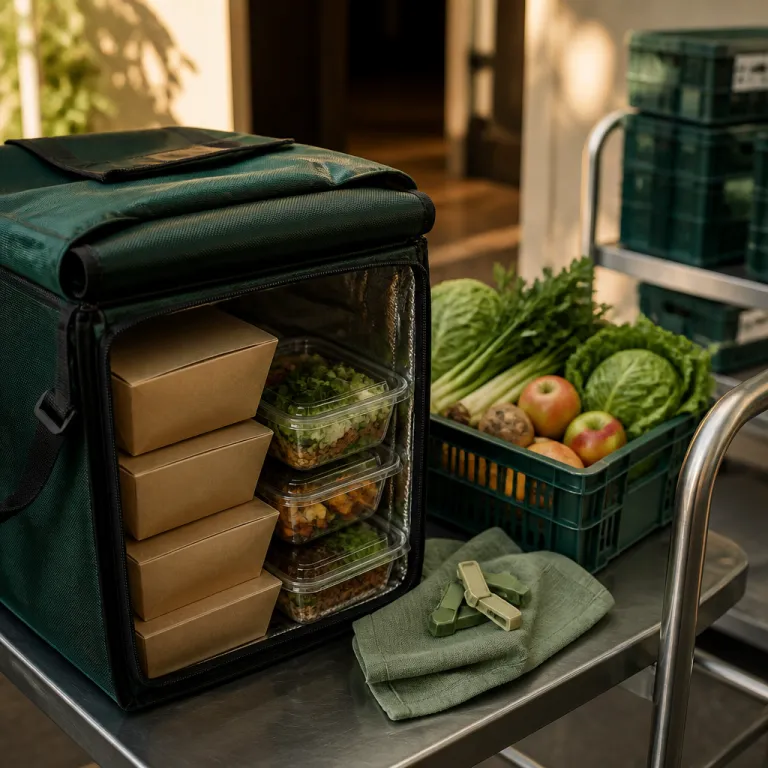
Food recovery as the new baseline for sustainable F&B hospitality
Hotel food recovery has moved from pilot project to operational standard in sustainable F&B hospitality. Regulatory pressure, ESG expectations and the hard economics of food waste are forcing hospitality businesses to treat surplus food as a managed asset rather than an inevitable loss. For a general manager running a high volume hotel with several restaurants on site, the shift touches sustainability strategy, guest satisfaction and the full food and beverage P&L.
The environmental impact is no longer abstract; food waste is widely cited as a major contributor to global greenhouse gas emissions, with estimates placing it among the top sources of climate impact when measured as a country-level emitter.1 This places hospitality squarely inside the environmental and social conversation. Large hotels that once focused only on recycling and eco friendly messaging now face investor questions about concrete waste reduction, energy consumption and measurable sustainable practices in every restaurant and bar. In this context, sustainable F&B hospitality means using data, waste tracking and structured food recovery solutions to cut waste while protecting food cost and labour margins.
Operators such as MGM Resorts International in Las Vegas illustrate how sustainability and community impact can align with commercial discipline. MGM reports donating millions of meals annually across its portfolio, including large volumes of prepared food from properties such as Bellagio on the Strip, demonstrating how a luxury restaurant operation can integrate food recovery without compromising brand standards.2 This type of programme turns surplus food into community impact while supporting long term ESG narratives that matter to owners, lenders and asset managers.
Across the hospitality industry, the operational model is converging around three pillars: frozen storage, scheduled pickups and staff training. Gaylord National Resort, for example, has been partnering with Food Recovery Network for several years, using frozen food storage systems and biweekly pickups to move safely handled surplus from banquet kitchens into the community.3 The same logic applies in urban hotels where high volume banqueting, all day dining and room service generate predictable surpluses that can be captured through disciplined tracking and clear standard operating procedures.
Technology is now embedded in this model, especially in large food and beverage operations where manual spreadsheets cannot keep pace with production. Winnow and similar AI driven systems sit at the waste station, weighing and categorising every tray, pan and plate that comes back from the pass, and the AI identifies and tracks waste. These data points feed menu engineering, menu design and sourcing decisions, allowing chefs to adjust plant based ratios, portion sizes and buffet layouts to reduce food waste at the source. As one executive chef using AI based tracking put it, “Once the team could see exactly what we were throwing away, it became a daily performance metric, not just a sustainability slogan.”
Industry platforms are helping hotels translate these insights into daily routines. The Hotel Kitchen programme, developed by the American Hotel & Lodging Association (AHLA) and World Wildlife Fund (WWF), gives hospitality businesses operational guidelines, training modules and communication tools to embed sustainable practices in both front and back of house.4 Its case studies, including a reported 73% food waste reduction at Mandarin Oriental Hong Kong using Winnow’s AI enabled tracking, show that disciplined waste measurement can deliver both environmental impact and direct cost reduction in complex luxury environments.5
For GMs, the business case now extends beyond sustainability storytelling into tax, risk and compliance. The U.S. Bill Emerson Good Samaritan Food Donation Act and the more recent Food Donation Improvement Act clarify liability protections for hotels that donate prepared food in good faith, provided they follow safe handling standards and work with qualified non profit partners.6 These protections, combined with permanent federal tax incentives for enhanced deductions on donated food inventory, mean that a hotel restaurant can convert surplus food into tax deductions while reducing disposal fees and aligning with corporate ESG metrics.
That legal clarity is critical for multi outlet hotels where chefs, finance teams and legal counsel must agree on a single standard. Clear national protections reduce perceived liability for hotel restaurants and give owners confidence to scale food recovery across portfolios rather than limiting it to one flagship property. As a result, sustainable F&B hospitality is increasingly defined by how effectively a hotel converts surplus food into structured donations rather than how many eco labels appear on the menu.
Tax incentives also change the economics of food recovery in high volume banqueting and convention hotels. When surplus food is properly valued, documented and donated through recognised partners, the resulting deductions can offset part of the food cost associated with conservative production planning. For a 300 room hotel with busy meeting space, that can mean the difference between viewing food recovery as a cost centre and treating it as a margin neutral sustainability tool, with many operators targeting payback periods of one to three years for basic food recovery infrastructure.
Designing menus and operations for food recovery from day one
Food recovery that works at scale starts long before the first plate leaves the pass. The most effective hospitality businesses now integrate recovery into event planning from the RFP stage, aligning menu design, production volumes and packaging choices with a clear waste reduction and donation strategy. This is where sustainable F&B hospitality becomes a cross functional discipline rather than a back of house initiative.
When sales teams negotiate group contracts, they increasingly specify whether events will be recovery eligible and which food categories can be safely donated. That early clarity allows chefs to build menus with more plant based centrepieces, modular sides and sauces, and food and beverage items that reheat well in community kitchens without compromising guest experience. It also shapes sourcing, pushing purchasing teams toward suppliers that can support consistent portion sizes, donation friendly packaging formats and eco friendly bulk options that reduce both packaging waste and energy consumption in storage.
Operationally, the kitchens that excel in food recovery treat waste tracking as a core production KPI, not an afterthought. AI systems such as Winnow sit alongside more traditional waste station scales, capturing data on what food is overproduced, what comes back from the guest and what never leaves the hot box. Those data streams inform menu engineering, from trimming low performing dishes to adjusting plant based garnishes, and they give chefs the evidence they need to defend changes to buffets, banquets and minibar assortments.
For GMs focused on guest satisfaction scores, the key is to ensure that sustainable practices remain invisible in service but visible in storytelling. Guests rarely notice that a breakfast buffet has shifted from three egg preparations to two plus a strong plant based option, yet they respond positively when the hotel explains its food recovery partnerships in room collateral or pre arrival emails. Articles on elevating guest experience through sustainable food practices in hotels, such as those published by F&B for Travel, show how to connect these operational choices to higher review scores and repeat business.
Packaging is another critical lever in sustainable F&B hospitality, especially for grab and go, room service and banquet breakouts. Eco friendly packaging that is designed for both guest convenience and donation viability can extend the usable life of surplus items without compromising food safety. Hotels that standardise on recyclable or compostable formats also reduce environmental impact while simplifying back of house sorting at the waste station.
From a sourcing perspective, aligning suppliers with the hotel’s sustainability and food recovery goals is now a competitive advantage. Contracts increasingly include clauses on surplus take back, reusable containers and plant based product lines that support both menu variety and lower environmental impact. For investors and asset managers, these long term supplier relationships signal that the hotel is managing both cost and risk in a structured way rather than chasing short term savings.
The community side of food recovery also matters for brand positioning in the hospitality industry. Food Recovery Network, which works with hundreds of hunger fighting partners across the United States, gives hotels a scalable framework for moving surplus food into local communities.7 Its guidance answers practical questions such as “What is Hotel Kitchen?”, “How does AI help in food recovery?” and “Why are hotels focusing on food recovery?” in language that resonates with both operators and corporate sustainability teams.
For independent hotels without corporate sustainability teams, partnering with established organisations reduces complexity. These partners provide standard operating procedures, training content and reporting templates that translate kitchen level actions into ESG ready data. That support allows smaller hospitality businesses to participate in food recovery at a professional level, even without the resources of a global hotel group.
As more hotels adopt these models, food recovery is becoming a differentiator in corporate RFPs and travel management company scorecards. Large buyers increasingly ask how a hotel manages food waste, what percentage of surplus food is donated and how those programmes support local communities. For a GM, being able to answer with specific data and named partners is now part of winning high value corporate and group business.
Metrics, governance and scaling food recovery across hotel portfolios
Once the operational basics are in place, the question for owners and GMs is scale. Sustainable F&B hospitality at portfolio level depends on consistent metrics, clear governance and the ability to translate kitchen data into ESG reporting that satisfies boards, lenders and regulators. Here, food recovery programmes intersect directly with financial performance, risk management and long term asset value.
The core metrics are straightforward but must be defined precisely across all hotels. Diversion rate measures the percentage of total food waste that is donated or otherwise recovered, while cost savings capture both reduced disposal fees and lower purchasing driven by better forecasting. Many hotel groups now translate these numbers into carbon offset equivalents, using recognised methodologies to show how food waste reduction contributes to overall environmental impact targets, often reporting tonnes of food diverted and meals provided as headline indicators.
Data quality is the recurring challenge, especially in high volume convention hotels where multiple outlets share production. Standardising waste tracking tools, whether AI based systems like Winnow or calibrated scales at every waste station, is essential to generate comparable data across hotel restaurants and regions. Those data then feed central dashboards that allow corporate F&B leaders to benchmark properties, identify outliers and target training or capital investment where it will deliver the greatest impact.
Governance structures are evolving to reflect the strategic importance of food recovery. Many hotel companies now assign clear accountability for sustainable practices in F&B, with targets for diversion, waste reduction and energy consumption embedded in management contracts and bonus schemes. In some cases, food recovery performance is reported alongside RevPAR and GOP in owner updates, signalling that sustainability is now a core operational metric rather than a side project.
For GMs, linking food recovery to financial outcomes is critical when defending investments in technology, storage or training. Case studies such as the 73% food waste reduction at Mandarin Oriental Hong Kong, achieved with Winnow’s AI system, demonstrate that disciplined tracking can unlock both cost savings and reputational gains.5 When combined with tax incentives for donations and lower hauling fees, these savings often justify the capital outlay within a relatively short payback period.
Portfolio level strategies also benefit from cross pollination between food recovery and other F&B initiatives. For example, a hotel that has already re engineered its beverage programme around regional wines, as explored in analyses of how the best Porto wine can anchor high performing hotel beverage programmes, can apply the same sourcing discipline to food. Aligning local producers, plant based suppliers and community partners creates a coherent narrative that resonates with both guests and investors.
Communication remains a delicate balance. Guests want to feel that their stay supports eco friendly and socially responsible initiatives, but they do not want to be confronted with the mechanics of waste sorting or surplus handling. The most effective hotels share high level results, such as tonnes of food donated or meals provided, while keeping the operational details behind the scenes and maintaining a seamless restaurant and banquet experience.
Finally, scaling food recovery across a portfolio requires patience and a long term view. Early adopters often face resistance from kitchen brigades, finance teams or legal departments who worry about complexity, liability or cost, yet consistent leadership and clear data usually win the argument over time. As more hospitality businesses embed food recovery into standard operating procedures, sustainable F&B hospitality is becoming defined not just by what is served to the guest, but by what happens to every kilogram of food that leaves the loading dock.
For investors and asset managers, that shift is material. Hotels that can demonstrate robust food recovery programmes, backed by credible data and recognised partners, are better positioned to meet ESG expectations, secure favourable financing and protect asset value in a market where environmental and social performance is increasingly scrutinised. From kitchen to community, food recovery is no longer a feel good add on; it is a core operating standard for any serious hotel F&B operation.